
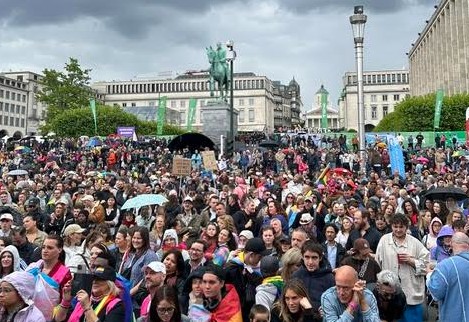
Brussels wanted to prove it could still shine brighter after 30 years of Pride. It did. From Mont des Arts to the Rainbow Village, from the march to the afterparties, this 2026 edition felt like a city fully claimed by its queer and allied crowds – loud, messy, political and deeply tender at the same time.
The theme “When Times Get Darker, We Shine Brighter” could have sounded like a slogan. Today, it felt like a description of what actually happened: in a Europe where rights are under pressure, more than 200,000 people turned the centre of Brussels into a moving, living Pride flag.
A march made of memory and protest
The day started at Mont des Arts, where the Pride Village opened at noon and quickly filled with associations, collectives, institutions and curious visitors. By 14:00, speeches on the main stage were already setting a clear tone: Pride as a celebration, yes, but also as a space to talk openly about backlash, transphobia, racism, intersex rights, asylum, and what it will take to keep moving forward.
At 14:30, the giant Rainbow Flag was lifted above the crowd and carried into the streets, kicking off a Pride March that crossed the city centre before looping back towards the Rainbow Village. In interviews with RTBF, pioneers like Chille Deman, one of the founders of Brussels Pride, reminded everyone that the first marches in the 1990s drew only a few hundred people and a lot of hostility – and that seeing today’s sea of rainbow flags, trans flags and bi flags is both moving and fragile.
Along the route, the march felt like what it has always been at its best: a protest wrapped in a party. Placards for trans and intersex bodily autonomy, calls for a real ban on conversion practices, solidarity with queer people under attack elsewhere in Europe and the world, and chants that made clear that Pride is not a brand, but a demand.
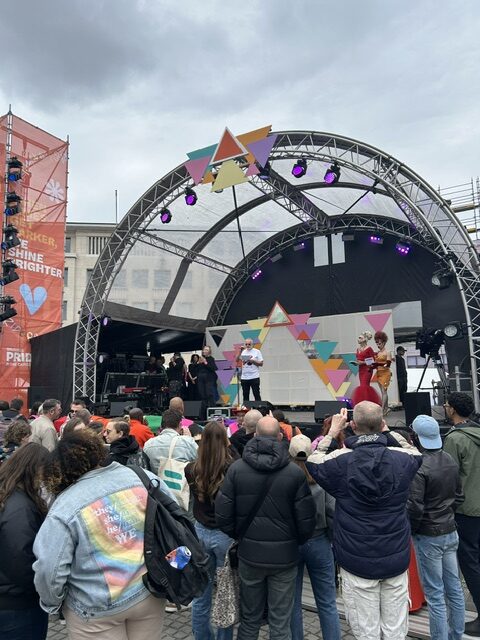
Mont des Arts as a queer stage, club and rooftop
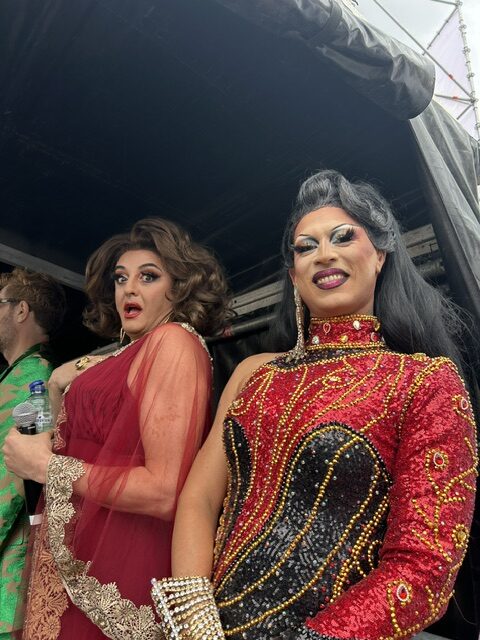
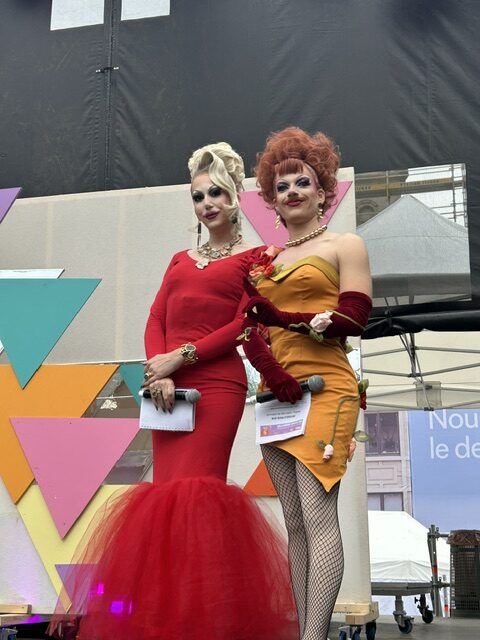
Back at Mont des Arts, the Albertine stage kept the energy flowing all day, with concerts, drag, choirs and DJs from midday until late evening. The programme did exactly what it promised in the run‑up: turning the hill into a queer choir, club and dancefloor where you could sing, scream, dance and just exist in a crowd that looked like you.
From community voices like Sing Out Brussels! to headline performers and a closing run of DJ sets, the stage stitched together the political and the emotional. Between songs and speeches, calls for solidarity echoed off the facades and off the “PRIDE 30” installation watching over the city. For many people, this was the first time they had seen themselves reflected so clearly on such a central, official stage – not as a side act, but as the main story.
A safer Pride, thanks to people who care
One of the quiet successes of today was Safer Pride. While cameras focused on floats and stages, a whole network of staff and volunteers worked to make sure the day stayed as safe as possible: a Safer Zone on site, a mobile Care Team, medics, psychosocial support and a clear commitment that Pride should be celebratory and caring.
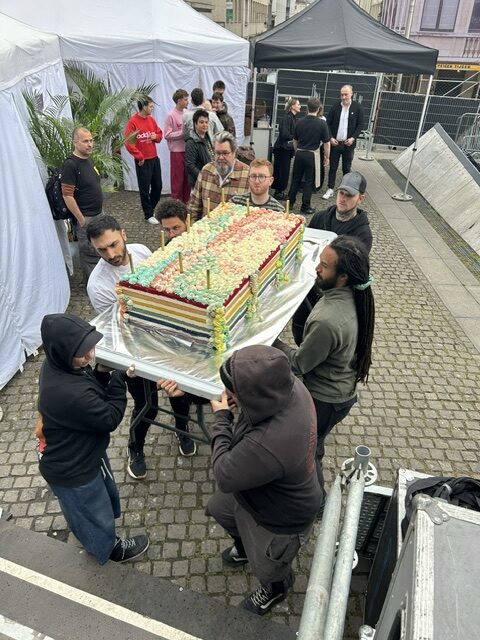
In a context where many people still come to Pride with a history of violence, mental health struggles or complicated family situations, that care is not a luxury. It is what makes the difference between an event you survive and an event you can fully inhabit. Today, that system held – and it deserves as much applause as any DJ drop.
Rainbow Village and a city dressed for Pride
From 16:00, the focus shifted towards the Rainbow Village and the wider centre, where bars, terraces, drag shows and street corners extended the Pride atmosphere until late into the night. The Saint‑Jacques neighbourhood once again proved why it remains such an important queer anchor for Brussels: a place where nightlife, local businesses and community history meet in a few tightly packed streets.
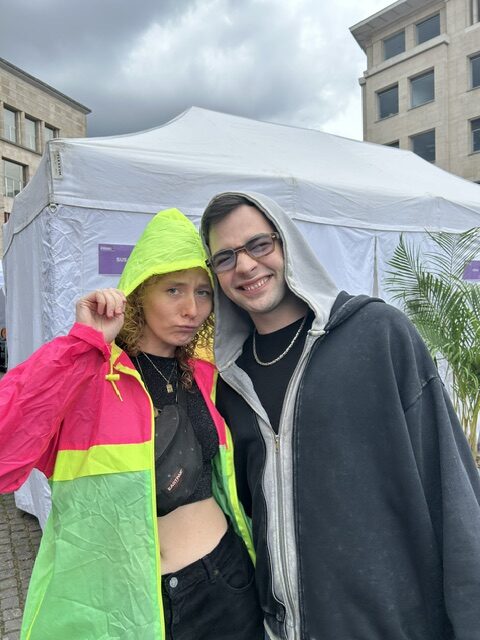
All of this took place in a city that had clearly made an effort to show up visually, too. 180 rainbow flags along the route, rainbow garlands over Rue du Marché au Charbon, light shows on the Bourse and La Monnaie, and that giant “PRIDE 30” structure at Mont des Arts gave the day a sense of scale and continuity. Pride was not tucked away; it was literally written onto the city’s skyline.
A huge thank you – and what comes next
From where Ket was standing (and dancing, and running between events), Brussels Pride 2026 is a success. Not because everything was perfect – Pride never is – but because the day managed to hold together joy and anger, memory and future, local and international struggles in one continuous movement.
That success is the work of many. RainbowHouse Brussels, as the engine of Pride Week and the political heart of the event, once again did an enormous job coordinating organisations, building the programme and making sure community voices stayed at the centre. The teams at visit.brussels and the City of Brussels backed that work with infrastructure, visibility and the kind of logistical support that turns a march into a city‑wide moment.
To everyone who marched, organised, performed, cared, worked a volunteer shift, staffed a bar, held a banner, checked in on a friend, or simply dared to be visible today: you made this anniversary real.
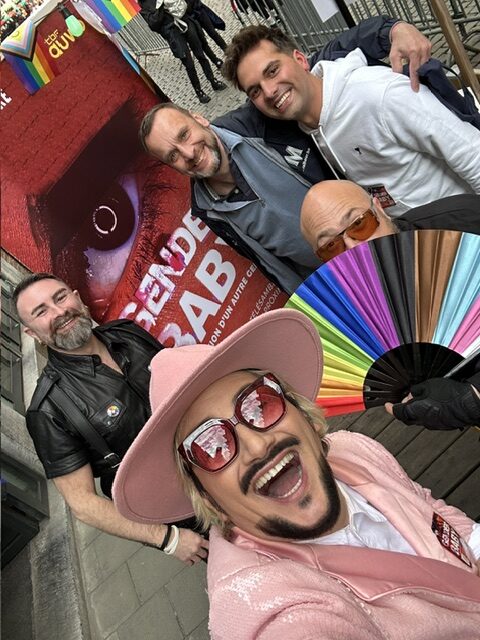
The fight, as Chille Deman reminded RTBF, is far from over – in Brussels, in Belgium, in Europe. But days like this are proof that we are many, that we are not tired yet, and that when times get darker, we really do shine brighter.
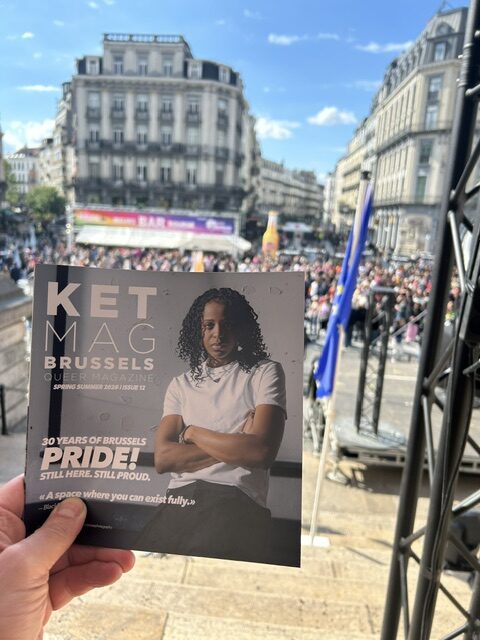
KET Magazine is a community‑driven, non‑profit magazine run by volunteers based in Brussels. Get in touch to share your thoughts or tell us about your activities. You can also promote your events on our website or support our work with a donation. Contact us at Info@ket.brussels.
You may also like
-
Garden Party de la Maison Arc-en-Ciel de Liège
Liège’s Maison Arc-en-Ciel is bringing back its annual Garden Party on Saturday 5 September 2026.
-
IGLYO Wants to Hear From You: Europe’s Biggest LGBTQI School Survey Is Back
IGLYO, the Brussels-based international LGBTQI youth network, has just launched the second edition of its
-
Back To Brussels? BGS Is The LGBTQI+ Sports Community Waiting To Meet You
September means fresh starts, new routines and, for a lot of people landing in Brussels
-
Sensuelle: A Softer Space to Explore Desire, Connection and Self-Expression
Sensuelle is creating warm, women-centred spaces where sensuality can be explored without performance pressure, shame
-

Freedom & the pleasure to challenge yourself: the underground scene by CAIÃO
Techno, electronic, and baile funk collide with a unique stage presence that pulls us in!