
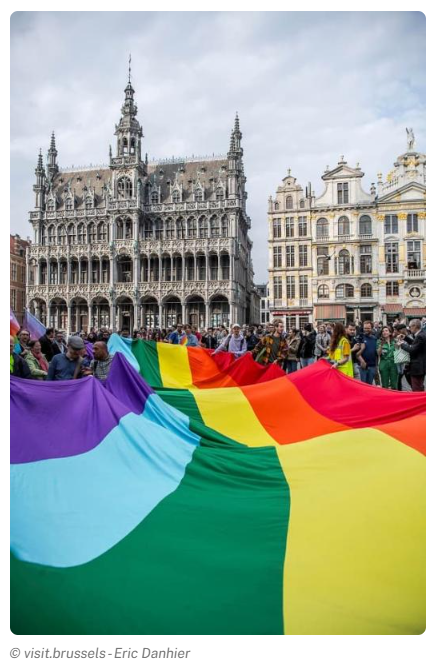
In Belgium, the situation is different – and that matters. After years of pressure from organisations and survivors, the country adopted a national ban on conversion practices in 2023. The law:
- defines conversion practices as any attempt to change or suppress someone’s sexual orientation, gender identity or gender expression;
- makes carrying out such practices punishable by imprisonment (from one month to two years) and/or a fine;
- also criminalises the promotion or incitement of these practices.
Belgium joined a small group of European countries with explicit bans – including France, Germany, Malta and several Spanish regions – which the European Parliament now cites as models. So if you live in Brussels, the message is clear: these so‑called “therapies” are not just unethical, they’re illegal.
But that doesn’t mean the story is over.
A patchwork of protection – and a dangerous message
At EU level, the Commission’s choice means the map will stay patchy:
- a handful of countries with explicit bans and penalties;
- others with partial measures or vague provisions;
- and several where conversion practices still operate in churches, clinics, back rooms and WhatsApp groups with no specific legal risk.
For people who can’t choose where they’re born, or who are stuck in hostile environments, that gap is not theoretical. It decides whether a youth pastor can send you to a “healing camp”, whether a psychologist can try to “correct” you, whether a family can threaten you with an exorcism – and whether the law will be on your side.
The message is also political: when the Commission says it won’t propose a ban, even temporarily, it tells queer and trans people in the most hostile member states that they may have to wait much longer for protection. Exactly at a moment when anti‑gender movements are gaining ground.
Why this matters for Brussels during Pride
From Brussels, it’s tempting to think: “We’re covered, we have the law, Europe will catch up eventually.” But Pride is not just local. The people who march in Brussels streets come from every corner of the continent – including countries where conversion practices are still tolerated, sometimes encouraged.
For Ket’s readers, a few points feel important:
- Solidarity beyond borders: Belgium having a ban doesn’t mean we can relax. It means we have a starting point to support campaigns in other countries, amplify survivors’ voices and keep pressure on European institutions.
- Implementation at home: even with a law, conversion practices don’t vanish overnight. They can move online, hide behind “prayer groups” or adapt their language. Survivors and organisations insist on the need for training judges, police, social workers and health professionals so the law is actually applied.
- Intersection with other struggles: conversion practices often target young people, migrants, people of faith, and trans and intersex communities in particular. Linking this fight to broader work on mental health, asylum, racism and disability is crucial.
Pride 2026, with its theme “When Times Get Darker, We Shine Brighter”, is an obvious moment to talk about this. Marching for queer joy also means marching against institutions and ideologies that still see us as illnesses to be cured.
What comes next?
The story is not finished at EU level. The Commission has promised:
- a study on conversion practices across the Union, to be completed in early 2027;
- a recommendation to member states in 2027, encouraging them to adopt bans and support measures for survivors.
Meanwhile, the European Parliament, the Council of Europe and many civil society organisations are pushing for more: they want conversion practices added to the list of EU‑recognised crimes, and they want clear, binding rules.
For now, the gap between those demands and the Commission’s caution is exactly the kind of space where activism lives. From petitions and legal cases to Pride speeches and community events, there are many ways to keep this issue on the agenda.
Because there is, as MEPs put it during a recent debate, “nothing to cure”. And as long as some people pretend otherwise, queer and trans communities – in Brussels and beyond – will have reasons to keep shouting.
KET Magazine is a community‑driven, non‑profit magazine run by volunteers based in Brussels. Get in touch to share your thoughts or tell us about your activities. You can also promote your events on our website or support our work with a donation. Contact us at Info@ket.brussels.
You may also like
-
Brussels Rainbow Village: More Than a Night Out
Just steps from Brussels’ Grand Place, the Saint Jacques neighbourhood is a place to meet,
-

Thirty-seven and still dancing: La Demence opens its birthday weekend at Fuse
La Demence turns 37 with three nights in Brussels, beginning at Fuse on Friday 30
-
Pleasure, care and no lectures: a pocket guide to gay sexual health
Sexual health is about more than a test result. In Le Petit Guide de la
-
Mideterms Elections in US – The Closetocracy: when the closet becomes a question of power
The Closetocracy, now available on YouTube through The Young Turks, puts secrecy, sexuality and political
-

Beyond the rent rant: Bruscope puts Brussels life under the lens
Why does finding a home in Brussels feel so complicated? Who does the work that