
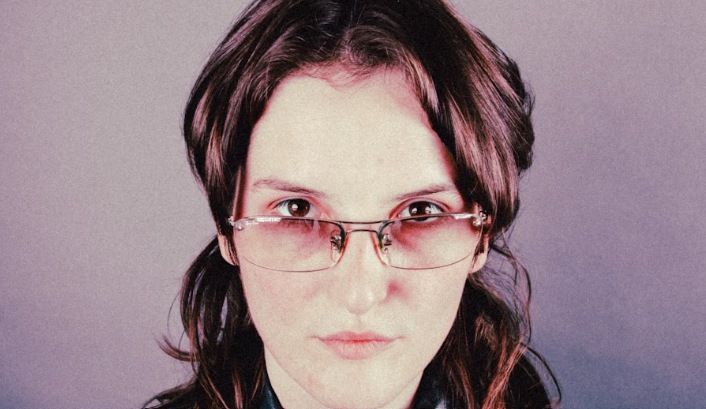
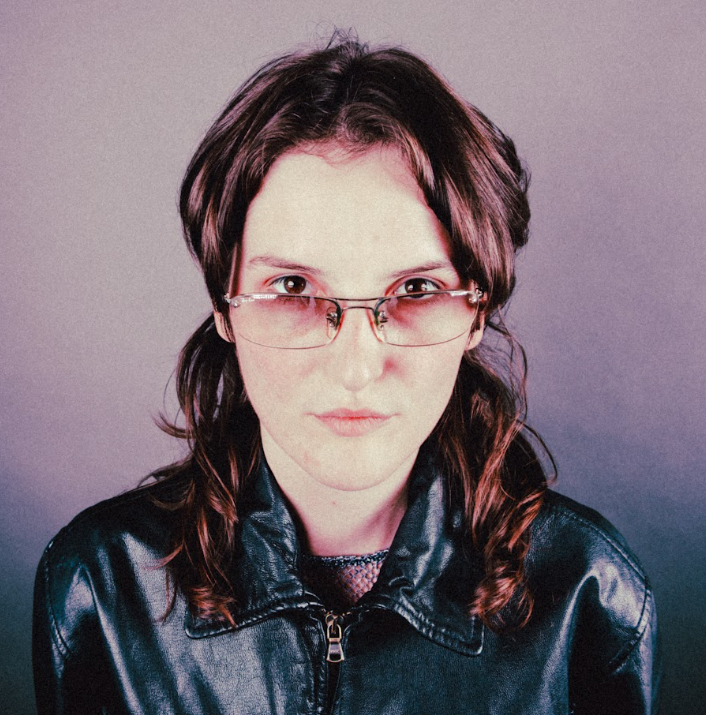
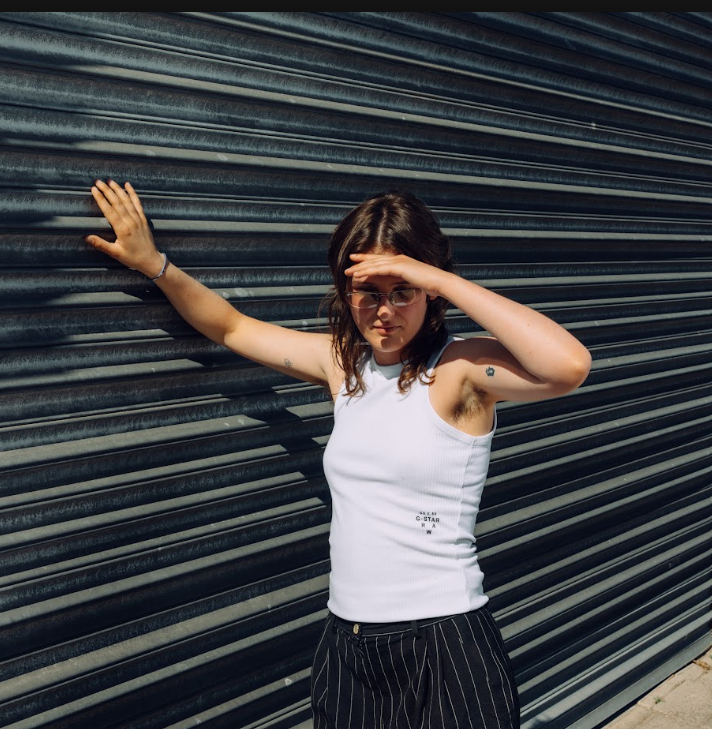
Between Brussels and Amsterdam, DJ and producer Stanislawa turns 1990s trance, sensual techno and progressive-house heat into sets that feel both nostalgic and sharply present-tense. Founder of queer collective Deep Down East, an organiser behind solidarity projects including Rave Against Fascism, and part of C12’s curation team, she sees club culture as more than nightlife: it is a space to become yourself, build community and take a stand. We met her during Voodoo Village Festival.
A love letter to the 1990s — without the museum dust
Stanislawa’s sound begins with a fascination for the 1990s and early 2000s: trance, techno, progressive house and the specific emotional voltage of an era that still echoes through Belgium’s dancefloors.
“I’m a big nostalgic,” she says. “The retro side — the 90s and early 2000s — is where I dig most of my music, and where I find all my inspiration for production too.” Her first electronic memories come from her parents’ CD collection: techno compilations, hypnotic trance, and a record sleeve she remembers as particularly magnetic while she was playing with Playmobil as a child.
That early intimacy with music still shapes her club sets. Her debut EP, Forever Strong, released in May 2024, brings together hard 909 kicks and trance-led melodies, while her monthly residency on Brussels radio station Gimic gives another side of her taste room to breathe: downtempo, trip-hop, 1970s and 1980s electronica, and overlooked gems drawn from a wider personal archive.
But Stanislawa’s nostalgia is not about reproducing an old sound without context. It is tied to the story of Belgian nightlife itself — the clubs, the cross-pollination of scenes and the collective memory of a country that helped shape European electronic music.
A bridge between generations
Belgium’s so-called golden era of clubbing is a recurring reference point for Stanislawa. Friends who experienced the 1990s club scene first-hand have passed on stories, tracks and perspectives that helped her understand the cultural history behind the records she plays.
She is particularly interested in the connections between Belgium and Detroit, and in remembering the Black and queer roots of house and techno. “We have to remember where the music comes from,” she says. “House and techno came from the US — Chicago, New York and Detroit — from queer people and Black people.”
That historical awareness is not a decorative footnote. In a clubbing landscape where dance music can easily be detached from the communities that created it, Stanislawa treats musical memory as a political practice. To know the lineage of a track is also to understand the conditions that made it possible: marginalised people making pleasure, survival, freedom and collective expression audible.
Together with fellow queer DJ Laura Violi, she is preparing a new Gimic radio programme exploring Belgium’s 1990s nightlife heritage. The show will bring people who shaped the era into conversation with a younger generation of artists, DJs and dancers. It is a project that connects family memories, local club lore and the question of what can still be carried forward.
From collective energy to queer visibility
Stanislawa founded Deep Down East in 2017, initially as a way to reconnect with her Eastern European background through electronic music and to spotlight artists from the region.
“At the beginning, I would not say it was a queer collective at all,” she explains. Her coming out happened around the same time, after moving away from the codes and expectations of a rural upbringing. Deep Down East was first imagined as a bridge: a space for friends and curious newcomers to explore nightlife without immediately entering its most intimidating underground corners.
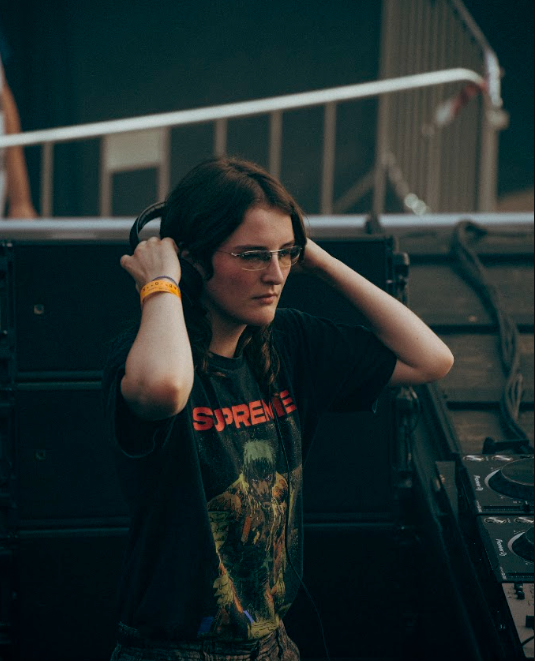
Over time, the collective evolved with the people who joined it. More queer artists became involved, and its programming shifted accordingly. “When there were more queer people in the collective, the collective became queer,” she says.
That evolution brought a clearer intention: to create line-ups that counter the persistent dominance of cisgender, straight, white men in club programming. Deep Down East has become one part of a wider Brussels ecosystem in which collectives often do the foundational work that institutions later benefit from — nurturing artists, building audiences and developing new sounds before they reach major stages.
Stanislawa names collectives including Missfitte, Not Your Techno et Gay Haze as essential forces in Brussels’ queer nightlife. For her, queer culture does not begin with a club branding itself “queer-friendly”. It begins with people making their own spaces, parties and networks — then pushing the rest of the city to follow.
Post-Covid, a faster and freer scene
For Stanislawa, the Covid-19 pandemic created a clear break in Brussels nightlife. When clubs reopened, a new generation of artists and collectives entered the scene with their own communities, references and pace.
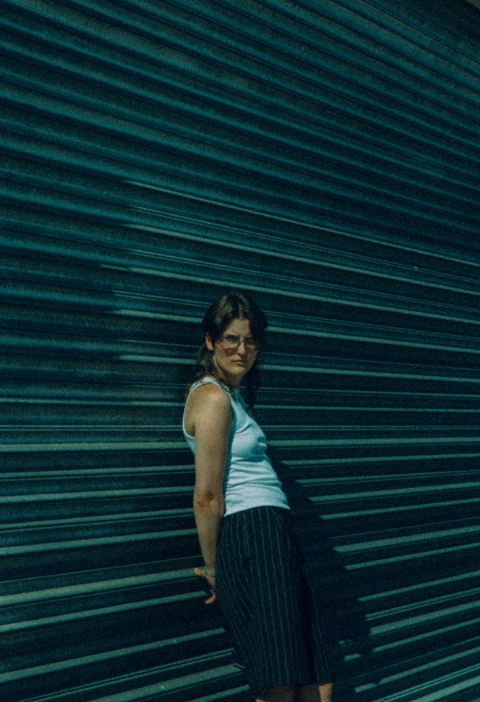
“There was a rupture,” she says. “From that rupture, lots of things emerged on their own, without necessarily referencing what came before.”
The early post-pandemic moment was often fast: speedier techno, fast trance, bass-heavy energy and, across some scenes, Latin-inspired sounds. Stanislawa herself played much faster during that period, before gradually slowing down again as she refined the sound that feels most like her own.
The deeper shift, though, was not only musical. New queer, trans and lesbian artists gained visibility; social media and independent radio made discovery easier; and collectives helped transform expectations around representation. All-male line-ups, once common in Belgian electronic-music institutions, have become harder to defend — even if equality behind the decks, in technical teams and at decision-making level is still far from guaranteed.
Stanislawa has performed across some of Belgium’s most visible stages, including Fuse, Ancienne Belgique, Kompass, Boiler Room, Paradise City, Pukkelpop and Dour Festival, while also playing internationally from Berlin and Copenhagen to France, Poland, Luxembourg and the Netherlands. Her presence at C12 — where she works on the curation team — places her at the intersection of artist, organiser and programmer.
The club as a political space
Stanislawa does not separate her work as a DJ from her political commitments. She helped initiate Slava, a fundraising rave for Ukraine with the Veselka and Zaika collectives, and brought Belgian FLINTA+ collectives together for Rave Against Fascism.
For her, culture cannot pretend to be neutral, especially in a moment shaped by the far right, war, precarity and ongoing violence within nightlife. “In the times we are living in, it’s very important to stay with our values,” she says.
That can come with professional risks. Speaking about safety in clubs, naming the presence of abusive behaviour in the industry or publicly taking a political position may make some venues less inclined to book an artist. Still, Stanislawa is clear about her line: “I stand for what I stand for.”
The club gave her the freedom to develop her identity beyond a public-facing, institutional career path. She studied European politics and was previously active in a left-wing political party, but found that nightlife offered a more immediate way to live her values. In the club, she says, she could experiment with presentation and feel fully herself — not as a fixed character, but as a person still allowed to discover who she is.
That is why representation in nightlife matters. Seeing trans, queer and lesbian artists on stage can change what younger people believe is possible for themselves. Stanislawa did not grow up with accessible queer role models. Today, she is helping create the visibility and infrastructure she once lacked.
More than a dancefloor
Stanislawa’s trajectory is a reminder that a DJ set can be both carefully selected music and a form of world-making. Her craft is rooted in the sensual pull of a trance lead, the physical insistence of a 909 kick and the joy of a well-timed groove. But it is also rooted in who gets to be there, who gets booked, who feels safe enough to dance, and whose histories are remembered.
The dancefloor does not solve everything. A club is not automatically a safer space just because it uses the language of inclusion, and queer scenes are not free from inequality or harm. Yet collectives such as Deep Down East show what becomes possible when nightlife is organised with intention: more entry points, more visible role models, more room for people to make culture on their own terms.
At Voodoo Village, Stanislawa brought that full story into focus: a Belgian clubbing past reframed through a younger, queer and politically alert generation — one record, one rave and one community at a time.
Interview conducted during Voodoo Village Festival. Ket.brussels warmly thanks Aurélie Cordier, press relations officer, for making this interview possible.
KET Magazine is a community‑driven, non‑profit magazine run by volunteers and based in Brussels. You can find our other music and nightlife stories on ket.brussels, and you can always write to us to share your projects or pitch a story: info@ket.brussels
You may also like
-

Orlane on Amour Pluriel: The Rise of a Queer Belgian Pop Icon
Orlane has never hidden her queerness. In ROUGE À LÈVRES, desire for a woman slips
-

FIVE QUESTIONS… AND ONE BONUS – Meet Tristan Jon, painter
Music, movement, Brussels and the poetry of blur: painter Tristan Jon talks about the art
-

“Don’t Fear, Make Love”: DARA on Eurovision, Pride, and the Power of Letting Go
A few months after her Eurovision win, DARA is still moving fast. Taking on Pride
-

Dolly Parton: The Rhinestone Queen Who Made Space for Us
Dolly Parton has died at the age of 80, leaving behind an immense catalogue of
-
From Humanitarian Frontlines to a Brussels Gallery Wall: Meet the Artist Behind Made by Baya
Barbara Kralovicova spent five years advocating for children’s rights in some of the world’s toughest