
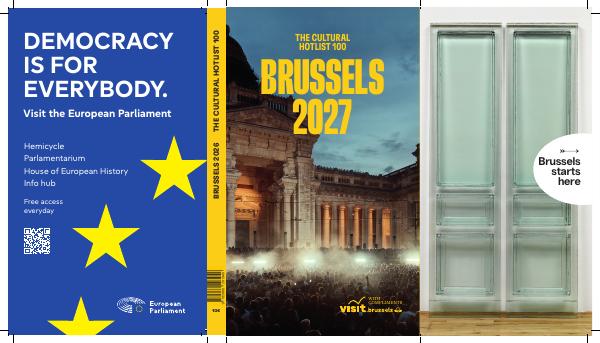
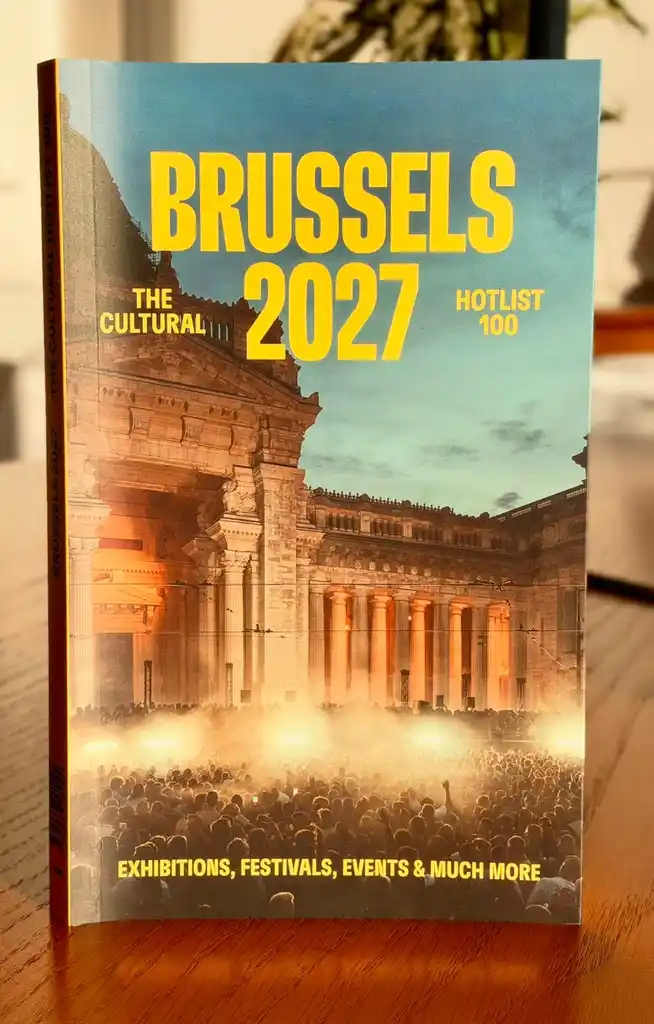
Your next Brussels discovery might start on paper. Out on 25 November, Brussels 2027 brings together 100 ideas for exhibitions, performances, concerts, festivals and cultural places across the capital. Published in English by the Fondation pour les Arts à Bruxelles, the pocket-sized guide pairs major institutions with independent spaces, bookshops and artists’ studios. For curious locals and newcomers alike, it offers a starting point for exploring beyond the places already on their radar.
A year of culture, without another open tab
There is a particular kind of cultural planning that involves saving seventeen links, forgetting sixteen of them and remembering the last one just after the exhibition closes.
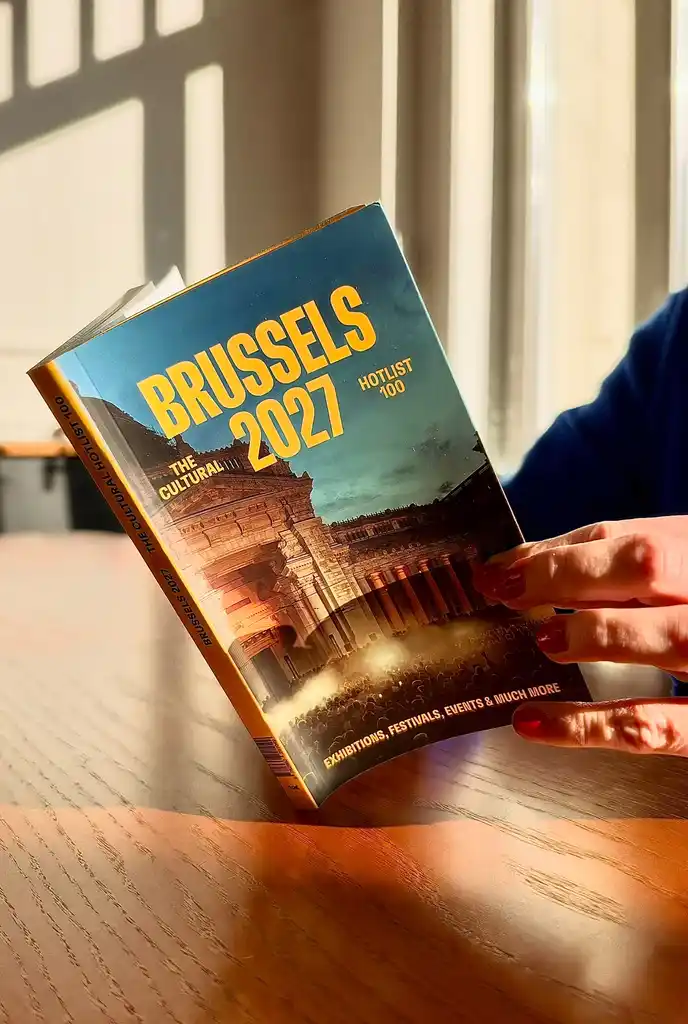
Brussels 2027 proposes something simpler: a book you can carry, browse and return to throughout the year. Across 168 pages, concise texts, photographs and a clear layout introduce 100 suggestions, with a calendar at the back gathering the dates of key exhibitions, events and festivals.
Visual arts take the largest share of the spotlight, alongside a selection of music and performing arts. This is not an attempt to list everything happening in Brussels. It is a curated invitation to choose a few things — and perhaps try something unexpected.
Big institutions, smaller doors
Five journalists have put the selection together: Sarah Crew, Richard Harris, Mylène Mistre-Schaal, Sarah Schug and Estelle Spoto.
Their scope stretches beyond the capital’s best-known cultural addresses. Alongside major institutions, the guide makes room for independent initiatives, artists’ studios, creative spaces, bookshops and music venues.
That mix is part of the appeal. A city’s cultural life is not only what happens behind its most recognisable façades. It also takes shape in smaller places you might walk past without knowing what is inside.
For readers who already know their way around Brussels, the promise is not necessarily a new city. It is a different route through the one they know.
What is on the 2027 horizon?
The publisher highlights several developments featured in the guide: a first year of programming at Kanal, Wiels’ twentieth anniversary, the reopening of the Musée d’Ixelles and the programme at Bozar.
These are presented as highlights of the year ahead, rather than events already underway. Individual dates, booking arrangements and programme details should be checked with the venues as they are announced.
The press release also places this activity against a less celebratory backdrop: the funding difficulties facing the cultural sector. A busy calendar does not mean every organisation has the resources it needs. Looking beyond the biggest names is one way readers can broaden their attention to the people and places sustaining the city’s cultural life.
A queer perspective, without a queer label
Brussels 2027 is not presented as an LGBTQIA+-specific guide, and the press release does not identify a dedicated queer selection.
For LGBTQIA+ readers, its relevance lies in the possibility of widening their cultural map: finding artists, stories and spaces that resonate, while stepping beyond familiar circuits.
That distinction matters. A place appearing in a cultural guide is not, on its own, evidence of queer-inclusive programming, accessibility or a safer-space policy. Those details still deserve a closer look when choosing where to go.
The guide can open a door; readers can decide which ones feel worth walking through.
Practical information
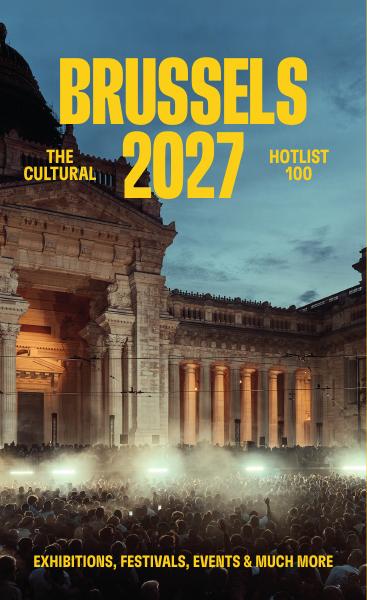
- Title: Brussels 2027
- Release date: Wednesday 25 November 2026
- Price: €10
- Language: English
- Length: 168 pages
- Format: Pocket-sized, 110 × 180 mm
- Contents: 100 cultural suggestions, photographs and a closing calendar
- Availability: Bookshops and the bookshops of museums and art centres, according to the publisher. A detailed stockist list is not included in the press release.
- Publisher: Fondation pour les Arts à Bruxelles, with support from visit.brussels
- ISBN: 978-2-9602910-4-9
- Further information: Fondation pour les Arts à Bruxelles
Leave a little room in next year’s diary. Brussels may have a few doors you have not tried yet.
KET Magazine is a community‑driven, non‑profit magazine run by volunteers and based in Brussels. You can find our other music and nightlife stories on ket.brussels, and you can always write to us to share your projects or pitch a story: info@ket.brussels
You may also like
-

Meet the people behind the headlines: independent media take over La Tricoterie
Less scrolling, more conversation. On Sunday 15 November, the Salon des médias indépendants brings journalists,
-

After the party, parenthood: Jordan Firstman’s Club Kid changes the guest list
One minute you are running the night. The next, a ten-year-old is calling you Dad.
-
Who’s shaping you? Sous Influence takes over a Brussels townhouse
Your family, your feed, your beliefs: how much of who you are did you actually
-
Turn up the resistance: a Brussels gathering puts art and freedom of expression centre stage
What if an orchestra belonged as much in a public square as in a concert
-

A berth, not a boarding gate: European Sleeper’s €40 escape plan
An end-of-year getaway does not have to begin at the airport. European Sleeper is advertising