By Petra Kurtović
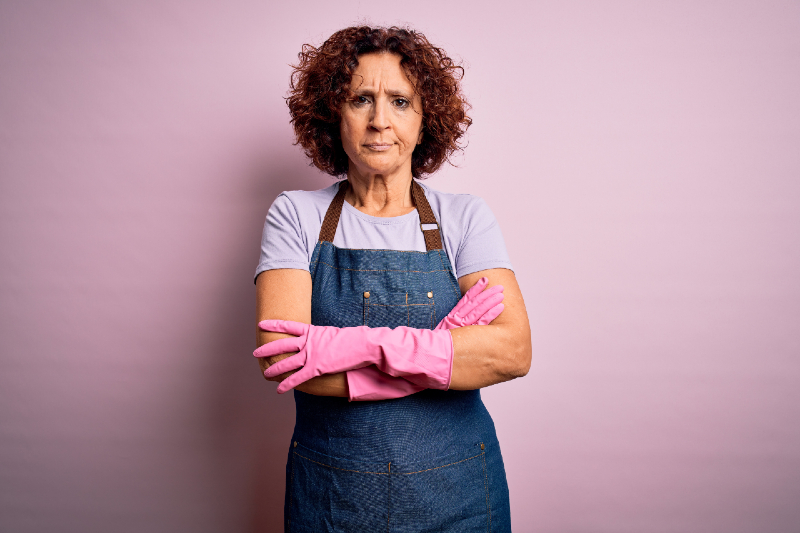
If you are a working class woman during a pandemic, there’s no such thing as rest.
Balancing work and family responsibilities has always been a challenge, but now more than ever, housework and “real” work are intertwined and there’s no clear line between the two.
As a result of the pandemic, women face a double burden – longer shifts at work and additional care work at home.
During the coronavirus lockdown, experts say domestic violence has increased substantially. Women suffer violence from their partners at home, while – in parallel – having online meetings and trying to prepare meals for their families.
If they have children, due to online teaching, they have to feed them during work hours and help them with their homework and learning. They are tired, but at the same time afraid to take sick leave because they are not sure if their contracts will be extended.
This (house)work is systematically being ignored and undervalued, and women’s economic and social contribution through it is not recognised. It is not even considered to be genuine work, just something that “women do”.
In addition, women are on the frontier of fighting the pandemic. Globally, women make up over 70% of workers in the health sector – including those working in care institutions. Nurses, care workers, pharmacists, cleaners, teachers, grocery store clerks – all are essential roles doing essential work.
This work has always been essential, but only now during the pandemic we started calling it so.
We need to take the current coronavirus pandemic as a wakeup call. We need to take this opportunity to imagine feminist alternatives for the prevailing order.
It is time that women lead the rethinking and redesigning of the world.
You may also like
-

“The LGBT Lobby” Is a Lie: Why This Old Fantasist Myth Still Fuels Real Violence
For decades, anti-LGBT+ voices have recycled the same tired story: that queer people form a
-

Portugal set to roll back trans self-determination law: what’s at stake?
Portugal, long seen as a frontrunner on trans rights in Europe, is on the verge
-
Ten Years After the Brussels Attacks, a City – and Its Queer Community – Still Carry the Shock
Ten years after the 22 March 2016 bombings at Brussels Airport and Maelbeek metro station,
-

Brussels Finally Has a Government. But What Does It Really Mean for Queer Rights?
After months of political deadlock, Brussels finally has a new regional government and a fresh
-

From Red Barricades to Brown Ballots: How Parts of the Gay Movement Drift Right
For decades, the “homosexual movement” imagined itself – and was imagined – as a natural
