
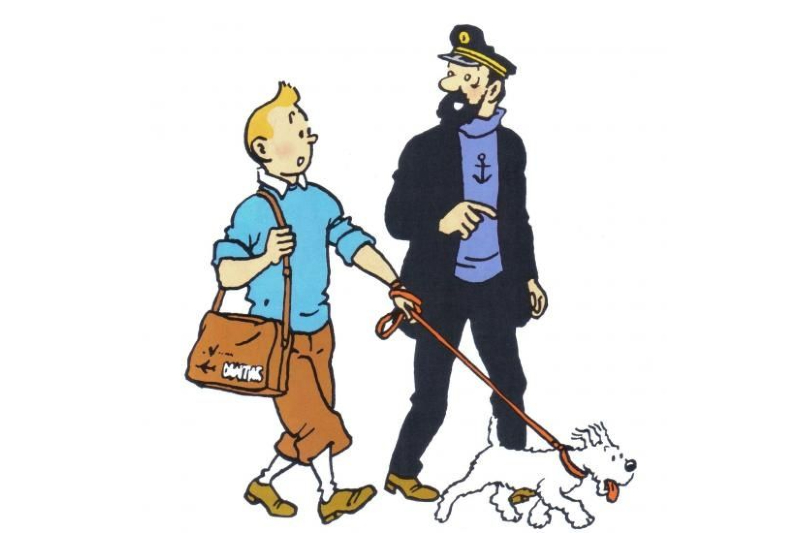
Tintin is one of the iconic cultural touch-points of Belgium, but just how queer is the intrepid reporter?
The creation of Tintin
First published in 1929, The Adventures of Tintin is the creation of Georges Remi, who wrote under the pen name Hergé.
Initially serialised in newspapers, Tintin quickly became one of the most popular comic-book characters of the 20th century – the stories were translated and read around the world.
Who is Tintin?
Tintin is a courageous young Belgian reporter and adventurer. His investigative journalism often leads him into dangerous mysteries.
He’s intelligent, inquisitive, and creative – never compromising his Boy Scout ideals. But we don’t ever get any backstory to Tintin. We never even find out if he has any other names apart from Tintin.
Other characters that regularly feature in the stories include Snowy, Captain Haddock, Professor Calculus, and Thomson and Thompson.
Is Tintin gay?
Tintin’s creator was silent on the question, and there’s nothing definitive included in the published adventures of the intrepid reporter. So, we need to put our Gaydar to work and see what we can deduce.
Sure, first impression is that Tintin is a well-groomed young twink with a cute dog, but is there more to it than that?
Tintin’s world is fairly homocentric. Sure, there’s a couple of female characters that appear throughout the adventures – but we’ve done the maths. Out of 350 characters featured, only eight of those are women and none of them are even remotely close to being any kind of romantic interest for Tintin.
Most fan-fiction conjecture centres around Tintin’s relationship with Captain Haddock. It’s not really clear how the two men met. Haddock emerges as a kind of wayward father-figure to the considerably younger Tintin – remember, we don’t know anything about Tintin’s actual parents. Tintin and Snowy move into Haddock’s home – Marlinspike Hall. Also, Tintin seems to be a calming influence on Haddock – Haddock goes from a hard-drinking foul-mouthed sailor into a caring and almost noble character.
We may not have conclusive evidence, but anything is possible.
You may also like
-
A Safe Space for Recovery: A New Chemsex Self-Support Group in Liège
Centre S and the Maison Arc-en-Ciel de Liège have launched a new monthly self-support group — a caring,
-

A New Safe Harbor in Brussels: RainbowHouse Launches LGBTQIA+ Info Point
RainbowHouse Brussels is opening a brand-new door for our communities – and it’s one that
-

Ten Years of Balkan LGBTQIA: A Decade of Fighting Borders, Discrimination and Silence
Created in Brussels by volunteers from across the Balkans, Balkan LGBTQIA has spent ten years
-

Queens of the South: When Nice Turns Carnival into Queer Celebration
On 27 February 2026, Place Masséna in Nice will shimmer a little brighter. Lou Queernaval,
-
Safer on Paper, Not in Reality”: ILGA Warns of Rising Anti-LGBTQIA+ Violence in Belgium
Belgium still ranks among Europe’s most protective countries for LGBTQIA+ people on paper – yet
