
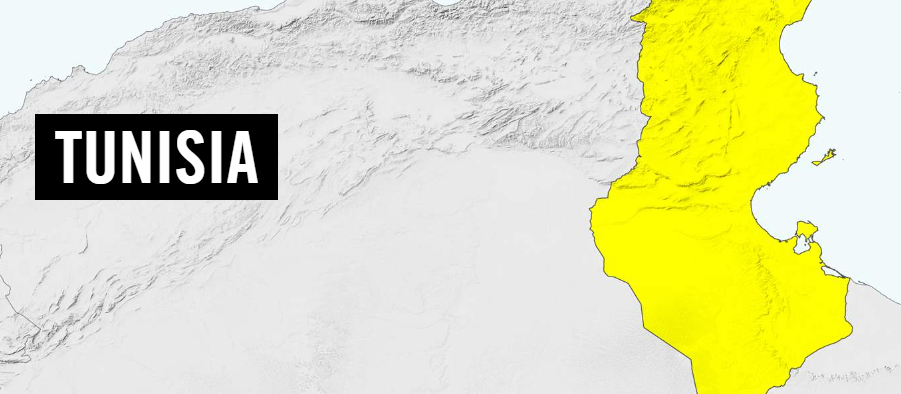
A Tunisian NGO has sounded the alarm over a new wave of arrests targeting LGBT+ individuals, highlighting ongoing concerns about state practice and legal repression based on sexual orientation and gender identity.
Since last week, 14 people—five on the southern island of Djerba and nine in the capital, Tunis—have been arrested in police operations involving body searches and phone inspections. The information comes from Saif Ayadi, program manager at Damj, the Tunisian Association for Justice and Equality, which advocates for LGBT+ rights.
According to Damj, these arrests follow a pattern: between September 2024 and the end of January 2025, the NGO documented 84 arrests of LGBT+ individuals. Several of those detained in the most recent operation have already been sentenced to prison terms ranging from one to two years, primarily under Article 230 of Tunisia’s Penal Code, which criminalizes same-sex relationships with sentences of up to three years in prison. In at least one case, the charge of “offending public morality” was also applied.
Ayadi denounced what he described as a “state practice” targeting people based on their gender identities and sexual orientations. “We are forced to stay in our homes, in our private spaces, without showing our identities, our activism, or our orientation,” he lamented. Damj further alleged that those arrested were subjected to mistreatment by police.
Tunisia’s Ministry of Interior could not be reached for comment.
International organizations have expressed growing concern. On Wednesday, Amnesty International called on Tunisian authorities to “immediately and unconditionally release all those detained because of their sexual orientation or gender identity, whether actual or perceived.” Hussein Baoumi, Amnesty’s deputy regional director for the Middle East and North Africa, said it was “time to end the use of morality as a weapon against LGBT+ individuals.”
Amnesty had already denounced earlier this year the escalation of repression against LGBT+ people in Tunisia, drawing particular attention to the continued use of forced anal examinations on men accused of homosexual relations—a practice condemned globally as inhumane and degrading.
Same-sex relations remain criminalized and heavily stigmatized across Tunisian society, and activists face a difficult environment characterized by arbitrary arrests, invasive searches, and public hostility. Human rights organizations are calling for urgent reforms and protection for those at risk within the country’s LGBT+ community.
You may also like
-
At Liège’s Queer Families Festival, Every Family Has a Story
The third edition of the Queer Families Festival takes place on 11 October at the
-
Türkiye’s LGBTQIA+ Community Faces a New Wave of Pressure
LGBTQIA+ people in Türkiye are living through a sharp escalation in state pressure: Pride events
-
Fiji Declares a National HIV Emergency — and the World Must Pay Attention
Fiji has declared a national HIV emergency after a dramatic rise in diagnoses: 2,016 people
-

“After”: Listening to LGBTQIA+ Survivors Speak About Intimate Partner Violence
On 8 October, Tels Quels invites people to Les Grands Carmes in central Brussels for
-

Balkan Trafik! Turns Brussels’ Bourse into a Three-Day Balkan Universe
After a year away, Balkan Trafik! returns to Brussels from 19 to 21 November 2026