
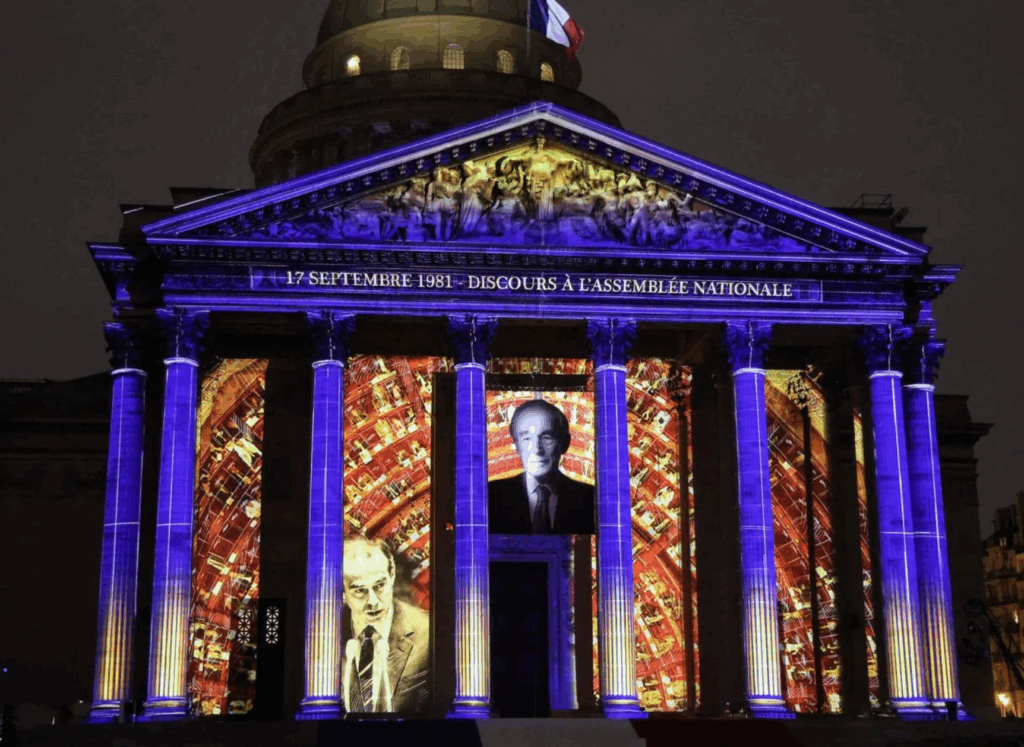
On October 9, 2025, France held a solemn ceremony to induct Robert Badinter into the Panthéon — not by moving his remains (which remain in Bagneux) but through a symbolic cenotaph carrying his advocate’s robe and chosen books. This date was chosen deliberately: it marks the 44th anniversary of the abolition of the death penalty in France, a cause that Badinter championed.
This moment is more than state ceremony; it’s a reminder that liberty, justice, and equality are not relics but living struggles.
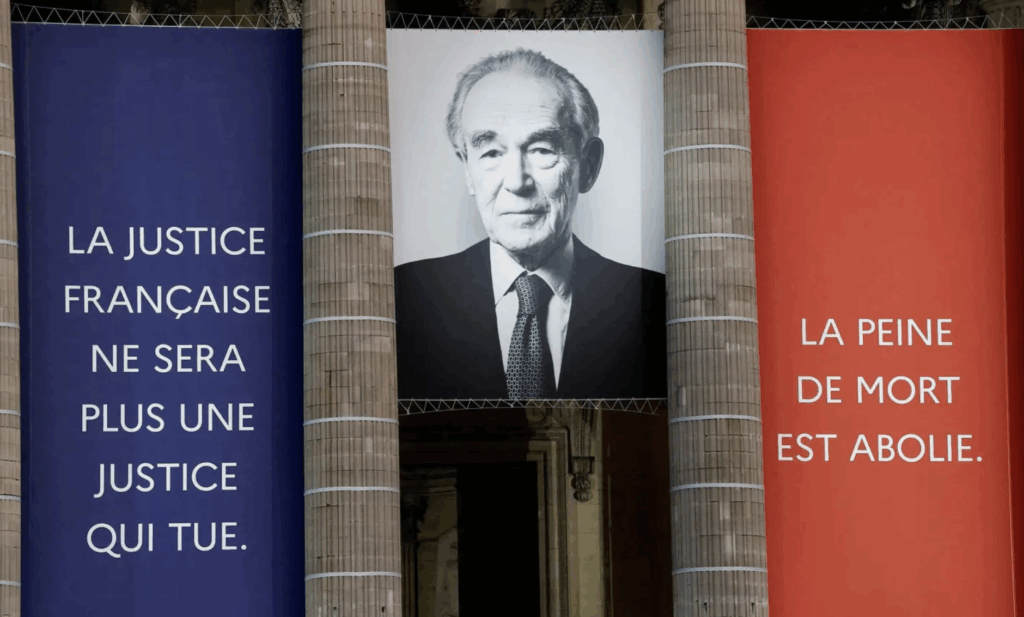
Robert Badinter’s name is indelibly linked to two historic reforms in France: the abolition of capital punishment in 1981, and the decriminalization of homosexuality in 1982.
His vision was powerful and simple: that the state has no place punishing love or difference. He once framed it as a “fundamental question” — that decriminalization of homosexuality must be rooted in principle. This was not a partial concession, but a demand for dignity.
He decried the “hunt for homosexuality” as an expression of intolerance and arbitrary enforcement. He believed the law should protect, not persecute.
Yet last week’s honoring came with a stark reminder: just hours before the ceremony, Badinter’s tomb in Bagneux was defaced with graffiti targeting his legacy — particularly his stances on the death penalty and queer rights. Such desecration underscores that homophobia, while pushed back, still lurks in public space.
From Brussels and across Europe, that tension feels familiar. We live in a society that has made progress — legal protections, cultural visibility, queer spaces — but also one where backlash, erasure, and violence persist. Queer and trans youth in Belgium still face barriers in schools. LGBTQIA+ workers still navigate discrimination. Our public spaces sometimes forget us, or deliberately exclude us.
Honouring Badinter invites us to keep pushing. His phrase — “the principle that is the decriminalization of homosexuality” — should not feel like a relic but a living demand. It means saying: love is not criminal. Identity is not punishable. Liberty is not negotiable.
So when France engraves Badinter’s name in its pantheon, we in Brussels can take heart — and take courage. Let this gesture be less an epitaph than fuel. Let us treat equality not as granted, but as ceaselessly claimed — together, across borders, across identities.
Because yes: equality is still being written. Let’s keep writing it.
You may also like
-

HIV diagnoses are falling in Belgium. The work is not finished.
Belgium recorded 603 new HIV diagnoses in 2025, a 7% decrease compared with 2024, according
-

Pop, drag and positive action: La Nuit Positive takes over Les Halles
Come for the voices. Stay for the queens. On Saturday 5 December 2026, La Nuit
-

Whose night? Our night: Brussels takes to the streets against gender-based violence
The night belongs to more than the people who feel safest in it. On Saturday
-

Remy Bony, Forbidden Colours : We are at a turning point!
As Europe faces an increasing backlash against Diversity and Inclusion, LGBTQI+ rights are becoming a
-
A bedside lamp, a shared kitchen, a new beginning: help build CADAL’s next queer home
The building is there. Now it needs the things that turn accommodation into a place