
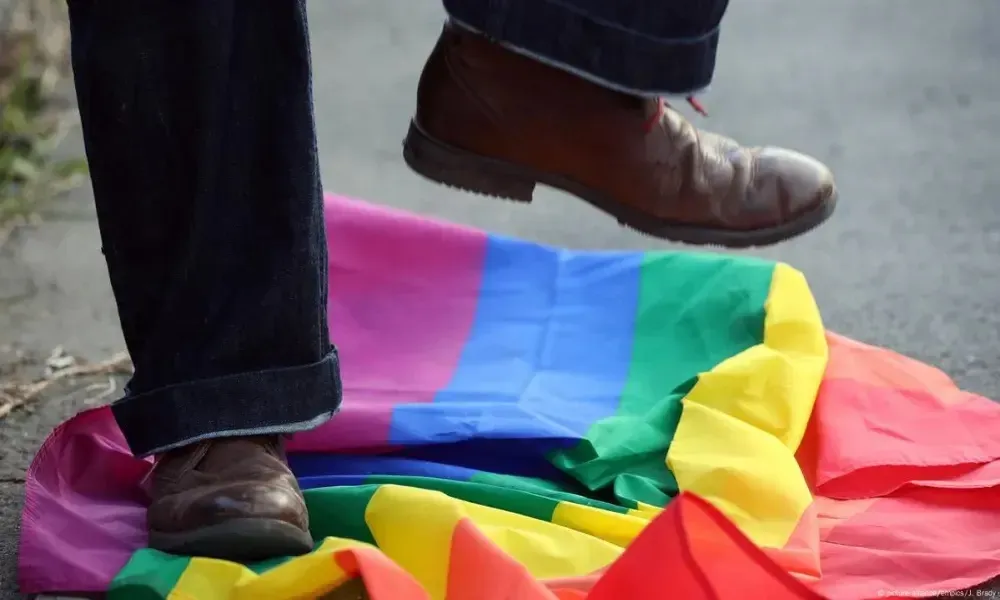
May 17, 2026- the International Day Against Homophobia and Transphobia – is approaching with a renewed sense of urgency. Across Europe, a growing movement to ban so-called “conversion practices” is gaining political weight and visibility, thanks to a citizen-led effort that refuses to let these harms remain in the shadows.
This year, a European Citizens’ Initiative (ECI) calling for an EU-wide ban passed the symbolic one-million-signature mark. That milestone pushed the conversation to the highest levels of the Commission. In October 2025, the EU unveiled its LGBTIQ+ Equality Strategy 2026–2030, championed by Belgium’s Commissioner for Equality, Hadja Lahbib.
Lahbib’s stance is unapologetic: “Conversion practices are not therapies. They cause harm and attack human dignity.” The Commission now recognises them as harmful interventions that can lead to long-term physical and psychological trauma. The message is simple: Europe can – and must – do better.
In Belgium, the fight is already concrete. The country adopted a law banning conversion practices, with criminal penalties for anyone who performs or encourages them. Belgium is now among the few EU Member States with a full ban in place — only eight countries offer such protection today. That uneven landscape is precisely why the ECI mattered so much: no one’s safety should depend on a postcode.
For the association Against Conversion Therapy (ACT), which launched the initiative, the past months have been intense. “We managed to speed up a Commission that initially wanted to deal with this issue at the end of its term,” co-president Mattéo Garguilo explained. In mid-December, ACT will meet Commissioner Lahbib in Brussels, accompanied by survivors including Benoît Berthe Siward and Drag Race France’s Mami Watta — voices that bring lived reality back to the political table.
ACT has also been invited to the European Parliament — a Parliament now tilted to the right and far right since the 2022 elections. Some MEPs, from the French left to liberals supporting Emmanuel Macron, have pledged their support. Others remain resistant, claiming the EU has no competence to legislate. The contradiction is striking: several conservative politicians publicly condemn conversion practices yet have repeatedly voted against banning them.
Despite the political friction, the EU’s 2026–2030 strategy sends hopeful signals. It commits to “taking appropriate measures to tackle conversion practices” and to commissioning a study analysing their prevalence and impact. Importantly, it also recognises the link with intersex and trans rights pledging action against intersex genital mutilation and forced medicalisation of trans people. In other words: Europe is beginning to address the broader ecosystem of bodily and identity-based harm.
Crucially, the Commission explicitly cites ACT’s initiative as a key element in shaping its approach. Community pressure is no longer at the margins: it is becoming a driving force.
Six months from now, when May 17 arrives, Europe may be one step closer to turning symbolic visibility into binding protection.
The road ahead is still uneven, but the direction feels clearer than ever.
You may also like
-

Brussels Rainbow Village: More Than a Night Out
Just steps from Brussels’ Grand Place, the Saint Jacques neighbourhood is a place to meet,
-

Thirty-seven and still dancing: La Demence opens its birthday weekend at Fuse
La Demence turns 37 with three nights in Brussels, beginning at Fuse on Friday 30
-

Pleasure, care and no lectures: a pocket guide to gay sexual health
Sexual health is about more than a test result. In Le Petit Guide de la
-
Mideterms Elections in US – The Closetocracy: when the closet becomes a question of power
The Closetocracy, now available on YouTube through The Young Turks, puts secrecy, sexuality and political
-

Beyond the rent rant: Bruscope puts Brussels life under the lens
Why does finding a home in Brussels feel so complicated? Who does the work that