

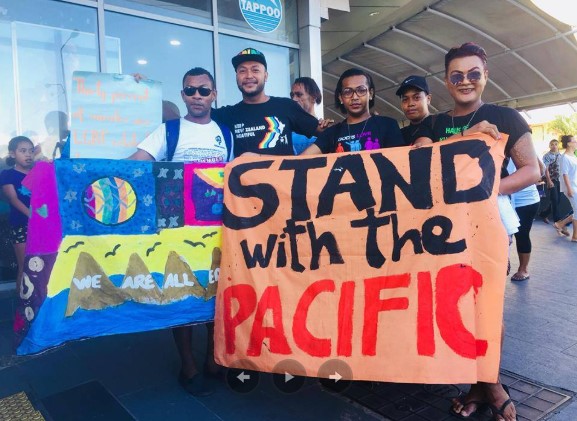
In Suva, when night falls, people line up around a converted minibus called Moonlight. It is not glamorous, but it is doing the work that matters most right now: getting HIV testing, condoms, counselling and referrals to people who might otherwise never walk into a clinic.
That is the image at the centre of Fiji’s HIV crisis — not a hospital tower or a ministerial press conference, but a mobile, community-led space built on trust. For queer readers, it is a story about how prevention survives when stigma is high, services are uneven and the people most at risk need care that meets them where they are.
A crisis moving faster than the system
Fiji has declared a national HIV emergency after reporting more than 2,000 new cases in a year, a rise of 26% compared with 2024. That pace is alarming in a country of under one million people, and it has pushed public-health actors to describe the epidemic as one of the fastest-growing in the world.
The numbers are only part of the story. The deeper problem is that the response has been lagging for years, while the epidemic has been accelerating since around 2019, especially among people exposed to injecting drug use and unprotected sex. In other words, the crisis is not only about a virus; it is about delay, inequality and a system that has had to catch up in public.
Why Moonlight feels radical
Moonlight matters because it changes the point of contact. Instead of asking people to come to a formal clinic, it rolls into neighbourhoods and turns testing into something immediate, ordinary and less frightening. Within a few hours, it can test dozens of people, link reactive cases to care and hand out prevention tools without making people jump through hoops.
That simplicity is the point. Rapid HIV testing has existed for years, but the real innovation here is social: peer educators, local trust and a setting that feels safe enough for people to show up. Moonlight works because it is not pretending shame doesn’t exist; it is building around it.
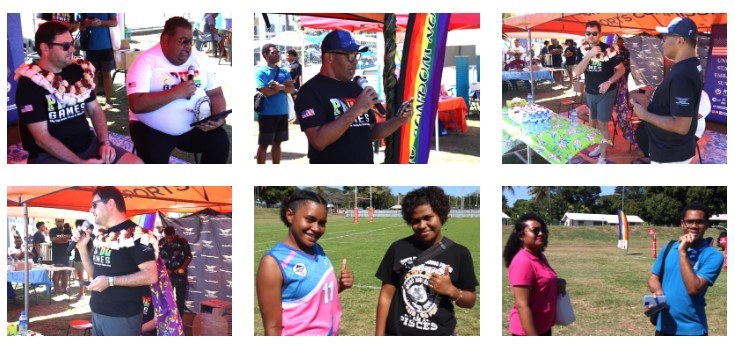
C – Rainbow Pride Fiji
Queer groups on the front line
What makes the Fiji response especially relevant for queer audiences is the presence of community groups like Rainbow Pride Fiji and the Survival Advocacy Network, which work with LGBTQ+ people and sex workers respectively. Their role is not decorative. They are the bridge between public health and the people public health often struggles to reach.
That matters in a country where stigma remains one of the biggest barriers to testing and disclosure. People living with HIV are still carrying fear alongside the diagnosis, and younger people in particular are often reluctant to speak up. In that context, community-led care is not an alternative to the health system; it is the health system’s missing half.
Drugs, harm reduction and urgency
The epidemic in Fiji has been intensified by injecting drug use, with methamphetamine and cocaine circulating through Pacific trafficking routes and feeding a sharper risk environment. Public-health voices, including UNAIDS-linked experts, have stressed the need for syringe exchange, safe access to equipment and harm-reduction approaches that do not rely on punishment or moral panic.
That is where the crisis feels painfully familiar to queer communities everywhere: when prevention is treated as shameful, the virus keeps moving. Fiji’s response is a reminder that the most effective HIV work is usually the least theatrical: peer support, low-threshold testing, stigma-free information and easy linkage to treatment.
A Pacific lesson with global resonance
Fiji is often photographed as a postcard paradise, but the reality here is much starker. The Moonlight Clinic shows what happens when public-health infrastructure has to be improvised around urgency, community knowledge and the willingness of local organisations to do the hard work.
For Ket, this is a queer story because it is about bodies, access and who gets to be safe. It is also a story about dignity: about refusing to let fear and silence decide who receives care. In Fiji, the fight against HIV is happening in a minibus because that is where trust can still be built.
Useful links
Rainbow Pride Fiji (official site not available in the search results; the organisation is cited in the article
Moonlight clinic / Fiji HIV crisis report
WHO Pacific update on Fiji’s HIV epidemic
UNAIDS / rapid assessment coverage
KET Magazine is a community‑driven, non‑profit magazine run by volunteers based in Brussels. Get in touch to share your thoughts or tell us about your activities. You can also promote your events on our website or support our work with a donation. Contact us at Info@ket.brussels.
You may also like
-
At Liège’s Queer Families Festival, Every Family Has a Story
The third edition of the Queer Families Festival takes place on 11 October at the
-

Türkiye’s LGBTQIA+ Community Faces a New Wave of Pressure
LGBTQIA+ people in Türkiye are living through a sharp escalation in state pressure: Pride events
-
Fiji Declares a National HIV Emergency — and the World Must Pay Attention
Fiji has declared a national HIV emergency after a dramatic rise in diagnoses: 2,016 people
-

“After”: Listening to LGBTQIA+ Survivors Speak About Intimate Partner Violence
On 8 October, Tels Quels invites people to Les Grands Carmes in central Brussels for
-

Balkan Trafik! Turns Brussels’ Bourse into a Three-Day Balkan Universe
After a year away, Balkan Trafik! returns to Brussels from 19 to 21 November 2026