
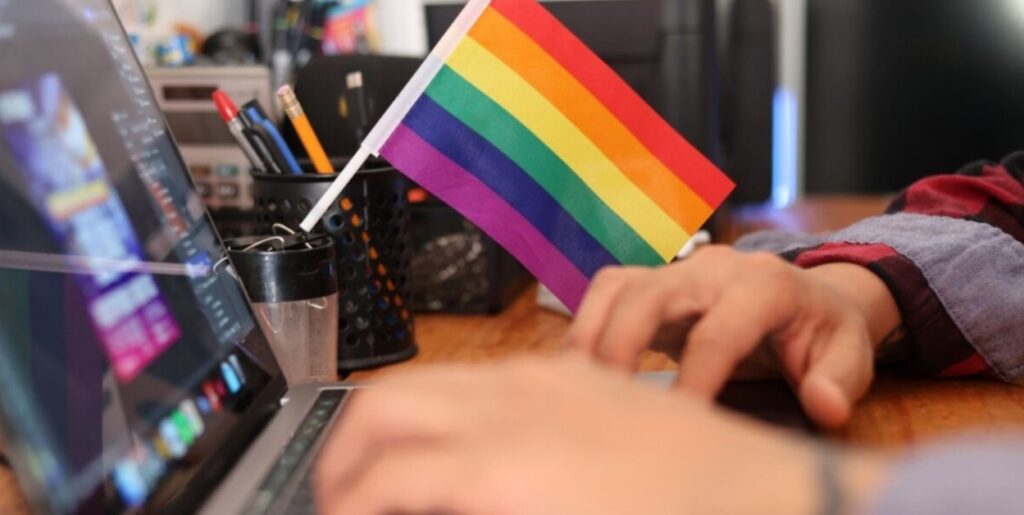
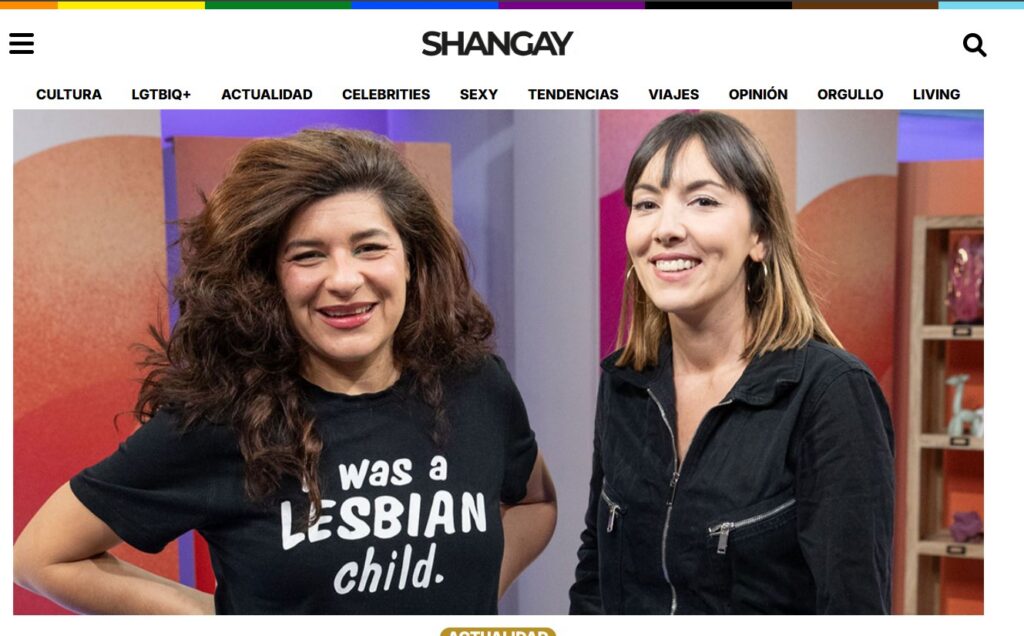
Homophobia doesn’t hit everyone in the LGBTQIA+ community in the same way. In a recent feature, Spanish queer magazine Shangay breaks down new data from FELGTBI+, Spain’s national LGBTQ+ federation, and the picture is sharp: the most economically precarious queer people are also the ones who face the highest levels of hate and violence.
Thanks to ELMA – the European LGBTQIA+ Magazines Association, ket can adapt and share this story from Spain, because it speaks directly to what many people experience in Brussels and across Belgium too.
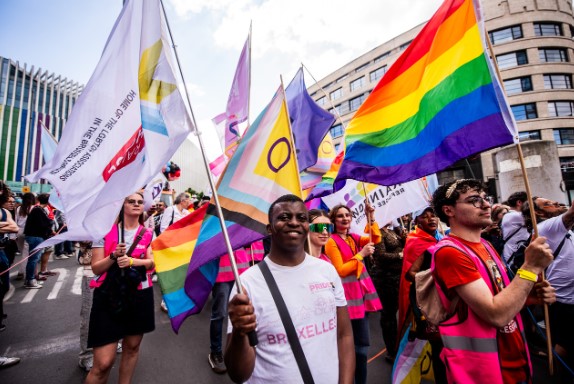
Hate on the rise
The study, based on a survey of around 800 LGTBIQ+ people, shows a clear spike in reported hate incidents over the last two years.
Between 2024 and 2026:
- reported harassment rose from about 20% to 36%
- discrimination from 23% to 29%
- and physical attacks from 7% to 22%.
More than half of respondents say they experienced at least one hate incident in a single year, and 22% report a physical assault. FELGTBI+ president Paula Iglesias uses one word repeatedly: urgency. She calls for a state‑level pact against hate speech and hate crime, arguing that when hate grows, protection must grow even faster.
The study’s main researcher, María Rodríguez, adds another layer: for many people, these aren’t one‑off shocks but repeated attacks. Around half of those who report incidents have experienced them three or more times in five years.
Poverty as a risk multiplier
Where the article really hits is when it maps these experiences onto income levels. The survey shows that LGTBIQ+ people living on less than 1,000 euros a month are significantly more likely to experience homophobia and transphobia than those with higher incomes.
Precarity becomes a risk multiplier:
- less room to move if the neighbourhood turns hostile
- more dependence on family or employers who might be queer‑phobic
- more time in public space and on public transport, where many attacks happen.
The study also highlights familiar patterns: trans people, young people, racialised people, disabled folks and those with lower levels of formal education or unstable housing are over‑represented among victims. It’s the intersection of class, race, gender, age and health that shapes who is most exposed.
More hate, but also more reporting
There is at least one encouraging trend: more people are filing complaints. According to the figures cited by Shangay, police reports of hate incidents against LGTBIQ+ people in Spain have almost doubled in two years, reaching around 35% of cases.
Researchers say that is not only because there is more hate, but also because there is more awareness and more trust in reporting mechanisms. Community organisations, campaigns and media coverage are all pushing people to say “enough”.
But not everyone can use those tools equally. Those who are most precarious, isolated or dependent on hostile environments (families, religious contexts, workplaces) still face the highest barriers to going to the police or to court.
From Madrid to Brussels
Read from Brussels, this Spanish snapshot feels uncomfortably familiar. Belgium often appears high in European rankings for LGBTQIA+ rights, but on the ground, it is queer and trans people who are poor, racialised, migrants, Roma, undocumented, disabled or in unstable housing who are most frequently targeted – and least protected.
That is the key lesson in Shangay’s piece: homophobia and transphobia are not just about attitudes, but also about social inequality. When we talk about “safe countries” or “queer‑friendly cities”, we need to ask: safe and friendly for whom, exactly? A cis gay man with a permanent contract and a central flat doesn’t navigate the same risks as a young trans woman of colour trying to survive on under 1,000 euros a month.
If Pride 2026 is serious about this year’s theme – “When Times Get Darker, We Shine Brighter” – then shining brighter also has to mean looking at class and poverty inside our own communities, not only outside enemies.
Source and network
This article is adapted from:
Ket is able to share and adapt this content thanks to ELMA – the European LGBTQIA+ Magazines Association, which connects queer media across Europe and makes it easier to amplify each other’s reporting.
KET Magazine is a community‑driven, non‑profit magazine run by volunteers based in Brussels. Get in touch to share your thoughts or tell us about your activities. You can also promote your events on our website or support our work with a donation. Contact us at Info@ket.brussels.
You may also like
-

Türkiye’s LGBTQIA+ Community Faces a New Wave of Pressure
LGBTQIA+ people in Türkiye are living through a sharp escalation in state pressure: Pride events
-

Fiji Declares a National HIV Emergency — and the World Must Pay Attention
Fiji has declared a national HIV emergency after a dramatic rise in diagnoses: 2,016 people
-

Balkan Trafik! Turns Brussels’ Bourse into a Three-Day Balkan Universe
After a year away, Balkan Trafik! returns to Brussels from 19 to 21 November 2026
-

In Myanmar, the Spirit Wives Keep Dancing
Near Mandalay, in a country torn apart by civil war, the annual Taungbyone festival has
-

Five Equality Champions Remind WorldPride What Queer Progress Looks Like
On 5 August, during the WorldPride Human Rights Conference in Amsterdam, UNDP and ILGA World