
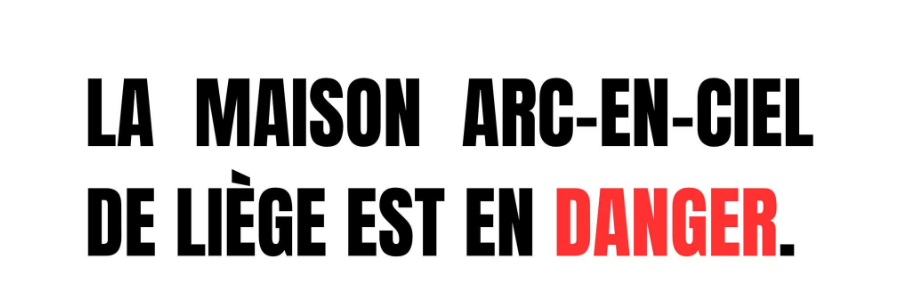
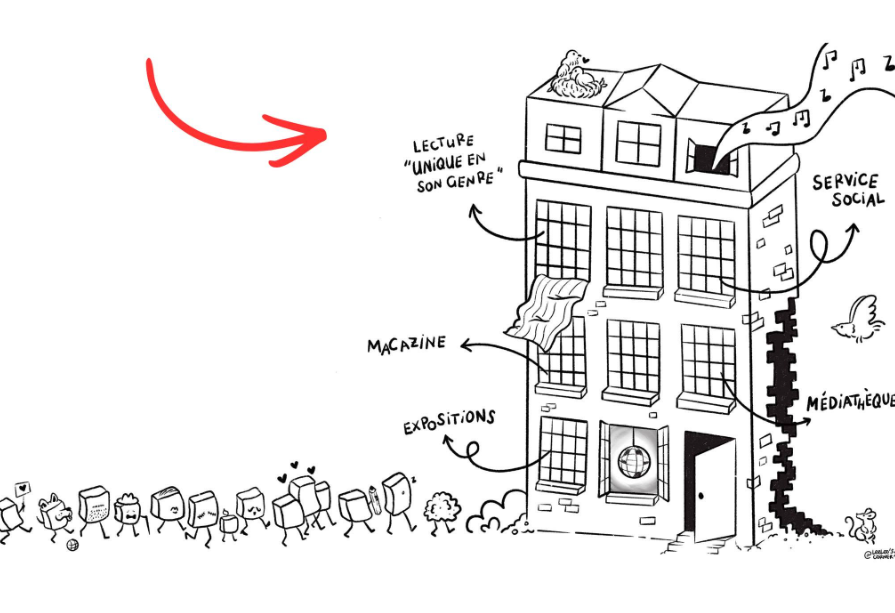
Maison Arc-en-Ciel de Liège, a vital LGBTQIA+ community hub in Wallonia, is facing growing financial pressure and has launched a donation appeal. The organisation provides social support to around 450 people each year while hosting hundreds of mostly free events, meetings and community initiatives. Its future matters far beyond Liège: when queer spaces become fragile, access to safety, connection and support becomes fragile too.
A queer home under pressure
Maison Arc-en-Ciel de Liège is more than a venue. It is one of those places where LGBTQIA+ people can arrive as they are: to ask for help, meet others, join a conversation, dance, sing karaoke, attend an exhibition, or simply spend an evening without having to explain themselves.
But the organisation is now warning that its financial resources are no longer enough to maintain the house as people know it. Like many publicly subsidised services and non-profit organisations, it is continuing its work in increasingly precarious conditions, despite having already introduced internal cost-cutting measures.
The association is therefore launching a donation campaign to help secure its future. The message is clear, but not dramatic for the sake of it: a large, established LGBTQIA+ organisation finding itself in this position says something about the wider vulnerability of community infrastructure in Belgium.
A space built through collective care
The Maison Arc-en-Ciel’s work rests on a small but committed team: six employees, supported by a 13-person board and around one hundred volunteers. Together, they keep a busy social, cultural and community programme alive throughout the year.
Its social service supports nearly 450 people annually. That figure matters because queer community centres are often a first door to knock on when someone is dealing with isolation, discrimination, family conflict, housing insecurity, administrative questions or simply the need to speak to someone who understands.
This kind of support cannot be reduced to a number on a balance sheet. It is relational, practical and often discreet: the reassurance of being welcomed, the possibility of being referred to the right service, or the chance to find people who share an experience without demanding that anyone disclose more than they want to.
Hundreds of free ways to belong
Every year, hundreds of events take place at the Maison Arc-en-Ciel de Liège. Many are free, and that is a deliberate social choice rather than a minor detail.
The programme includes discussion groups, talks, exhibitions, community aperitifs, karaoke nights, garden parties and the LGBTQIA+ Tea Dance. Some gatherings are festive and visible; others are quieter, creating room for people to connect, reflect or simply exist in a queer-affirming environment.
Free access helps ensure that community life is not reserved for people with disposable income. For queer people facing economic pressure — including young people, students, people without family support, migrants, disabled people, trans and non-binary people navigating discrimination in employment, or those living with precarious housing — a no-cost event can make the difference between participating and staying isolated.
The house also welcomes dozens of other associations looking for space and support to run their own projects. In that sense, it does not only host a programme: it helps make an ecosystem possible.
Why this matters for LGBTQIA+ people
Queer spaces are sometimes imagined as nightlife, celebration or visibility moments. Those things have their place, of course. But a community house such as Maison Arc-en-Ciel de Liège also represents something more durable: a safer, accessible base for mutual aid, culture, organising and everyday belonging.
Its potential loss or reduction would not only mean fewer events on a calendar. It could mean fewer low-threshold support routes, fewer places for smaller groups to meet, and fewer opportunities for people across generations and identities to build solidarity.
This is particularly important at a time when LGBTQIA+ rights and visibility remain unevenly experienced. Legal progress does not automatically erase violence, exclusion, racism, transphobia, biphobia, ableism or economic inequality. Community organisations help translate abstract rights into lived support.
For Brussels audiences, the appeal is also a reminder that queer life in Belgium does not begin and end in the capital. Liège has its own histories, communities and cultural energy, and sustaining regional queer spaces strengthens the wider Belgian LGBTQIA+ network.
A donation appeal for the future
Maison Arc-en-Ciel de Liège is asking people to contribute in whatever way they can: through a donation, by sharing the appeal, or by connecting the organisation with potential supporters. The call is intentionally collective. No single person is expected to carry the whole weight — but many small gestures can help keep a shared house standing.
Supporting such a place means supporting a door that can remain open: for someone seeking social guidance, a volunteer building a project, an association needing a room, or a person looking for a first moment of recognition.
Practical information
Organisation: Maison Arc-en-Ciel de Liège
How to donate: Bank transfer
IBAN: BE78 0682 3265 0786
Communication: DON
Donations will help support the continuation of the organisation’s social, cultural and community work in Liège.
A queer home is never just a building. It is made of care, time, welcome and the possibility of finding one another — and that is worth protecting.
KET Magazine is a community‑driven, non‑profit magazine run by volunteers and based in Brussels. You can find our other music and nightlife stories on ket.brussels, and you can always write to us to share your projects or pitch a story: info@ket.brussels
You may also like
-
At Liège’s Queer Families Festival, Every Family Has a Story
The third edition of the Queer Families Festival takes place on 11 October at the
-
“After”: Listening to LGBTQIA+ Survivors Speak About Intimate Partner Violence
On 8 October, Tels Quels invites people to Les Grands Carmes in central Brussels for
-
Garden Party de la Maison Arc-en-Ciel de Liège
Liège’s Maison Arc-en-Ciel is bringing back its annual Garden Party on Saturday 5 September 2026.
-
IGLYO Wants to Hear From You: Europe’s Biggest LGBTQI School Survey Is Back
IGLYO, the Brussels-based international LGBTQI youth network, has just launched the second edition of its
-
Back To Brussels? BGS Is The LGBTQI+ Sports Community Waiting To Meet You
September means fresh starts, new routines and, for a lot of people landing in Brussels