

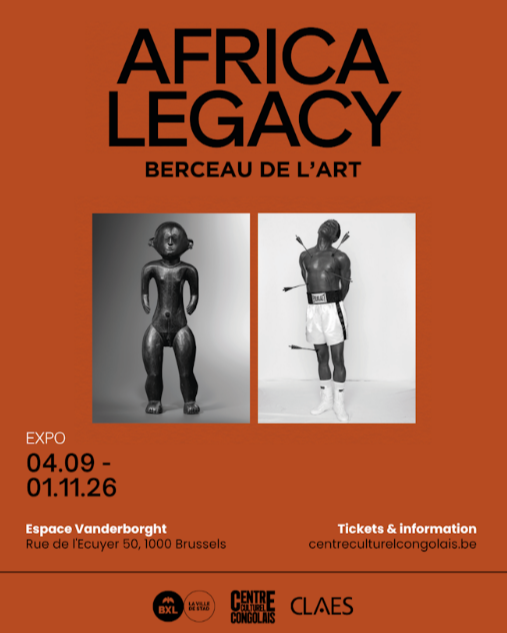
More than 250 works, 22 countries and a conversation across centuries: Africa Legacy – Berceau de l’Art is on view at Brussels’ Espace Vanderborght until 1 November 2026. Curated by Didier Claes, the exhibition brings classical and contemporary African art into the same frame, tracing connections between inherited forms and new visual languages. For queer audiences interested in representation and whose stories get centre stage, it offers a chance to look beyond familiar versions of art history.
Africa at the centre, not in the margins
The starting point of Africa Legacy is straightforward: African creativity belongs at the heart of the story of world art, not in a supporting role. Presented with the support of the City of Brussels and the Centre Culturel Congolais, the exhibition brings together loans from private and institutional collections in Africa and Europe.
Its curator, Didier Claes, was born in Kinshasa and is based in Brussels. His stated ambition is not to rewrite African art history, but to offer a fresh perspective on it — one that begins with looking, feeling and recognising the place of African creation within a shared artistic history.
That approach gives the exhibition its central thread: continuity. Rather than treating historical objects and contemporary works as separate worlds, the show invites visitors to follow forms, symbols and ideas as they move between generations.
Masks, photographs and more than one story
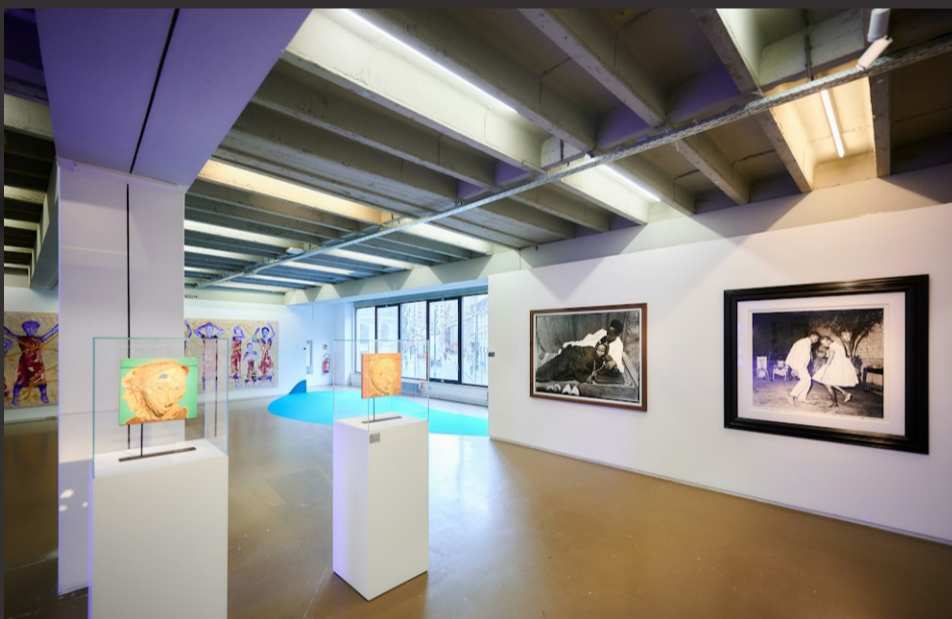
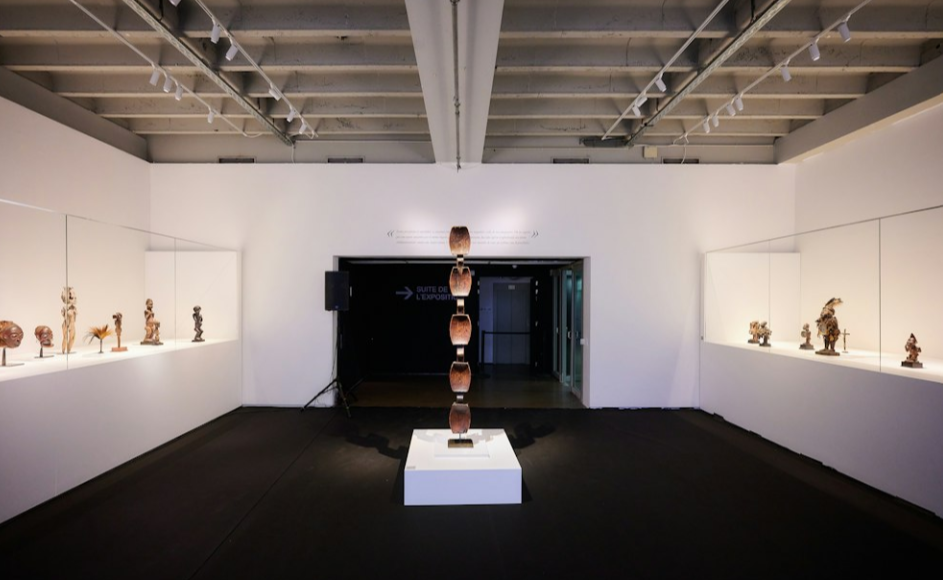
The exhibition spans sculpture, masks, ritual objects, painting, photography and contemporary installations. Its classical works introduce visual traditions shaped by different cultural, social and spiritual contexts; its contemporary selection explores how artists develop new forms and narratives in dialogue with those inheritances.
The organisers list 55 artists and 22 countries represented. That breadth matters: “African art” is a useful umbrella, but it should not flatten distinct practices into a single aesthetic or identity. The range of media offers visitors several ways into the exhibition, whether through a sculpted form, a photographic image or the relationship between works from different periods.
There is also a productive tension in the title, Berceau de l’Art — “Cradle of Art”. It looks towards origins, while the contemporary programme insists that this is an ongoing story. The exhibition’s premise is not simply that African cultures inspired others, but that African artists continue to shape the visual world themselves.
A queer perspective, without forcing the label
Africa Legacy is not advertised as an LGBTQIA+-themed exhibition, and its published programme does not identify a dedicated queer strand. Its relevance to KET readers lies elsewhere: in the questions it opens about representation, inheritance and who gets recognised as a creator rather than treated as a source of inspiration.
For LGBTQIA+ audiences, those questions matter today because cultural belonging also involves seeing whose experiences and imaginations are allowed to shape the bigger picture.
That does not make African and queer experiences interchangeable. Nor should a queer reading mean assigning identities to artists or objects. Instead, it offers a way of approaching the show with curiosity: who tells the story, what gets passed down, and how much room is there to make something new?
A Brussels exhibition that keeps the conversation going
The Centre Culturel Congolais extends the exhibition through a programme of talks on art, memory, influence and contemporary creativity. With the show entering its final weeks, two sessions remain on the published schedule.
On 23 October at 6pm, L’Afrique, nouvelle puissance créative ? examines how African creators are shaping music, design, cinema and architecture. On 30 October at 6pm, Et si l’art africain était le prochain grand investissement ? turns towards collecting, investment and the art market. Both require a valid exhibition ticket and advance registration, with limited places.
The second topic adds another layer to the visit: the relationship between cultural recognition and financial value. Looking at art and discussing its market are different activities, but placing them within the same programme leaves room to consider how they intersect.
For visitors who prefer a conversation in front of the works, Sunday guided tours are offered in English at 11am and French at 4pm. Registration takes place at reception, and an exhibition ticket is required.
Practical information
- Exhibition: Africa Legacy – Berceau de l’Art.
- Dates: 4 September–1 November 2026.
- Venue: Espace Vanderborght, Rue de l’Écuyer 50, 1000 Brussels.
- Opening hours: Wednesday–Sunday, 11am–6pm, with late opening on Fridays until 9pm. Closed Mondays and Tuesdays.
- Admission: €12 standard; €6 for students, visitors with reduced mobility and visitors aged 65+; €8 per person for groups of eight or more. Children aged 0–12 enter free. Supporting documents are required for the listed reduced rates.
- Guided tours: Sundays, 11am–noon in English and 4–5pm in French. Places are limited; register at reception with a valid exhibition ticket.
- Accessibility: The organiser confirms access for people with reduced mobility. Assistance animals are permitted. For specific access requirements, contact the team before visiting.
- Getting there: The organiser lists De Brouckère as the nearby metro and tram stop.
- Payment: Tickets can be purchased online or at reception, subject to availability. On-site payment is by Bancontact only.
- Information and booking: Visit the Centre Culturel Congolais exhibition page or the visit.brussels listing.
There is still time for a slow Sunday visit or a Friday evening among the works — and for an encounter with art history that leaves a few familiar assumptions at the door.
KET Magazine is a community‑driven, non‑profit magazine run by volunteers and based in Brussels. You can find our other music and nightlife stories on ket.brussels, and you can always write to us to share your projects or pitch a story: info@ket.brussels
You may also like
-

Adam La Nuit: Making Music Between Worlds
For Adam La Nuit, belonging doesn’t mean choosing one world over another. The Belgian-Congolese artist
-
NAYA brings soul, soft edges and a little “Bagarre” to Café Flora
Brussels-based singer-songwriter NAYA releases her debut EP, Bagarre, on 30 October 2026, with a release
-
Inuit Art in Brussels: Women, Gender and Arctic Life
Women artists take a leading role in “Inuit: Impressions of the Canadian Far North” at
-
Escher in Brussels: Who Said Reality Had to Behave?
Staircases refuse to play by the rules, birds become fish, and two hands draw each
-
Tels Quels Talent Show: Brussels’ Queer Voices Take the Mic
On Friday 16 October, the Tels Quels Talent Show brings live queer creativity to Les