
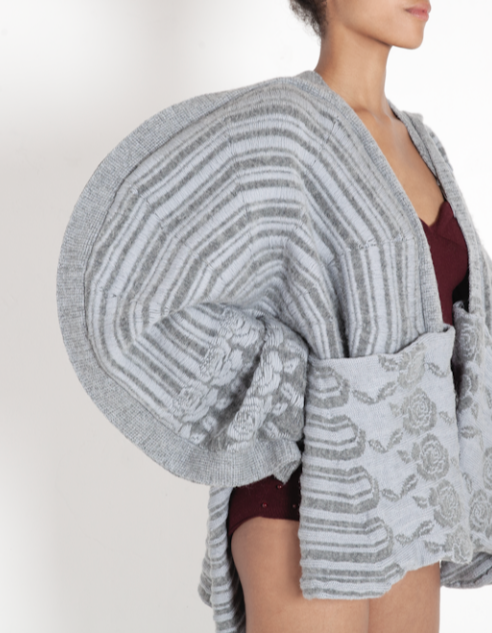
Reclaimed cardboard turned into textiles, a rural interior reimagined in ceramics: Brussels’ newest designers are finding possibilities in unexpected places. Already underway at MAD Brussels, Future Generation: The MAD Graduation Show 2026 continues until 12 December, leaving a few more weeks to discover 13 projects by 14 graduates. The free exhibition brings together talent from seven Brussels institutions across fashion, textiles, interiors and product design. For queer audiences interested in how we dress, inhabit spaces and express ourselves, it offers a chance to question the familiar — without needing a design degree to join the conversation.
Not opening soon. Worth seeing now.
If Future Generation has been sitting on your autumn to-do list, this is your reminder: the exhibition opened on 1 October and runs until Saturday 12 December. As of 20 November, there is still time to visit, but this is no longer an opening announcement.
The show presents the winners of the MAD Graduation Prize 2026, bringing their final-year projects out of school and into a public exhibition. Fourteen graduates contribute thirteen projects, including a joint interior-design project by Imane Ben Amar and Jihan Afrikh.
The participating institutions span Brussels’ creative education landscape: the Académie royale des Beaux-Arts, College of Art and Design, Ateliers Saint-Luc, École supérieure des arts Saint-Luc, Haute École Francisco Ferrer, La Cambre and LUCA School of Arts. Rather than presenting one school’s signature style, the exhibition puts different disciplines and approaches alongside each other.
Cardboard, ceramics and a second look at everyday things
Two of the exhibition’s starting points are particularly intriguing: a ceramic installation evoking a rural interior, and textiles made from reclaimed cardboard collected in Brussels. Both suggest a willingness to reconsider materials and settings that might otherwise escape attention.
That is a useful way into the show. Instead of asking whether something looks like “the future”, consider what it makes you notice about the present: the materials circulating through the city, the objects that surround us, the spaces we inherit.
The selection extends from ceramics and scenography to industrial design, knitwear and fashion accessories. Beatrice Meunier represents ceramics, Dominic Hughes scenography and Arwen Coïc industrial design, while Mira Van Den Neste and Florian Delmotte contribute work from ArBA’s knitting and textile programmes.
These are different practices, not thirteen variations on a single trend. The interest lies in seeing what happens when their questions share a room.
Fashion is part of the picture — not the whole story
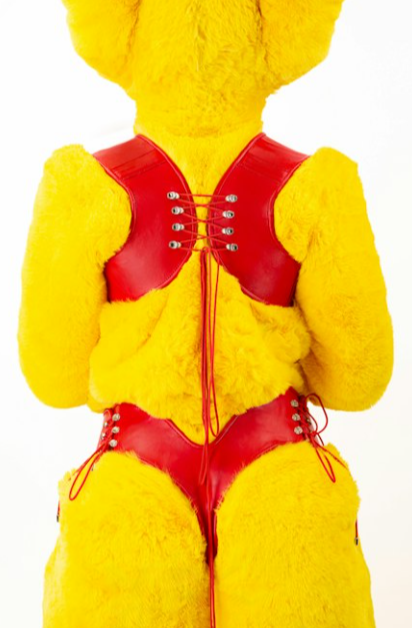
The fashion and accessories selection includes Claudia Mbutshu, Léa Destercke Hock, Étienne Madamet, India Coppolecchia and Celia Giannini. Their educational backgrounds range from fashion and accessory design to an eco-concept fashion programme. Léo Seignez adds another textile-design perspective.
That breadth keeps the exhibition from becoming simply a parade of outfits. Clothing sits within a wider conversation about making, alongside interiors, objects and materials.
For visitors, it offers several entry points. You might arrive for fashion, then find yourself paying closer attention to a textile structure or an unfamiliar object. A graduation show can be valuable precisely because the names are not yet familiar: the work has to begin the introduction.
A queer lens, without assigning queer identities
Future Generation is not advertised as an LGBTQIA+-specific exhibition. The programme does not establish the graduates’ sexualities or gender identities, and there is no reason to make those assumptions.
Its relevance to KET readers lies elsewhere. Clothes, interiors and everyday objects help shape how people present themselves and occupy space. Looking closely at design can mean asking whose body, habits or way of living has been treated as the default.
For LGBTQIA+ people today, that matters because self-expression depends not only on being visible, but also on having room to dress, live and make a home beyond inherited expectations.
That is an editorial route into the exhibition, not a claim that every project addresses gender or sexuality. The pleasure is in bringing your own questions while allowing the work to surprise you.
Free entry, with one thing to organise first
MAD makes the exhibition free to visit, but advance reservation is required. It is an important detail for anyone imagining a completely spontaneous stop while passing through the neighbourhood.
The venue also presents Icons – 20 Years Designer of the Year during the same autumn period, placing the graduate exhibition alongside a look at more established design practices. It offers an opportunity to encounter different career stages in the same visit, without treating early work as merely a rehearsal for something more important.
Free admission removes the ticket-price barrier, but it does not answer every access question. The exhibition information does not detail step-free routes, seating, accessible toilets or sensory support, so visitors who need those arrangements should confirm them with MAD.
Practical information
- Exhibition: Future Generation: The MAD Graduation Show 2026.
- Remaining run: Until Saturday 12 December 2026; the exhibition has been open since 1 October.
- Opening hours: Wednesday–Saturday, 11am–6pm. Closed Sunday–Tuesday.
- Venue: MAD Brussels, Place du Nouveau Marché aux Grains 10 / Nieuwe Graanmarkt 10, 1000 Brussels.
- Admission: Free, with advance reservation required.
- What is on show: Thirteen graduation projects by fourteen laureates from seven Brussels institutions.
- Booking and updates: Use the official MAD exhibition page.
- Accessibility and languages: The event overview does not specify detailed access provisions or all exhibition-text languages. Check with the venue before visiting if these affect your plans.
There is still time to meet these projects before the exhibition closes. A familiar material, an unfamiliar name, a different way of seeing what surrounds you: that is more than enough reason to step inside.
KET Magazine is a community‑driven, non‑profit magazine run by volunteers and based in Brussels. You can find our other music and nightlife stories on ket.brussels, and you can always write to us to share your projects or pitch a story: info@ket.brussels
You may also like
-
Who’s shaping you? Sous Influence takes over a Brussels townhouse
Your family, your feed, your beliefs: how much of who you are did you actually
-
Africa Legacy: a different way to look at art history in Brussels
More than 250 works, 22 countries and a conversation across centuries: Africa Legacy – Berceau
-
Inuit Art in Brussels: Women, Gender and Arctic Life
Women artists take a leading role in “Inuit: Impressions of the Canadian Far North” at
-
Escher in Brussels: Who Said Reality Had to Behave?
Staircases refuse to play by the rules, birds become fish, and two hands draw each
-
Inuit Art Takes Centre Stage at Brussels’ Art & History Museum
From 16 October 2026 to 18 April 2027, the Art & History Museum in Brussels