
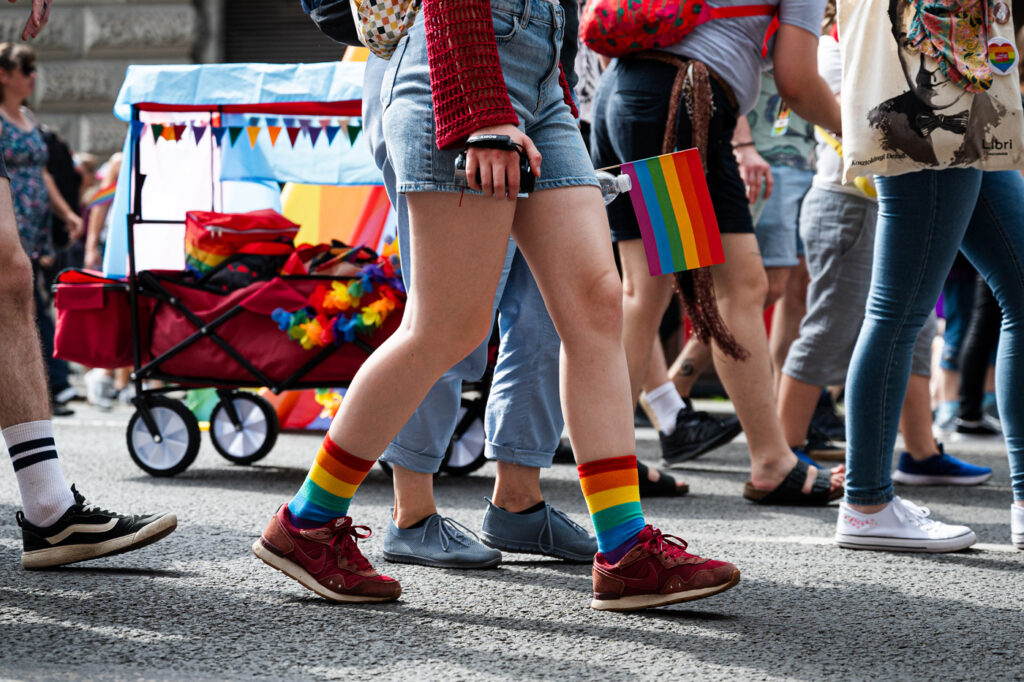
This year, Budapest Pride marks its 30th anniversary. For three decades, Hungary’s LGBTQIA+ community has marched through the capital with courage, resilience, and hope. But instead of celebrating this milestone, 2025 brings with it one of the darkest moments in the history of Hungarian queer activism.
In March, the Hungarian Parliament voted in favour of a law that effectively bans Pride marches — making Hungary the only EU country to legally restrict LGBTQIA+ gatherings. This is not just a symbolic gesture: it’s a deliberate attack on queer visibility, freedom of expression, and the right to assembly.
And yet, Budapest Pride will go ahead on June 28. Because the law — as oppressive as it is — doesn’t criminalize participation. According to TASZ, a leading Hungarian civil rights organisation, taking part in the march may be considered a regulatory offence, but not a criminal act. At worst, participants face a fine ranging between €17 and €510. Activists have already announced legal aid and solidarity funds to help those who might be targeted.
What the government hopes is that fear will keep people away. But as TASZ argues, the more of us who show up, the less effective the intimidation becomes. Visibility is protection. Numbers are power.
That’s why this anniversary matters more than ever. Pride in Budapest isn’t just for Hungarians — it’s a frontline in the ongoing struggle for LGBTQIA+ rights in Europe. What happens there sets a precedent. If a Pride march can be banned in an EU capital without a loud international response, what’s stopping others from following?
So maybe this year, instead of just watching from afar, we should go. To stand with the Hungarian LGBTQIA+ community. To say that queer lives — and queer joy — will not be legislated out of existence. And to remind those in power that thirty years of Pride cannot be erased with one law.
Budapest. June 28. Be there!
You may also like
-

Garden Party de la Maison Arc-en-Ciel de Liège
Liège’s Maison Arc-en-Ciel is bringing back its annual Garden Party on Saturday 5 September 2026.
-
IGLYO Wants to Hear From You: Europe’s Biggest LGBTQI School Survey Is Back
IGLYO, the Brussels-based international LGBTQI youth network, has just launched the second edition of its
-

Back To Brussels? BGS Is The LGBTQI+ Sports Community Waiting To Meet You
September means fresh starts, new routines and, for a lot of people landing in Brussels
-

Sensuelle: A Softer Space to Explore Desire, Connection and Self-Expression
Sensuelle is creating warm, women-centred spaces where sensuality can be explored without performance pressure, shame
-

Freedom & the pleasure to challenge yourself: the underground scene by CAIÃO
Techno, electronic, and baile funk collide with a unique stage presence that pulls us in!