
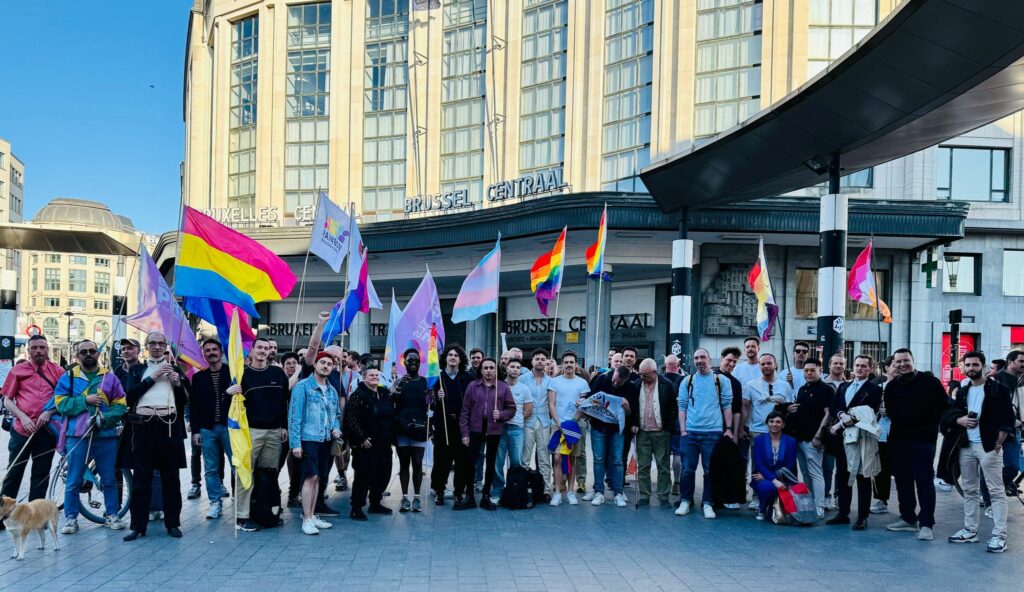
On Friday, April 4, a demonstration was held at the Carrefour de l’Europe in central Brussels to show solidarity with the LGBTQIA+ community in Hungary. The event was co-organized by members of various political parties, who united to denounce the rise of hate speech and anti-LGBTQIA+ policies promoted by Viktor Orbán’s government.
As Hungary continues to restrict the rights of queer people, the organizers expressed their concern over the growing influence of far-right rhetoric—not only in Europe but also in the U.S., where the return of homophobic discourse in Donald Trump’s presidential campaign is raising alarms.
More than 100 people joined the gathering, sending a powerful message that the defense of human rights transcends political divides.
The demonstration was initiated by:
Tarik Mnissar (Parti Socialiste), Julien Dubois (Mouvement Réformateur), Matthias Loose (Les Engagés), Thomas Anciaux (Vooruit), and the Jongliberalen.
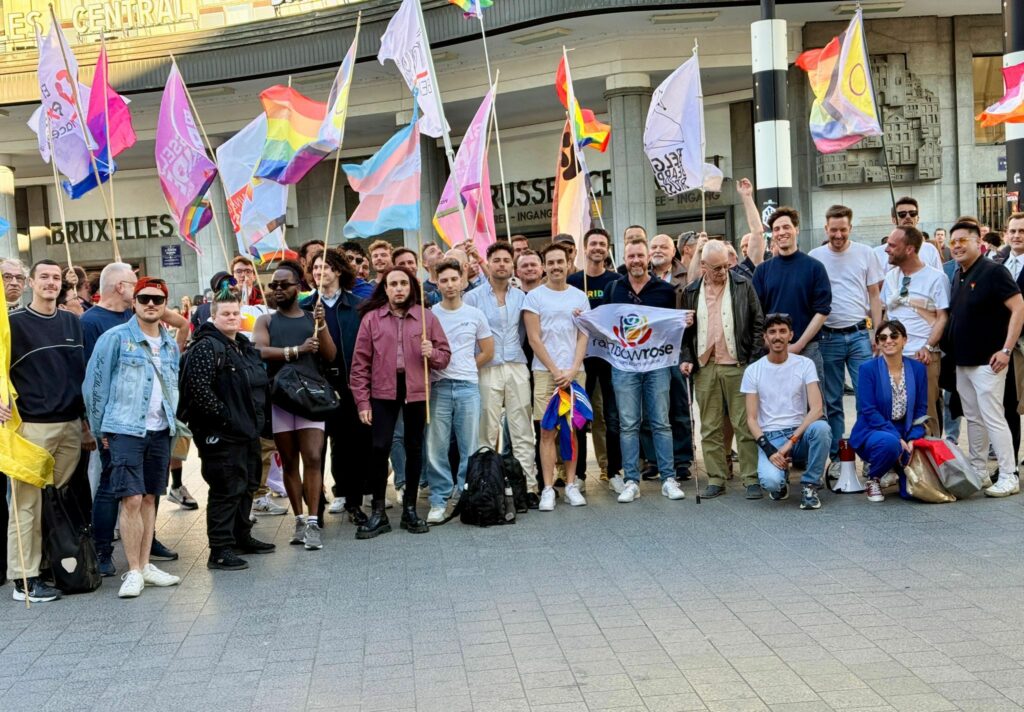
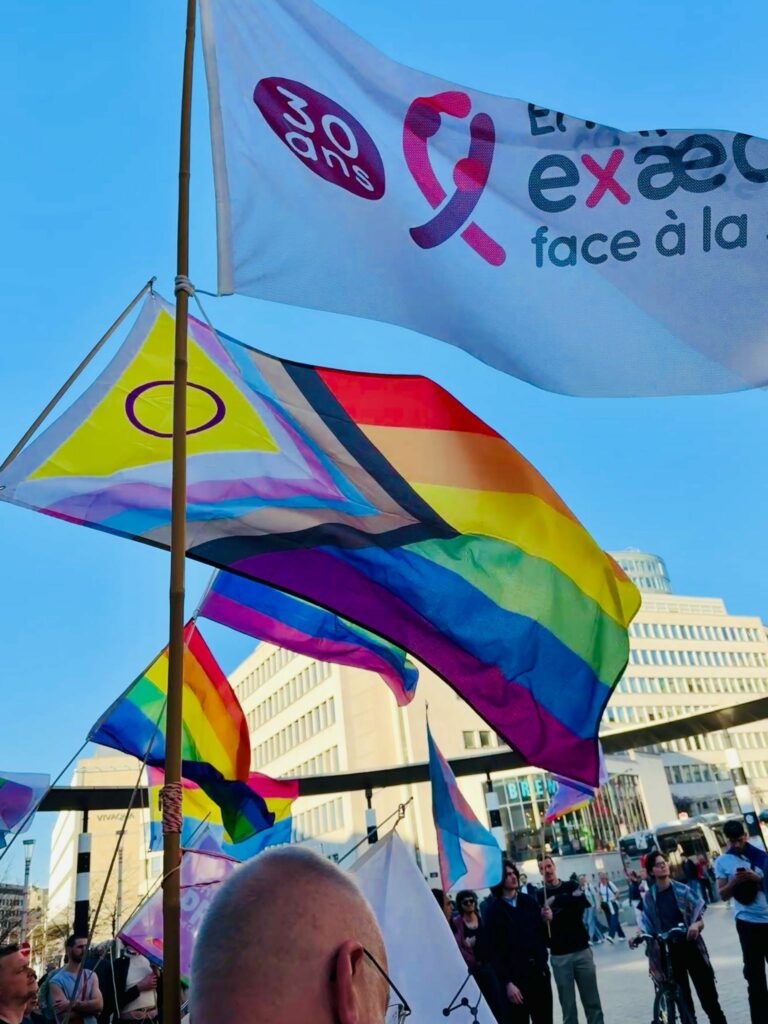
Several LGBTQIA+ organizations were present to support the initiative, including RainbowHouse Brussels, Ex Aequo, Brussels Rainbow Village, Belgium Bear, Rainbow Friends, Visite Particulière and many engaged activists.
This moment of unity between citizens, activists, and political leaders underlined a shared commitment: in Belgium and across Europe, the fight for LGBTQIA+ rights continues—and we won’t back down.
You may also like
-

At Liège’s Queer Families Festival, Every Family Has a Story
The third edition of the Queer Families Festival takes place on 11 October at the
-

“After”: Listening to LGBTQIA+ Survivors Speak About Intimate Partner Violence
On 8 October, Tels Quels invites people to Les Grands Carmes in central Brussels for
-
Liège’s Maison Arc-en-Ciel Needs Support to Keep Its Doors Open
Maison Arc-en-Ciel de Liège, a vital LGBTQIA+ community hub in Wallonia, is facing growing financial
-
Garden Party de la Maison Arc-en-Ciel de Liège
Liège’s Maison Arc-en-Ciel is bringing back its annual Garden Party on Saturday 5 September 2026.
-
IGLYO Wants to Hear From You: Europe’s Biggest LGBTQI School Survey Is Back
IGLYO, the Brussels-based international LGBTQI youth network, has just launched the second edition of its