

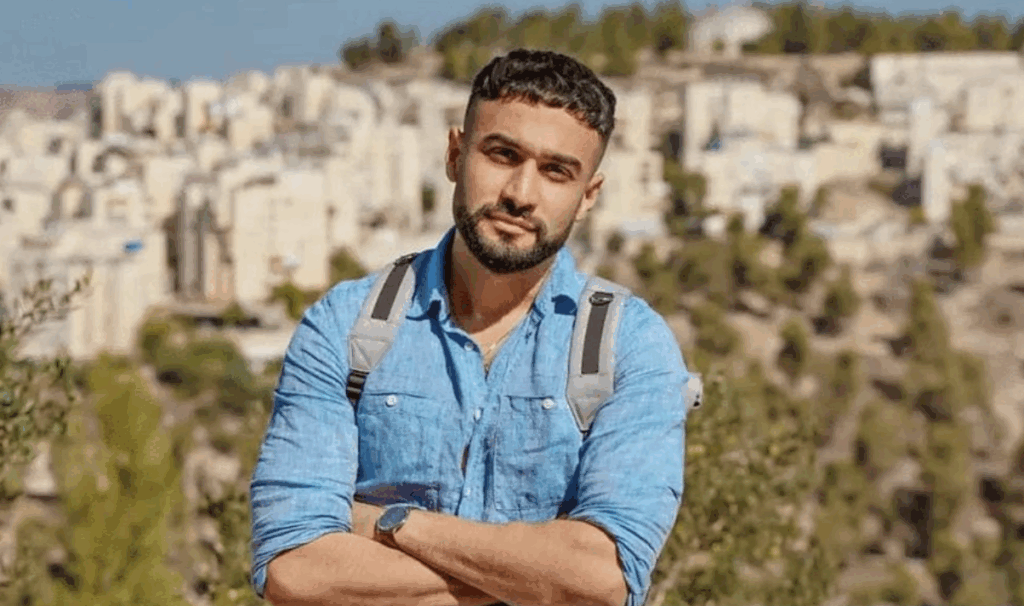
In Pécs, a historic city in southern Hungary known more for its art and architecture than its protests, Pride has become a symbol of quiet defiance. For five years, Géza Buzás-Hábel has been at its heart — organizing the only Pride march in the country outside Budapest. This year, his courage crossed a new frontier of repression: on October 28, he was formally interrogated as a criminal suspect for “illegal assembly.” His crime? Organizing a Pride event that local authorities had banned.
Buzás-Hábel, a long-time human rights defender, has repeatedly stated that canceling Pride was never an option. For him and for the local queer community, visibility remains a matter of dignity and survival. “Queer people in Pécs deserve to be seen — even when the law tries to erase us,” he said in a recent public statement.
Despite the ban, between 7,000 and 8,000 people took to the streets on October 4, waving rainbow flags in the face of police warnings and counter-demonstrators. Their peaceful march stood as a powerful act of collective courage in a country where queer visibility has become a political target.
Hungary’s tightening grip on LGBTQIA+ life has been well documented: from the anti-“LGBT propaganda” law to the government’s attempts to redefine gender and family. Yet the criminal prosecution of a Pride organizer marks an alarming first in the European Union — a move that aligns Hungary with countries like Russia or Turkey, where Pride marches are routinely banned and organizers jailed.
International activists and NGOs have called on the European Commission and EU member states to condemn the charges and defend the right to peaceful assembly. “If they let this happen in one member state, it can happen anywhere,” Buzás-Hábel warned. “Rights are not local; they are European.”
His case is a wake-up call — and a rallying cry. From Brussels to Pécs, queer people know that Pride is more than a parade: it’s a statement of existence. As Buzás-Hábel said, “Pride is the act of living openly, of refusing to disappear. If they put me on trial for that, then I’ll go proudly.”
You may also like
-

Türkiye’s LGBTQIA+ Community Faces a New Wave of Pressure
LGBTQIA+ people in Türkiye are living through a sharp escalation in state pressure: Pride events
-

Fiji Declares a National HIV Emergency — and the World Must Pay Attention
Fiji has declared a national HIV emergency after a dramatic rise in diagnoses: 2,016 people
-

“After”: Listening to LGBTQIA+ Survivors Speak About Intimate Partner Violence
On 8 October, Tels Quels invites people to Les Grands Carmes in central Brussels for
-

Balkan Trafik! Turns Brussels’ Bourse into a Three-Day Balkan Universe
After a year away, Balkan Trafik! returns to Brussels from 19 to 21 November 2026
-

Liège’s Maison Arc-en-Ciel Needs Support to Keep Its Doors Open
Maison Arc-en-Ciel de Liège, a vital LGBTQIA+ community hub in Wallonia, is facing growing financial