
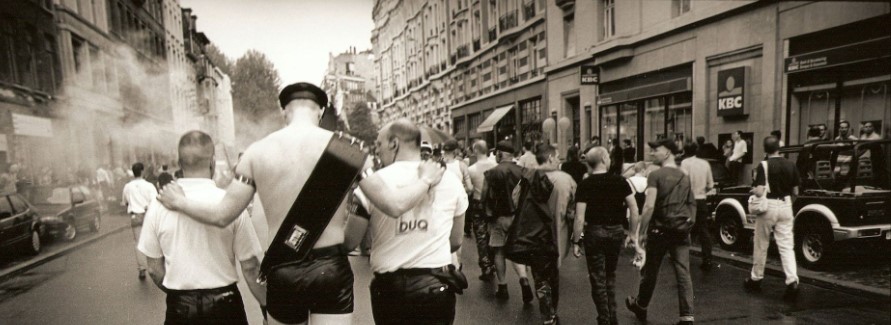
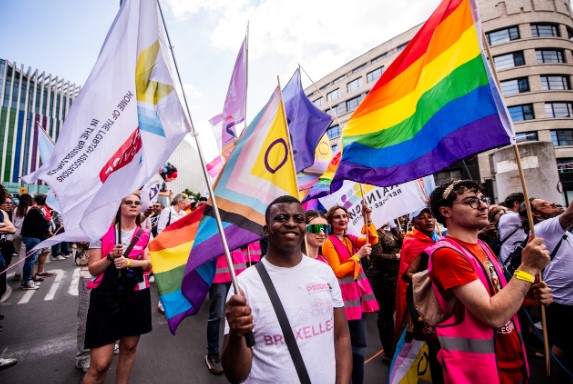
Thirty years of Belgian Pride means thirty years of streets reclaimed, visible bodies, and slogans that shift with the times. Between political march, queer carnival, and tourist attraction, Pride in Brussels tells the story of a movement that has won major battles while watching rainbow capitalism move into the parade.
See you on Saturday, 16 May 2026…
From militant beginnings to “The Belgian Pride”
Belgian Pride grew out of the first “Gay Days” at the end of the 1970s, organised by collectives like De Rooie Vlinder and, later, by associations such as Tels Quels. In 1996, the first large, unified march in Brussels, led by the Belgian Lesbian and Gay Pride association, marked the start of an annual event that gradually consolidated and eventually took the name The Belgian Pride.
From early on, the march was built around clear demands: anti-discrimination laws, legal recognition of same-sex couples, marriage and adoption rights, rights for trans people, increased lesbian, bi and intersex visibility. A significant part of these demands turned into concrete legal progress in the 2000s, strengthening the idea that Pride is both an efficient political tool and a moment of celebration.
Useful links:
- History of The Belgian Pride: https://www.pride.be/index_php/en/about-us/history
- Historical overview of Brussels Pride: https://en.wikipedia.org/wiki/Brussels_Pride
Carnivals, sponsors, and pinkwashing
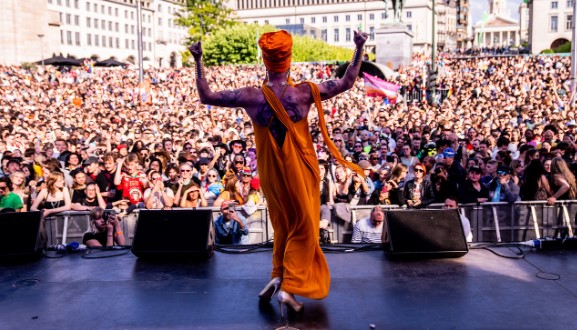
Over the years, Pride has changed: more floats, bigger stages, exploding attendance, and a normalised presence of institutions and major brands. Partnerships with visit.brussels and official recognition of Pride as part of the region’s intangible cultural heritage have reinforced its festive, event-driven side.
For many young activists, this evolution brings unease: on one hand, massive visibility and official support are precious; on the other, banks, corporations, and political parties marching with rainbow logos raise real questions about coherence and co‑optation. Community organisations keep insisting that Pride is not just a colourful backdrop for marketing campaigns, but a space of struggle for those still facing violence, precarity, and racism, including in the heart of Brussels.
Useful links:
- Brussels Pride (practical info, history, current edition): https://www.brusselspride.eu
- Article (EN) on intangible cultural heritage recognition: https://www.brusselstimes.com/1293473/brussels-pride-recognised-as-intangible-cultural-heritage-45-years-after-first-parade
Older activists and new generations: crossing perspectives
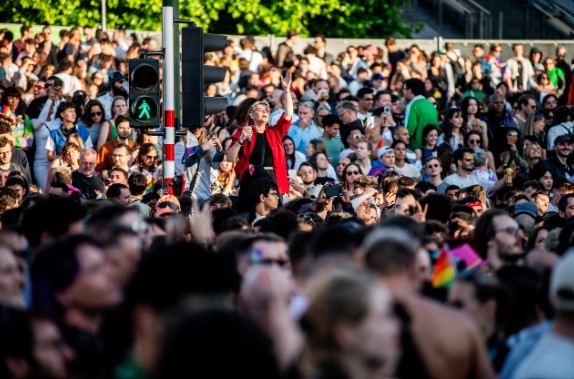
Activists from the 1990s often describe a Pride that was smaller, more fragile, but also more radical, where simply marching openly was already a major risk. For them, seeing tens of thousands of people flood the city centre today, rainbow flags in shop windows and entire families walking in the parade, feels like a powerful symbolic victory.
Younger generations, who grew up with many legal rights already in place, tend to focus on different urgencies: institutional transphobia, police violence, racism within the community, the situation of migrants and undocumented people, and mental health. They call for a Pride that is more intersectional, more accessible, less centred on consumption and big sponsors, and more connected to queer struggles in Eastern Europe, around the Mediterranean, and in the rest of the world.
Useful links:
- Equal opportunities and LGBTQIA+ policies in Brussels: https://www.brussels.be/equal-opportunities
- LGBTQI+phobic violence reporting project (RainbowHouse / equal.brussels): http://rainbowhouse.be/en/projet/report/
What kind of Pride for tomorrow?
The bankruptcy of The Belgian Pride association in 2024 highlighted how fragile the structures behind such a major event can be, even after almost thirty years of existence. The decision to maintain Brussels Pride with new partnerships and a stronger role for actors like RainbowHouse is a reminder that the march belongs first and foremost to the community, not to a single organisation.
The question “what now?” is still open, but several paths are clear: re‑anchor Pride in the Brussels associative network, ensure accessibility for precarious and disabled people, limit pinkwashing, and give more space to marginalised voices in the programme. Between carnival, business, and political struggle, the future of Belgian Pride will likely depend on our ability to hold together celebration and resistance, visibility and solidarity, the main stage and the margins.
Useful links:
LGBTQIA+ info – Brussels-Capital Region: https://be.brussels/en/assistance-social-health/lgbtqia
Official site of The Belgian Pride / Brussels Pride: https://www.pride.be
RainbowHouse Brussels (umbrella organisation): https://rainbowhouse.be
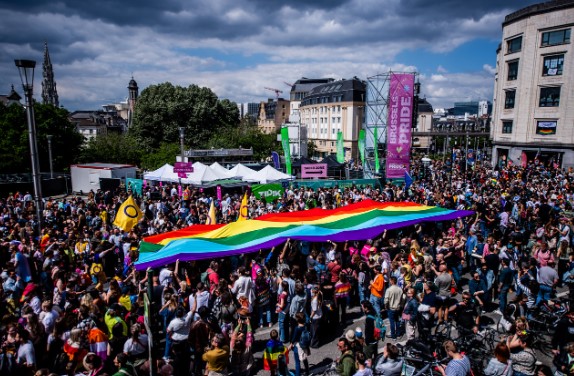
Photos : Brussels Pride
You may also like
-

Endless Summer Camp: Scout Rules Meet Queer Desire at Balsamine
Summer might be over, but Sophie Guisset has other plans. From 19 to 28 November
-

Escher in Brussels: Who Said Reality Had to Behave?
Staircases refuse to play by the rules, birds become fish, and two hands draw each
-
When Nuns Go Pirate: A Queer Sacred Thriller at Varia
What happens when lesbian love, religious memory and horror theatre enter a locked convent—and refuse
-
KET in Paris — Le Hasard Ludique, Where the Tracks Lead to Music
For this stop in our KET in Paris series, we visited Le Hasard Ludique, a
-

At Liège’s Queer Families Festival, Every Family Has a Story
The third edition of the Queer Families Festival takes place on 11 October at the