
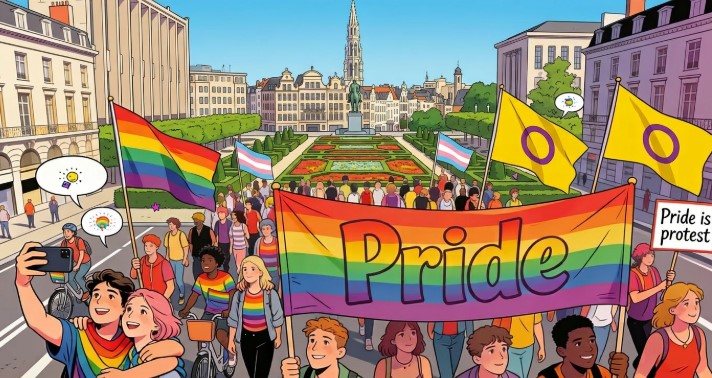
In 30 years, Brussels has gone from a small “Gay Pride” marched by a few thousand people to Brussels Pride – In the Capital of Europe, a politically charged, internationally visible event recognised as intangible cultural heritage. From Gay Pride to Belgian Pride to Brussels Pride, the name changes tell a story: of who is included, who speaks, and how a local march became a national then European reference point for LGBTQIA+ rights.
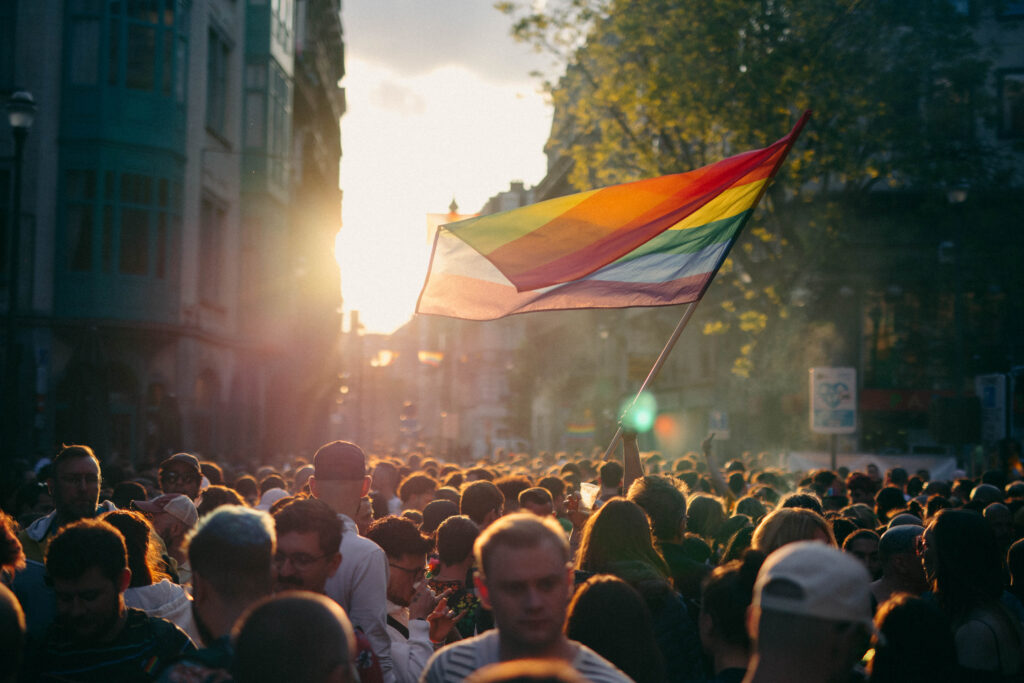
When RTBF looked back on “20 years of Belgian Pride” in 2015, the story already stretched much further. Belgium’s first big queer gathering dates back to 1978, with the “Gay Day” in Ghent, followed by a second edition in Antwerp in 1979. In the 1980s, small marches under different names tested the waters, but it is in 1996 that Brussels really installs an annual Pride, then commonly called “Gay Pride”, mirroring what was happening in other European capitals. At that stage, the focus is still largely on gays and lesbians, in a country where same‑sex marriage is not yet legal (it will only arrive in 2003) and where trans issues barely appear in the public debate.
In the 2000s, the demonstration grows and starts to call itself “Belgian Pride”, reflecting a shift from a Brussels‑only march to an event claiming to speak for the whole country. The non‑profit behind it, The Belgian Pride, is a joint venture between RainbowHouse Brussels, çavaria (Flanders) and Arc‑en‑Ciel Wallonie (today Fédération Prisme), with the idea that the parade in the capital should be a common platform for the three Regions and Communities. In 2010, the name “The Belgian Pride” is officially adopted; by 2012, a formal partnership with visit.brussels brings the tourism office into the picture and helps push the event into a different scale. Attendance triples in just a few years, up to 100,000 people in 2015, a year explicitly dedicated to trans rights.
Read also : Brussels Pride 2026: registrations for Pride Village are open – be part of it!
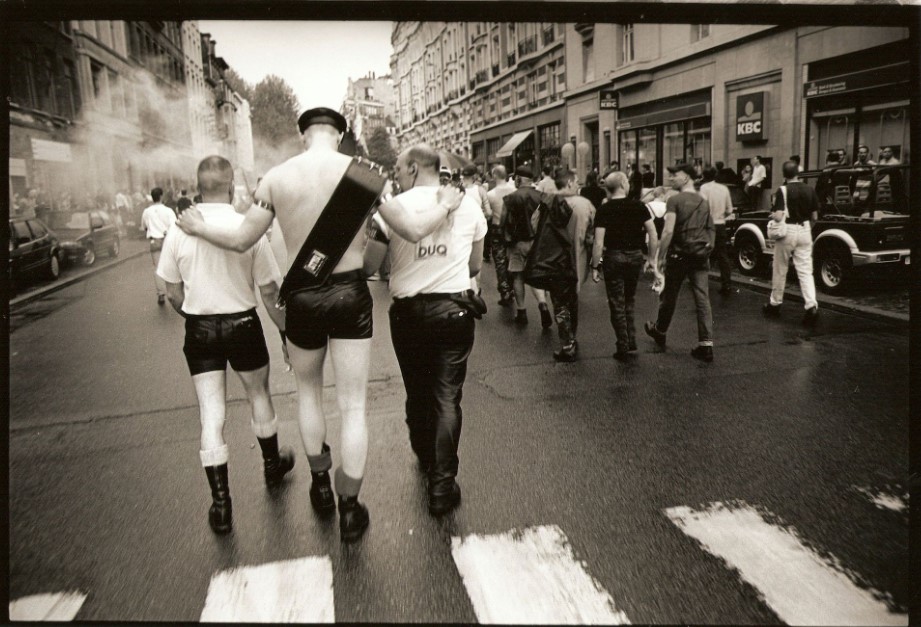
© Hilde De Bock / Anvers 1990.
The past ten years have been a rollercoaster. In 2015, the Pride focuses on trans issues; in 2016, the march goes ahead despite the March terrorist attacks, rerouting and moving the main stage from the Bourse to Mont des Arts, where it still stands today. In 2017, under the theme #CrossingBorders, the city dresses itself in rainbows – crossings, traffic lights, buses, façades – while activists push asylum and migration to the centre of the conversation. By 2018, Pride Week stretches over more than two weeks, with some 70 events and around 140,000 visitors, confirming that Brussels is no longer just hosting a one‑day march but a full festival of queer culture and politics.
Read also : 2026 Global & European Pride Calendar: Dates & Destinations
After two years of pandemic, the 2022 Belgian Pride returns with the theme #OPEN, insisting on inclusivity and on the right to feel safe every day, everywhere. In 2024–2025, Brussels Pride becomes the official name of the event, now organised directly by visit.brussels, and leans fully into its positioning as the opening Pride of the European season. Themes like “Safe Everyday Everywhere” and “Unite, time to protect our rights” respond to a harsher political climate, from anti‑gender movements to attacks on trans healthcare. Activists and institutions walk side by side, sometimes in tension, but with a shared awareness that visibility alone is not enough anymore – rights can be rolled back.
Behind the scenes, the structure changes too. The Belgian Pride non‑profit, weighed down by debts and internal tensions, is declared bankrupt in October 2024. The brand lives on, though, reconfigured as Brussels Pride – In the Capital of Europe, run by visit.brussels with a strong role for RainbowHouse Brussels and community partners. In September 2024, Brussels Pride is added to the Inventory of Intangible Cultural Heritage of the Brussels‑Capital Region – making it only the second Pride in the world to receive this kind of recognition. A transnational application led by Amsterdam is now being prepared for UNESCO, with the ambition to have Pride itself recognised as global heritage at a time when queer and trans lives are once again under attack.
Read also : Thirty Years of Belgian Pride: What Now?
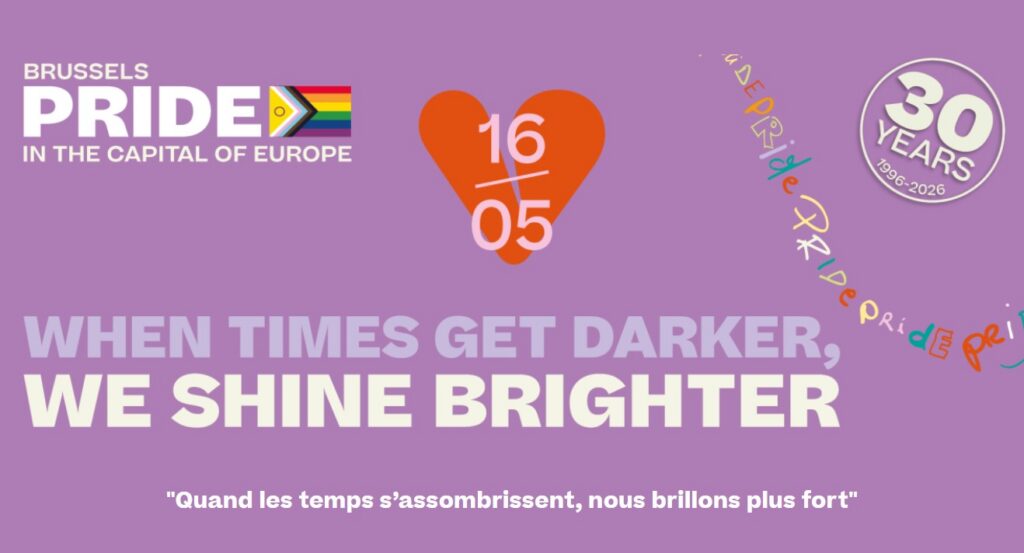
In 2026, Brussels Pride celebrates “30 years of Pride in Brussels” under the theme “When Times Get Darker, We Shine Brighter”. The march and Pride Village are expected to gather up to 250,000 people, with the Saint‑Jacques Rainbow Village and dozens of venues turning the city centre into a giant, multi‑day queer zone. From “Gay Pride” to “Belgian Pride” to “Brussels Pride”, the evolution is more than cosmetic. It marks a movement from a community march claiming space, to a national platform negotiating between Regions, to a city‑anchored event that owns its role as European capital while trying – not always perfectly – to stay accountable to those who started it: the people who still need Pride the most.
Useful links
– RTBF (2015): petite histoire de la Belgian Pride
https://www.rtbf.be/article/la-belgian-pride-a-20-ans-petite-histoire-de-cette-manifestation-haute-en-couleurs-8969367
– Short history of The Belgian Pride (organisation, name choices)
https://www.pride.be/index_php/en/about-us/history
– Brussels Pride – official site (themes, programme, history)
https://www.brusselspride.eu/en/home
– Brussels Pride 2025–2026 themes and calls
https://www.brusselspride.eu/en/theme-2025
– Brussels Pride recognised as intangible cultural heritage
https://tripbytrip.org/2024/11/01/brussels-pride-officially-recognised-as-intangible-cultural-heritage/
– Background on LGBTQ+ rights in Belgium
https://fr.wikipedia.org/wiki/Droits_LGB
KET Magazine is a community‑driven, non‑profit magazine run by volunteers based in Brussels. Get in touch to share your thoughts or tell us about your activities. You can also promote your events on our website or support our work with a donation. Contact us at Info@ket.brussels.
You may also like
-

Pink Screens Turns 25 — and Brussels’ Queer Cinema Is Still Coming Home Late
From 28 October to 7 November 2026, Pink Screens returns to Brussels for its 25th
-
Türkiye’s LGBTQIA+ Community Faces a New Wave of Pressure
LGBTQIA+ people in Türkiye are living through a sharp escalation in state pressure: Pride events
-

Fiji Declares a National HIV Emergency — and the World Must Pay Attention
Fiji has declared a national HIV emergency after a dramatic rise in diagnoses: 2,016 people
-

“After”: Listening to LGBTQIA+ Survivors Speak About Intimate Partner Violence
On 8 October, Tels Quels invites people to Les Grands Carmes in central Brussels for
-
Circle Park Prepares One Last Summer Dancefloor in Brussels
Circle Park is bringing its summer season to a close with a two-day Closing Weekend