
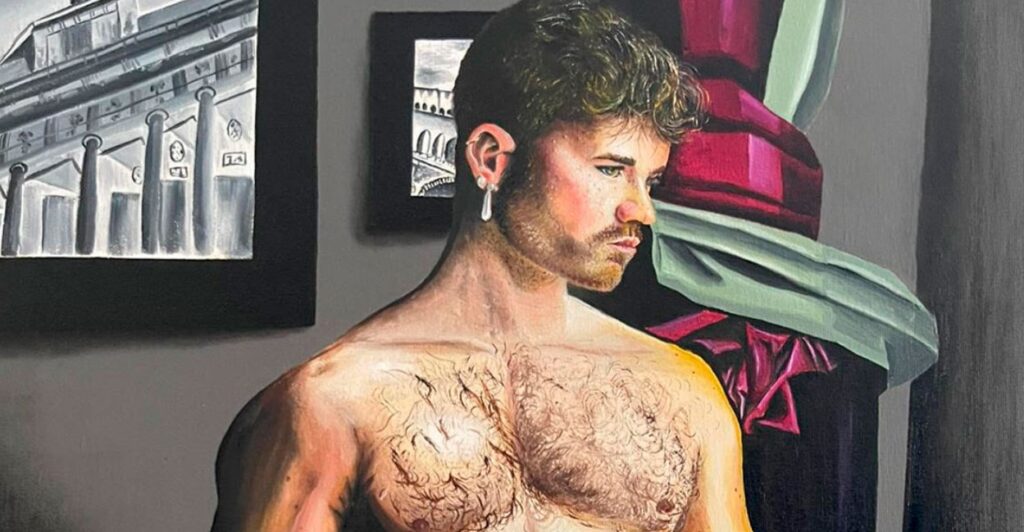
Madrid is getting ready for Pride season, and this year one of the first signals comes from a canvas. At DLRO Live, a queer nightlife and culture space in the Chueca district, the Nicaraguan artist Jorge Sevilla is presenting “Baimenik Gabe” (“Without permission” in Basque), an exhibition that puts trans men at the centre of the frame. The show officially opens the art route of Muestra t, the cultural festival of MADO Madrid Orgullo, which runs through June and July.
Thanks to ELMA – the European LGBTQIA+ Magazines Association, ket can share and adapt this story first published by Spanish queer magazine Shangay.
Making trans men visible in the Pride city
“Baimenik Gabe” is presented as a queer exhibition dedicated to visibilising trans men, a group that is still often missing from mainstream Pride imagery: less hyper‑fetishised than other bodies, less represented in media and campaigns.
Sevilla’s paintings focus on the trans masculine body and presence, using colour, gesture and texture to reclaim a space that art history and contemporary visual culture have rarely ceded to trans men. The choice of title – “without permission” – underlines the point: this is not a timid request for inclusion, but a statement that these lives do not need anyone’s authorisation to exist.
As Shangay notes, the fact that this exhibition opens the 20th edition of Muestra t is not a detail. It signals a conscious decision by the festival to start its cultural route with a trans‑centred project, rather than tagging one on at the end.
“Art has always been my refuge”
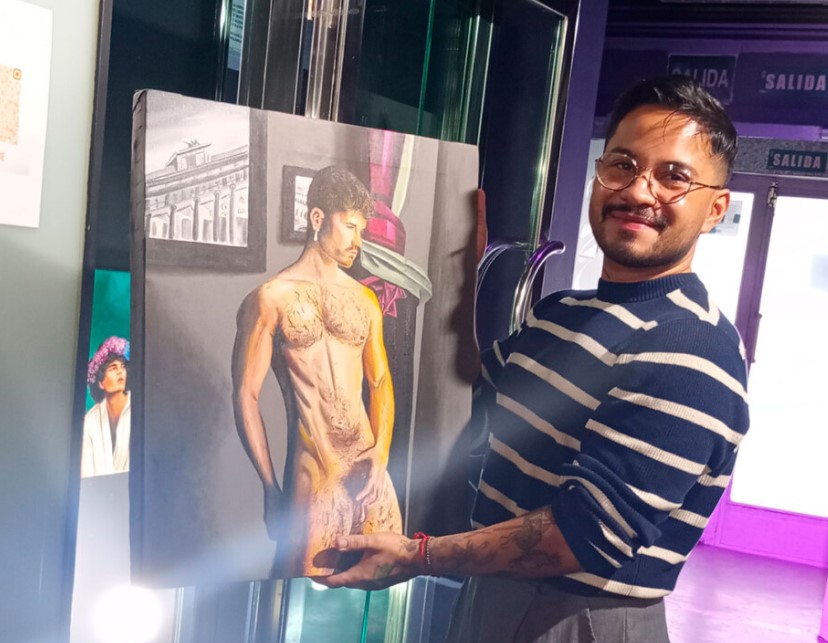
In the interview quoted by Shangay, Jorge Sevilla describes how painting became a lifeline long before any gallery wall.
“Art has always been my refuge. Since childhood, painting was a way to escape and to understand the world. I grew up in an environment where opportunities were limited and art was not seen as a possible path, but I still found in it a constant need,” he explains.
He goes on to say that this exhibition “was born from the need to make visible what is often ignored – a community that is growing and resisting.” That line could easily double as a manifesto for trans men across Europe: present, active, but still routinely erased from both transphobic attacks and trans‑positive narratives.
Muestra t: the cultural heart of Madrid Pride
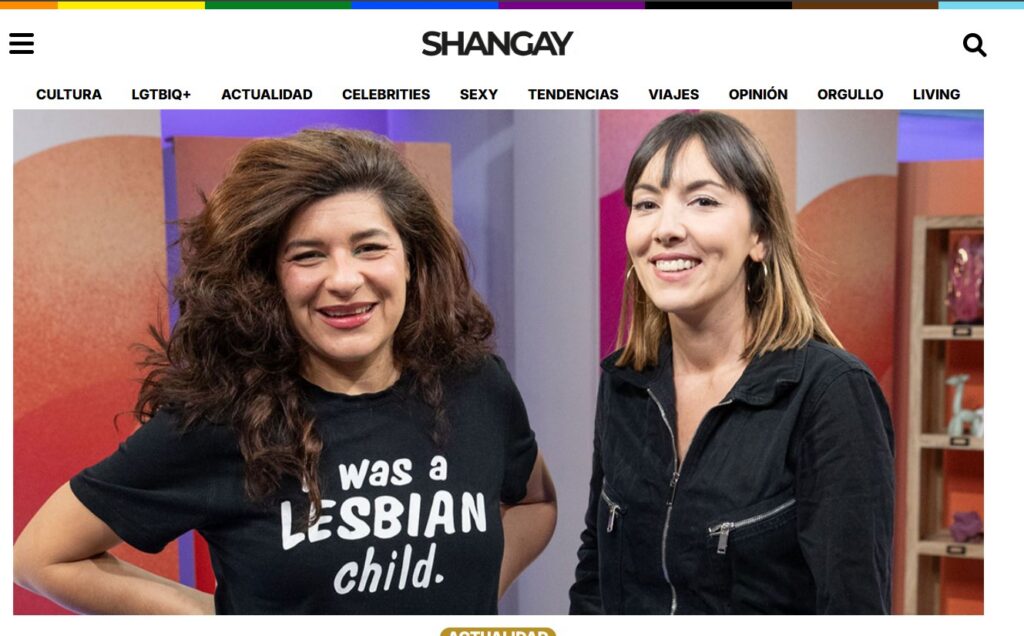
For anyone who only knows MADO through the street party and parade, Muestra t is the part of Madrid Pride that lives in galleries, bars, cinemas and cultural centres. Celebrated between June and July, it is the official cultural festival of Madrid Orgullo, with a programme of events that promote LGTBIQ+ diversity and inclusion through art.
Muestra t’s mission is to organise and showcase queer projects, creating meeting spaces for the community and inviting the wider public into those conversations. Its programme covers:
- painting and illustration exhibitions
- photography and performance
- film cycles
- workshops and other creative formats.
This year, by putting Jorge Sevilla’s work at the very beginning of its “queer art route”, the festival makes a clear statement about where it wants the focus to be: on stories that have been sidelined even within LGBTQIA+ spaces.
A trans‑centred show that speaks beyond Madrid
For ket’s readers in Brussels, “Baimenik Gabe” is a reminder that Pride is also about who we choose to centre in our cultural narratives. Trans men are often caught between hyper‑visibility in certain fetishised niches and near‑invisibility in mainstream conversations. Sevilla’s work – and Muestra t’s choice to foreground it – offers a different option: visibility on their own terms.
It also shows how queer culture travels. A Nicaraguan artist living and working in Madrid, painting trans men in a Basque‑titled show that opens a Spanish festival and gets picked up by magazines in Greece, the Netherlands and now Belgium through ELMA – this is what a transnational queer ecosystem looks like.
Source and network
This article is based on and adapted from:
- “Una exposición que visibiliza al hombre trans inaugura el festival cultural del Orgullo de Madrid”, published (in Spanish) by Shangay on 7 May 2026.
We are able to share this story in English on ket thanks to ELMA – the European LGBTQIA+ Magazines Association, which connects LGBTQIA+ magazines across Europe and helps us amplify each other’s reporting.
KET Magazine is a community‑driven, non‑profit magazine run by volunteers based in Brussels. Get in touch to share your thoughts or tell us about your activities. You can also promote your events on our website or support our work with a donation. Contact us at Info@ket.brussels.
You may also like
-

Türkiye’s LGBTQIA+ Community Faces a New Wave of Pressure
LGBTQIA+ people in Türkiye are living through a sharp escalation in state pressure: Pride events
-

Fiji Declares a National HIV Emergency — and the World Must Pay Attention
Fiji has declared a national HIV emergency after a dramatic rise in diagnoses: 2,016 people
-

Balkan Trafik! Turns Brussels’ Bourse into a Three-Day Balkan Universe
After a year away, Balkan Trafik! returns to Brussels from 19 to 21 November 2026
-
In Myanmar, the Spirit Wives Keep Dancing
Near Mandalay, in a country torn apart by civil war, the annual Taungbyone festival has
-

Five Equality Champions Remind WorldPride What Queer Progress Looks Like
On 5 August, during the WorldPride Human Rights Conference in Amsterdam, UNDP and ILGA World