
More and more people are waking up to a simple idea: if your inbox, cloud storage and daily digital life are built on U.S. platforms, your data is never really just yours. That frustration sits at the heart of the recent push toward privacy-first services like Proton Mail, a Swiss-based alternative that promises encrypted email and far less data harvesting than Big Tech services.
The appeal is easy to understand. In a world where Google, Meta and other American tech giants have built empires on surveillance-based business models, choosing a privacy tool is no longer just a technical decision; for many users, it has become a political one.
Privacy is becoming a lifestyle choice
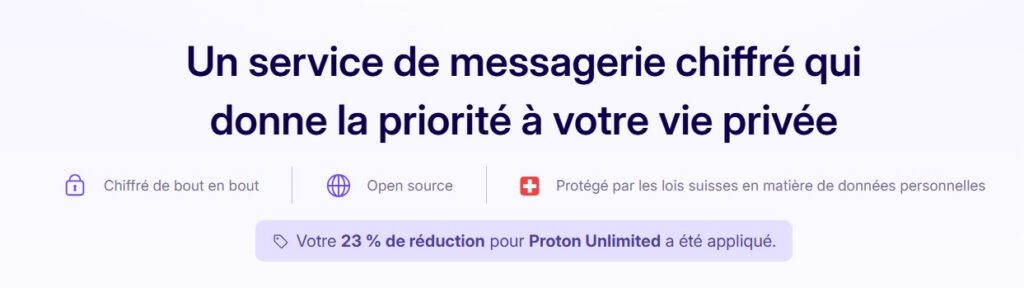
Proton positions itself as a secure email provider based in Switzerland, protected by some of the world’s stricter privacy laws. The company says its services are designed around encryption and that it does not have access to the content of your encrypted messages, which is exactly why many people see it as a way to step out of the data-extraction economy.
That message has clearly resonated with users who are tired of signing up for “free” products that are paid for with their behaviour, contacts and metadata. If you would rather keep your personal life out of the hands of ad-tech systems, moving to a service like Proton can feel less like a convenience and more like a refusal.
Why this matters to queer users
For queer people, this debate is even sharper. Email accounts, cloud storage and login systems often hold highly sensitive information: health appointments, private conversations, activist organising, dating apps, family conflicts and community work. Putting that material into a surveillance-heavy ecosystem can create a real vulnerability, especially for people who need discretion.
That is why privacy tools have become part of queer digital self-defence. It is not about paranoia; it is about agency. Choosing encrypted or low-data services can be a way to reduce exposure, especially for people who are already more likely to face outing, harassment or doxxing.
What Proton actually offers
Proton says its email service is end-to-end encrypted and that it is headquartered in Switzerland, where strong legal protections apply. The company also explains that while it may still have access to some metadata, it does not have access to the encrypted content of messages, which is the key reason many people use it.
If you want to try it, the sign-up page is here: Proton Mail signup. Proton also offers a broader privacy ecosystem including VPN, Drive and Pass, which can make it easier to reduce dependence on U.S. tech stacks across several parts of your digital life.
A small switch with bigger symbolism
Switching email providers will not magically erase your online footprint, but it can change who gets to see it, monetise it and connect it to your identity. That is why the move away from American platforms feels symbolic as well as practical: it is about refusing a default that was never neutral in the first place.
The point is not that everyone must become a privacy maximalist overnight. It is that more users are realising they do have a choice, and that choice has consequences for their safety, autonomy and relationship to the internet.
Useful links
If you want to explore further, start with Proton Mail, read their privacy policy, and watch the explainer video you shared here. For broader context on Proton’s privacy model, the company’s Switzerland page is also useful.
This article is editorially independent and has not been produced in exchange for any advertising partnership; it is a deliberate editorial choice.
KET Magazine is a community‑driven, non‑profit magazine run by volunteers based in Brussels. Get in touch to share your thoughts or tell us about your activities. You can also promote your events on our website or support our work with a donation. Contact us at Info@ket.brussels.
You may also like
-

Thirty-seven and still dancing: La Demence opens its birthday weekend at Fuse
La Demence turns 37 with three nights in Brussels, beginning at Fuse on Friday 30
-

Beyond the rent rant: Bruscope puts Brussels life under the lens
Why does finding a home in Brussels feel so complicated? Who does the work that
-

Türkiye’s LGBTQIA+ Community Faces a New Wave of Pressure
LGBTQIA+ people in Türkiye are living through a sharp escalation in state pressure: Pride events
-

Fiji Declares a National HIV Emergency — and the World Must Pay Attention
Fiji has declared a national HIV emergency after a dramatic rise in diagnoses: 2,016 people
-

Balkan Trafik! Turns Brussels’ Bourse into a Three-Day Balkan Universe
After a year away, Balkan Trafik! returns to Brussels from 19 to 21 November 2026