
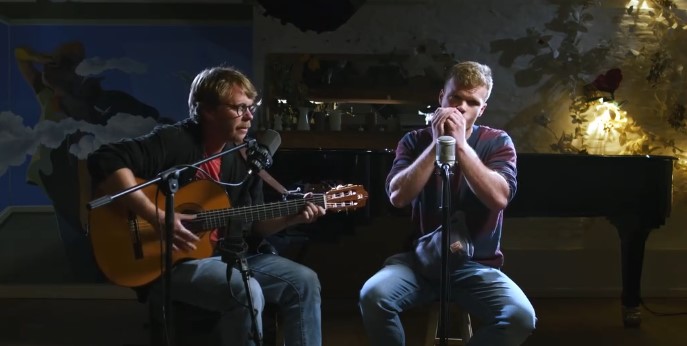
Imagine a listening room where acoustic music feels close enough to touch, and where every livestream you watch actually supports the artists behind it. That’s the promise of Jardin Musical, a Brussels‑based ecosystem created by pianist Julien Brocal, mixing intimate concerts, high‑quality recordings and a fair‑trade model that treats musicians as co‑producers rather than content providers.
A living room, a stage, an ecosystem
Jardin Musical is more than a venue: it’s a non‑profit, artist‑run ecosystem in the historic centre of Brussels, at Quai aux Briques 62, built around a small salon with exceptional acoustics. The idea is to reclaim music in its most convivial form — close, shared, unamplified when possible — while using digital tools to reach far beyond the city.
Weekly concerts are recorded and streamed live online, with replays available to a global audience. Inside the room, a handful of listeners sit almost inside the sound; online, others join from across continents. Jardin Musical calls itself an “artivist ecosystem”: a space where art, activism and sustainability are woven together instead of kept in separate boxes.
For queer and allied audiences, that mix matters. It offers a way to experience classical and acoustic music without the stiffness of traditional halls, and within a structure that explicitly values community, diversity and mutual care.
Fair‑trade streaming and permaculture for art
One of the most distinctive aspects of Jardin Musical is its fair‑trade economic model. The project runs a label and streaming platform where:
50% of revenue from concerts and subscriptions goes directly to the artists, who are treated as co‑producers of the ecosystem.
subscribers don’t just pay for access; they actively support the development of the space and its musicians, gaining exclusive access to concerts and a growing catalogue of recordings.
The team explicitly draws on permaculture principles: creating a harmonious ecosystem where artists, listeners and nature co‑animate creativity, welcoming diversity, integrating instead of separating, and focusing on resilience rather than extractive models.
In practice, this means:
concerts and recordings are produced with careful attention to sound, light and atmosphere (Steinway grand, high‑definition video, dedicated sound engineers)
artists are invited into a structure that prioritises long‑term relationships over one‑off gigs
audiences are asked to see themselves as part of the ecosystem, not just ticket holders.
For LGBTQIA+ musicians and listeners, this kind of fair‑trade model can be a relief: it recognises that many of us work in precarious conditions and creates a more horizontal, shared space to build careers and communities.
Accessible, human‑scale concerts in Brussels
On the ground, Jardin Musical functions as a human‑scale salon for regional and international artists. Events range from solo piano recitals and chamber music to interdisciplinary evenings where writers, singers and activists share space — for instance, a night on global justice and the common good with writer Mohammed Taleb and musician Ghalia Benali.

Practical details matter here too:
the venue is wheelchair accessible (entrance, parking, seating), with non‑gendered toilets, Wi‑Fi and a bar on site, and it’s noted as “suitable for children”, making it easier for families and people with different mobility needs to attend.
concerts often have a limited capacity, reinforcing the intimate feeling and reducing the pressure that can come with large halls.
Jardin Musical also runs a professional audiovisual studio for recording and video capture, with flexible credits and certified training, aimed both at Brussels‑based and international artists. That combination — public concerts plus studio — makes it a natural hub for musicians who want to both perform and document their work carefully.
Why it matters for queer‑friendly culture in Brussels
Brussels has a strong queer nightlife and performance scene, but classical and acoustic spaces can still feel distant or coded as “straight” and conservative. Places like Jardin Musical help change that texture by:
emphasising conviviality and immersion rather than gatekeeping and prestige
building a model where artists are fairly paid and structurally supported, which benefits marginalised creators who often sit at the edges of mainstream circuits
offering accessible, small‑scale concerts where queer, trans and allied audiences can experience acoustic music without feeling they have to perform respectability to belong.
When you add the project’s explicit commitment to sustainability, community and shared governance, Jardin Musical becomes more than “a nice concert hall”: it’s a blueprint for how we might build cultural spaces that are kinder to the bodies and lives that inhabit them.
Practical info
Name: Jardin Musical
Location: Quai aux Briques 62, 1000 Brussels (historic centre, near Sainte‑Catherine)
Concept: Artist‑run ecosystem combining an intimate salon, live streaming, a fair‑trade label and a professional recording studio.
Model: 50% of streaming and concert revenue goes to artists; subscribers are co‑producers and gain exclusive access.
Accessibility: Wheelchair‑accessible entrance, seating and parking; non‑gendered toilets; suitable for children; bar and Wi‑Fi on site.
If you’re looking for a place in Brussels where you can sit close to a piano, feel every note in your chest, and know that your ticket or stream is part of a fair‑trade, community‑driven structure, Jardin Musical is very much worth putting on your cultural map.
KET Magazine is a community‑driven, non‑profit magazine run by volunteers and based in Brussels. You can find our other music and nightlife stories on ket.brussels, and you can always write to us to share your projects or pitch a story: info@ket.brussels
You may also like
-
Inuit Art Takes Centre Stage at Brussels’ Art & History Museum
From 16 October 2026 to 18 April 2027, the Art & History Museum in Brussels
-

What Happens When We Move Together? The Mechanics of Crowds Comes to Liège
From 20 November 2026 to 4 April 2027, La Cité Miroir in Liège hosts The
-
Circle Park Prepares One Last Summer Dancefloor in Brussels
Circle Park is bringing its summer season to a close with a two-day Closing Weekend
-

Listen Festival Turns Brussels Into a 24-Hour Dancefloor
Listen Festival is back on Saturday 21 November for its 10th anniversary — and this
-

Fifty Years of Belgian Jazz, Still Moving
Les Lundis d’Hortense turns 50 this autumn with five days of concerts, encounters, jam sessions