

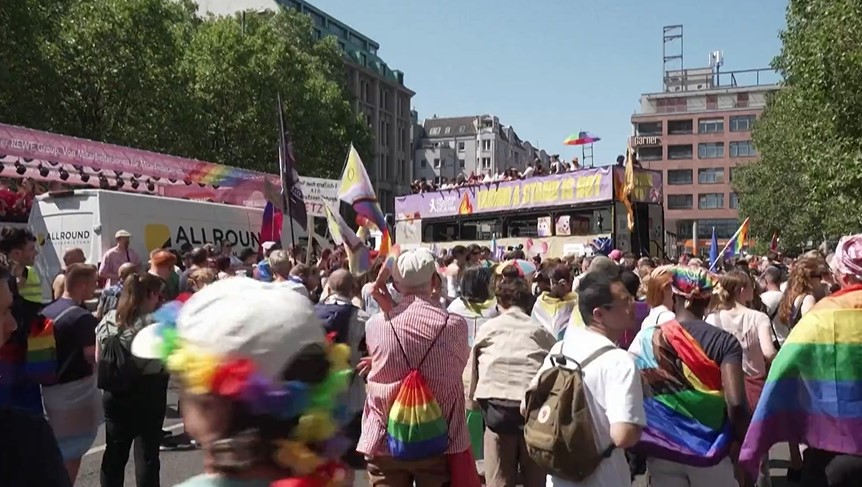
A vehicle drove into the crowd at Berlin Pride on Saturday, killing at least one person and injuring at least 15 others, and our first thought is for the victims, their friends and families, and everyone who was there to celebrate freely. The Pride celebrations were cancelled after the incident, while police launched a manhunt and emergency teams rushed to the scene in Tiergarten, near the Brandenburg Gate.
What happened
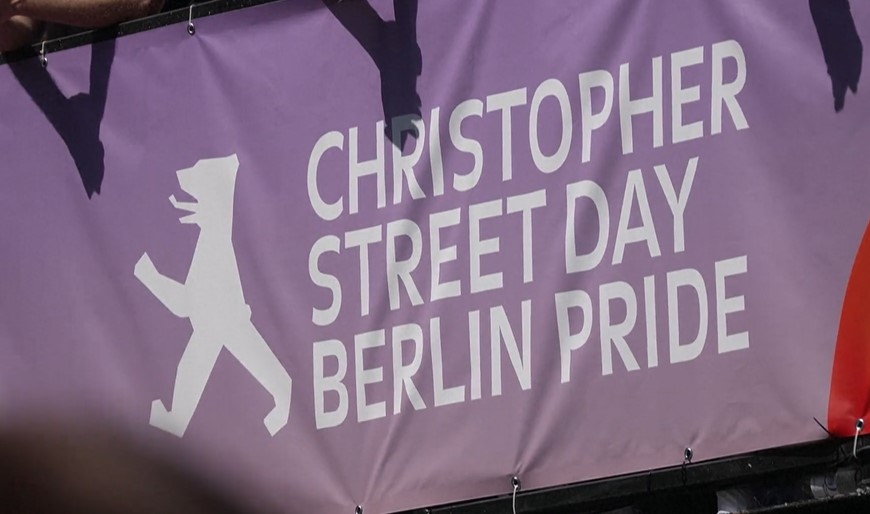
According to initial reports, the vehicle struck people gathered for Berlin’s Christopher Street Day / Pride celebrations around 10 p.m., before coming to a stop and the driver fleeing the scene. Police said multiple victims were seriously injured, and later reporting confirmed at least one death and more than a dozen injuries.
At this stage, authorities have not fully confirmed the motive, and the situation is still developing. What is clear is that a peaceful LGBTQIA+ gathering was violently disrupted, turning a day of visibility and joy into an emergency.
Why this hits hard
Berlin Pride is one of Europe’s biggest LGBTQIA+ celebrations, and the attack lands not just as a public safety crisis but as a wound to queer life itself. Pride is supposed to be a space of safety, memory and collective joy; when violence enters that space, it sends a message that queer bodies are still being targeted simply for showing up together.
For many of us in Brussels and beyond, this brings back the reality that queer public space is still fragile. Even when cities celebrate us officially, we still rely on crowd safety, political will and mutual care to get through the day and get home alive.
Solidarity, not speculation
Right now, the most important response is solidarity with those harmed and with Berlin’s LGBTQIA+ community. That means:
- centring the victims and their loved ones
- refusing to turn the attack into internet spectacle
- letting investigators do their work while protecting people from speculation and fearmongering.
In moments like this, queer communities do what they have always done: check on each other, share information carefully, and make room for grief without letting it erase our right to gather, dance and be visible.
For Brussels and beyond
If you are following this from Brussels, be gentle with yourself and with your people today. Berlin’s pain is felt across queer Europe, because Pride is a shared language of memory and resistance.
Our solidarity is with the injured, with those who lost someone, and with everyone who was at Pride expecting a celebration and got violence instead. That grief deserves care, not commentary.
KET Magazine is a community‑driven, non‑profit magazine run by volunteers and based in Brussels. You can find our other music and nightlife stories on ket.brussels, and you can always write to us to share your projects or pitch a story: info@ket.brussels
You may also like
-
Türkiye’s LGBTQIA+ Community Faces a New Wave of Pressure
LGBTQIA+ people in Türkiye are living through a sharp escalation in state pressure: Pride events
-

Fiji Declares a National HIV Emergency — and the World Must Pay Attention
Fiji has declared a national HIV emergency after a dramatic rise in diagnoses: 2,016 people
-
Balkan Trafik! Turns Brussels’ Bourse into a Three-Day Balkan Universe
After a year away, Balkan Trafik! returns to Brussels from 19 to 21 November 2026
-
In Myanmar, the Spirit Wives Keep Dancing
Near Mandalay, in a country torn apart by civil war, the annual Taungbyone festival has
-

Five Equality Champions Remind WorldPride What Queer Progress Looks Like
On 5 August, during the WorldPride Human Rights Conference in Amsterdam, UNDP and ILGA World