
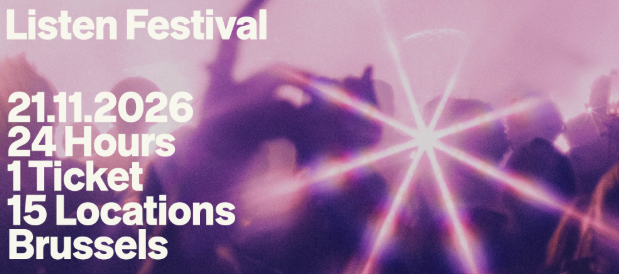
Listen Festival is back on Saturday 21 November for its 10th anniversary — and this time, it is going all in. The Brussels electronic-music festival is introducing a new 24-hour format across 15 venues, from the city’s major railway stations to beloved underground clubs. One ticket gives access to the entire programme: a city-wide, cross-genre marathon of local talent, international heavyweights and the communities that keep Brussels’ nightlife moving.
Ten years of listening differently
Over the past decade, Listen Festival has become one of the key annual meeting points for Brussels’ electronic-music ecosystem. Its strength has never been simply booking big names. It is the way the festival connects venues, collectives, DJs, live acts and audiences who might normally move through different corners of the city.
For its tenth edition, Listen is marking the milestone by stretching across the North–South axis of Brussels. North Station, Central Station, Congrès Station and the Quadrilatères beneath Brussels-Midi will be transformed into temporary dancefloors, while clubs and creative spaces including Fuse, C12, Blur and Hexagon continue the journey into the night.
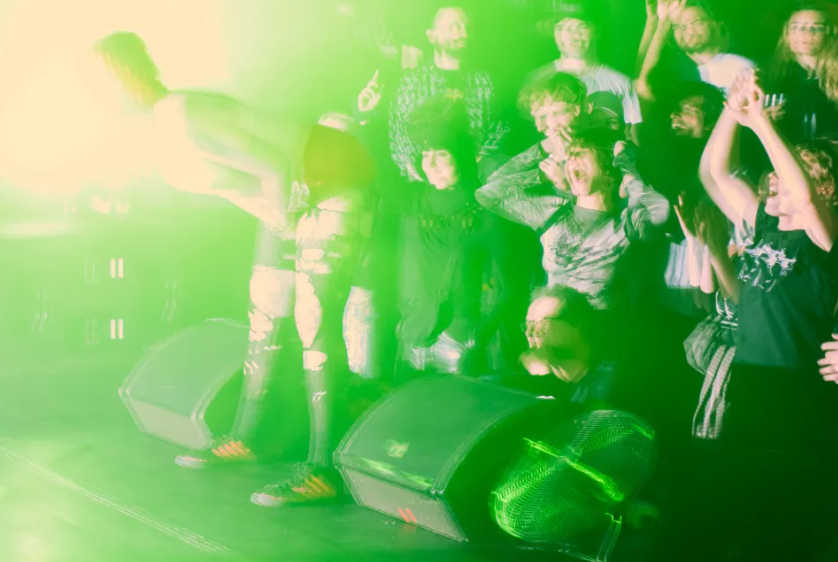
The result is less a conventional festival site than a moving map of the city. You can follow a favourite artist, switch genre halfway through the night, meet friends at another station or stumble into a set you had not planned for. Brussels becomes the venue — its public infrastructure, underground spaces and club rooms linked by music.
From 2pm to 2pm — then beyond
The first spaces open at 2pm on Saturday 21 November. From there, Listen’s 15 locations will gradually activate for a full 24-hour ride that runs until 2pm on Sunday 22 November.
The marathon does not necessarily end there. CityGate, curated by queer nightlife collective Gay Haze and Spek, is scheduled to continue until Sunday evening. That extension gives the anniversary a distinctly Brussels flavour: a festival that understands the party not as a single headline moment, but as a shared trajectory through different sounds, bodies, moods and spaces.
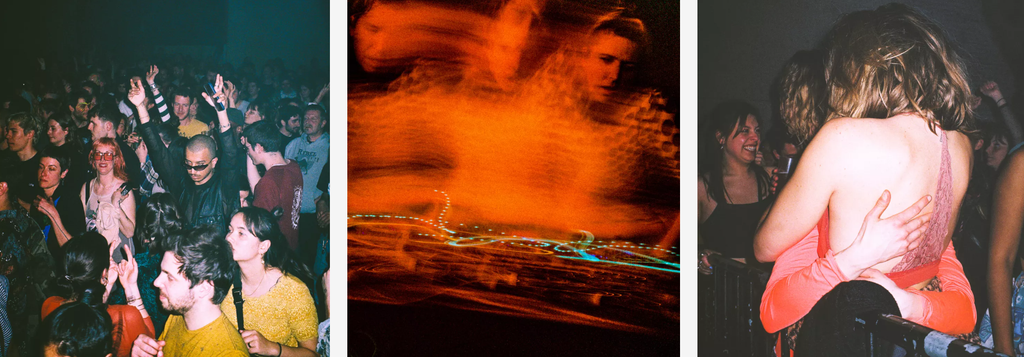
There is something genuinely exciting about a daytime-to-daylight structure. Stations are usually designed for transit: rushing to work, waiting for a train, passing through. Listen turns them into places to stay, dance and encounter one another — reclaiming everyday architecture for collective pleasure.
A line-up without genre borders
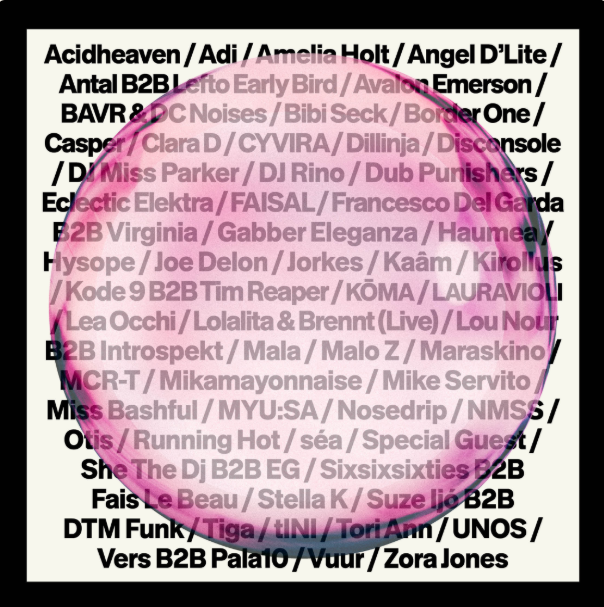
Listen Festival’s first announcements already signal a broad approach to club culture. International names include Tiga, Avalon Emerson, Dillinja, Mala, Miss Bashful, MCR-T, and the back-to-back set from Francesco Del Garda and Virginia.
The local line-up is equally central, with Lefto Early Bird, FAISAL, Bibi Seck, Nosedrip, Lolalita & Brennt ’Live’, DJ Rino, KŌMA and LAURAVIOLI among the announced Brussels and Belgian artists.
It is a programme that moves freely between techno, house, bass, jungle, dubstep, experimental electronics and harder club sounds. That variety matters. It refuses the tired idea that electronic music is one uniform culture, one kind of body or one acceptable way of dancing.
For queer audiences, that openness is part of the appeal. Dance music has deep roots in queer, Black and trans communities, even as its mainstream spaces have not always lived up to that history. A line-up that crosses scenes and generations can create more room for discovery — provided the festival continues to take safer-space practice, accessibility and care seriously across every venue.
One ticket, more possibilities
For the first time, Listen is offering one ticket for all festival venues and events. The organisers describe it as a fairly priced ticket, intended to make the full programme accessible without forcing people to choose between separate, costly entry points.1
That is a welcome move in a city where nightlife costs can quickly become exclusionary. Of course, “fairly priced” means different things depending on income, housing costs, disability access needs and whether someone can safely stay out through the night. The listed starting price is €25, while accessibility depends on the individual venue.
Still, a unified pass changes the experience. It invites people to take risks, leave their usual musical comfort zone and treat the festival as a collective exploration rather than a sequence of isolated ticketed events.
Nightlife is city culture
For queer communities, clubs and parties are not only about entertainment. They can be places of self-invention, chosen family, flirtation, release and political visibility. They are also workplaces for DJs, performers, bar staff, security teams, technicians and organisers — people whose labour keeps these spaces alive.
Listen’s tenth anniversary puts that cultural infrastructure in the spotlight. By moving between main stations, established clubs and independent spaces, it makes a case for nightlife as part of Brussels’ cultural identity rather than an afterthought to be managed.
The most compelling promise of this edition is not simply that it will be big. It is that it will be porous: a chance to connect different crowds, sounds and parts of Brussels through a shared 24-hour pulse.
Practical information
What? Listen Festival 2026, the festival’s 10th-anniversary edition
When? Saturday 21 November, from 2pm, until Sunday 22 November 2026, 2pm; the CityGate extension continues into Sunday evening
Where? More than 15 Brussels venues, including North Station, Central Station, Congrès Station, the Quadrilatères beneath Brussels-Midi, Fuse, C12, Blur and Hexagon
Line-up includes: Tiga, Avalon Emerson, Dillinja, Mala, Miss Bashful, MCR-T, Francesco Del Garda b2b Virginia, Lefto Early Bird, FAISAL, Bibi Seck, Nosedrip, Lolalita & Brennt ’Live’, DJ Rino, KŌMA and LAURAVIOLI
CityGate: Sunday extension curated by Gay Haze and Spek
Tickets: One festival pass gives access to all venues and events; early ticket tiers are listed from €25.
Age: 18+
Accessibility: Varies by venue; check the festival and each location’s information before buying a ticket.
Tickets and updates: Listen Festival ticket link
For one weekend, Brussels is not just a place to pass through. It is a place to stop, listen and dance until the city looks different in daylight.
KET Magazine is a community‑driven, non‑profit magazine run by volunteers and based in Brussels. You can find our other music and nightlife stories on ket.brussels, and you can always write to us to share your projects or pitch a story: info@ket.brussels
You may also like
-

Fifty Years of Belgian Jazz, Still Moving
Les Lundis d’Hortense turns 50 this autumn with five days of concerts, encounters, jam sessions
-

Orlane on Amour Pluriel: The Rise of a Queer Belgian Pop Icon
Orlane has never hidden her queerness. In ROUGE À LÈVRES, desire for a woman slips
-
Arkane Takes 200 Rock Voices Across Belgium, With Alice on the Roof at AB
From Marche-en-Famenne to Brussels Two hundred voices, a live band and a setlist ranging from
-
Brussels Design Week: Who Gets to Shape the City?
Brussels Design September is becoming Brussels Design Week for its 20th edition, running from 24
-
RIRE: A Queer Cabaret Against Taking Everything So Seriously
What if laughing could be a way of resisting? With RIRE (pour en finir avec