
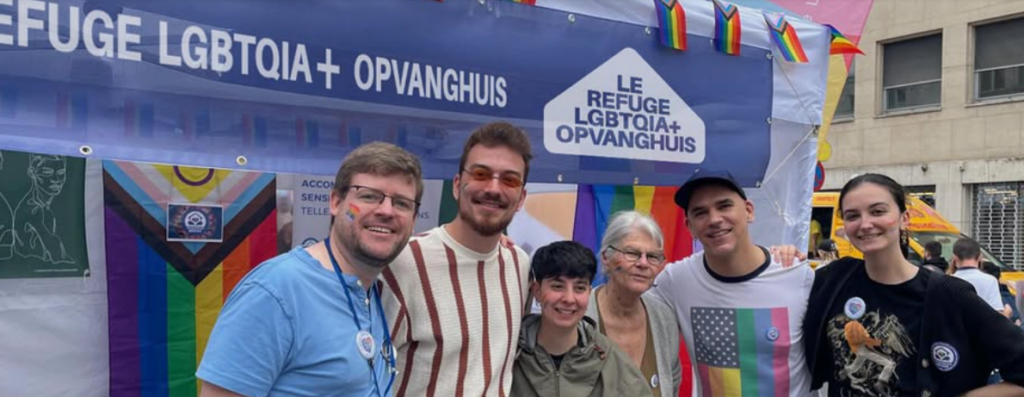
The building is there. Now it needs the things that turn accommodation into a place to live. CADAL, Le Refuge LGBTQIA+’s reception project for people seeking asylum, is preparing a new centre in Brussels and asking the community to help furnish it through a solidarity gift list. From a bedside lamp to a refrigerator for the whole centre, the campaign makes support tangible: everyday objects for people rebuilding their lives after fleeing persecution.
Safety is the starting point. A home takes more.
A room needs somewhere to sleep. It also needs light when you want to read, a kitchen where you can prepare a meal and shared spaces where living together becomes possible.
That is the idea behind CADAL’s appeal. According to the announcement, the new building has been secured, but its bedrooms, kitchen and communal areas still need equipping. The organisers have framed the campaign as a liste de naissance solidaire — a solidarity gift registry for a home coming into being.
The objects are ordinary. Their purpose is not.
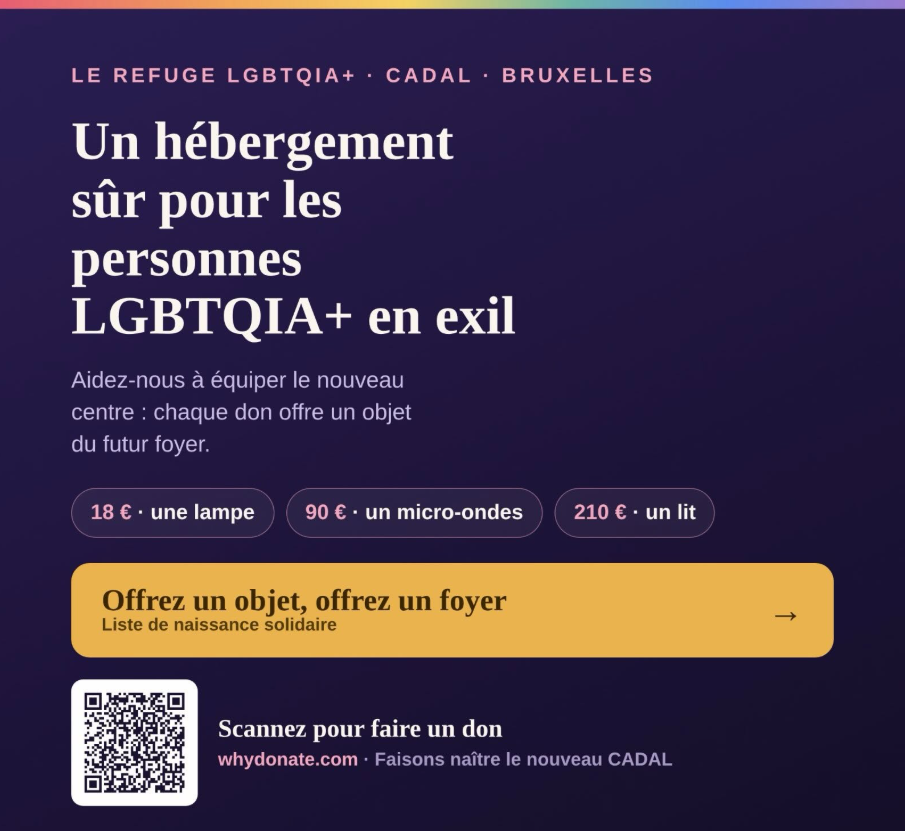
The campaign invites supporters to contribute towards concrete items rather than an abstract wish for a better future. The organisers state that donations go directly to the centre and emphasise that smaller contributions are welcome, too.
CADAL is not starting from zero
The new centre is another chapter in an existing project, not the launch of Brussels’ first LGBTQIA+ asylum accommodation service.
CADAL stands for Centre d’Accueil pour Demandeurs·euses d’Asile LGBTQIA+. Its initiative formally launched in 2021, following work by Le Refuge Bruxelles to develop accommodation responding to the particular circumstances of LGBTQIA+ people seeking international protection. KET reported on its inauguration that December.
Its purpose extends beyond a bed. CADAL describes an approach combining material support, psychosocial care and legal and medical orientation. Le Refuge also explains that the project accommodates particularly vulnerable queer adults referred by Fedasil, including people exposed to discrimination or violence in collective reception settings.
That distinction matters: CADAL is not simply a general emergency shelter with a rainbow on the door. It is a specialised reception project within Belgium’s asylum system.
Fleeing persecution should not mean hiding again
Leaving a country does not automatically remove every obstacle to living openly. The reason for specialised accommodation is precisely that an LGBTQIA+ person can still encounter discrimination or violence within a shared reception environment.
CADAL’s response combines accommodation with support tailored to the realities of exile: help navigating procedures, access to healthcare, psychosocial follow-up and assistance with rebuilding daily life in Belgium.
For LGBTQIA+ people today, this matters because the freedom to be yourself depends on material conditions as well as legal recognition — including having somewhere secure to sleep and people to turn to.
The key word is dignity. Future residents are not symbols of a campaign. They are people with different histories, relationships, abilities and plans, who need the practical foundations from which to pursue them.
A different kind of gift list
A bedside lamp will not resolve an asylum claim. A refrigerator cannot undo persecution. But neither is trivial in a home that needs to function.
The campaign’s strength is that it connects solidarity with the infrastructure of daily life. Lighting gives a bedroom a little more independence. A shared kitchen needs equipment before it can become somewhere people cook, talk or simply get on with their day.
Those are possibilities, not promises about how any individual resident will feel. Still, the premise is clear: meaningful support can include the unglamorous work of making sure a place is properly equipped.
There is no need to make the appeal more dramatic than it is. The building needs things. The people who will live there deserve those things to be there.
Not everyone can give — and the appeal recognises that
The organisers explicitly ask people who cannot donate to share the campaign instead. That keeps the invitation open without treating financial contribution as the only measure of community involvement.
CADAL also lists volunteering opportunities on its website, including accompanying residents to administrative or medical appointments. Anyone interested should contact the organisation about current needs and conditions rather than assume the new centre is accepting every type of help.
Likewise, a fundraising list is not automatically an invitation to drop off furniture. Before offering physical items, check what is needed, whether it can be accepted and how delivery would work.
Practical information
- Project: Equipping a new CADAL accommodation centre in Brussels for LGBTQIA+ people in exile, through Le Refuge LGBTQIA+.
- What the appeal covers: Bedrooms, kitchen equipment and shared living spaces, with examples ranging from bedside lamps to a refrigerator.
- Opening date: Not specified in the supplied announcement.
- Donate: The fundraiser is available through Le Refuge’s CADAL campaign on WhyDonate. Consult the live page for the current target, donation options and campaign updates.whydonate
- Share the appeal: Follow Le Refuge LGBTQIA+ on Facebook for its announcement and updates.
- About the service: Read CADAL’s presentation and Le Refuge’s project overview.
- Accommodation enquiries: CADAL operates through admission criteria that include a Fedasil designation; a donation does not provide access to a place, and the service should not be assumed to offer walk-in accommodation.
- Privacy: This article does not publish a residential address. Contact the organisation through its official channels rather than attempting to visit the centre.
Sometimes solidarity looks like a public statement. Sometimes it looks like a lamp switched on beside a bed — in a room where someone can begin again.
KET Magazine is a community‑driven, non‑profit magazine run by volunteers and based in Brussels. You can find our other music and nightlife stories on ket.brussels, and you can always write to us to share your projects or pitch a story: info@ket.brussels
You may also like
-

Bangkok, twelve points? Eurovision Asia is ready for its first big night
K-pop, beatboxing, folk-pop and a fresh set of national rivalries: Eurovision is taking its formula
-

US – A blue wave, new faces — and a gay man heading to the Senate
Democrats have won back control of the US House and Senate in the 3 November
-
Brussels Rainbow Village: More Than a Night Out
Just steps from Brussels’ Grand Place, the Saint Jacques neighbourhood is a place to meet,
-

Thirty-seven and still dancing: La Demence opens its birthday weekend at Fuse
La Demence turns 37 with three nights in Brussels, beginning at Fuse on Friday 30
-
Pleasure, care and no lectures: a pocket guide to gay sexual health
Sexual health is about more than a test result. In Le Petit Guide de la