
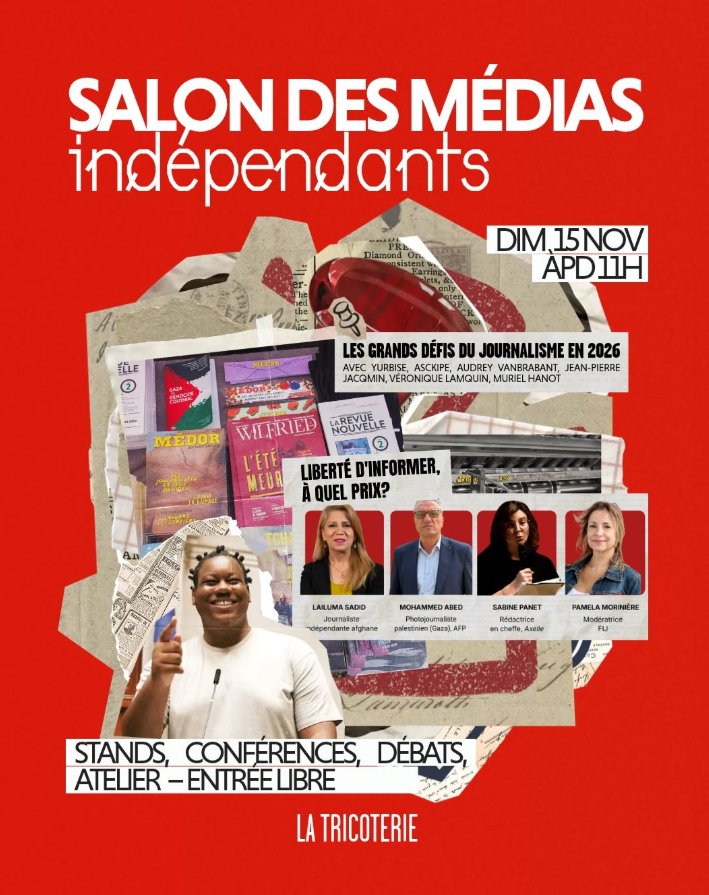
Less scrolling, more conversation. On Sunday 15 November, the Salon des médias indépendants brings journalists, magazines and audio projects to La Tricoterie in Saint-Gilles for a day of encounters, a feminist journalism workshop and debates on press freedom. The stands are free to visit from 11am to 6pm, with separately booked activities continuing until 8pm. For queer readers, it is a chance to ask not only who makes the news, but whose experiences get heard — and who gets to frame the story.
Step out of the feed and into the newsroom
There is something useful about meeting a publication away from its headlines. You can ask why it chose a subject, how it works, what it leaves out and how it pays the bills.
That is the proposition behind the Salon des médias indépendants. From 11am to 6pm, La Tricoterie’s Salon hosts a line-up of publications and projects including Wilfried, Médor, axelle, Politique, Tchak!, Imagine demain le monde, La Revue Nouvelle, Surimpressions, La Pointe and Alter Échos.
Géopolis, Studio Balado, Irruption Média, Le Ligueur, La Narrative and La Voix dans ta Tête are also announced, alongside the Conseil de déontologie journalistique, Belgium’s French- and German-language journalism ethics council.
According to the organisers’ programme, visitors can meet teams, discover their editorial approaches and explore their offers for readers and listeners. It is less about finding one publication that tells you everything than discovering different ways of looking at the world.
What changes when journalism starts from feminism?
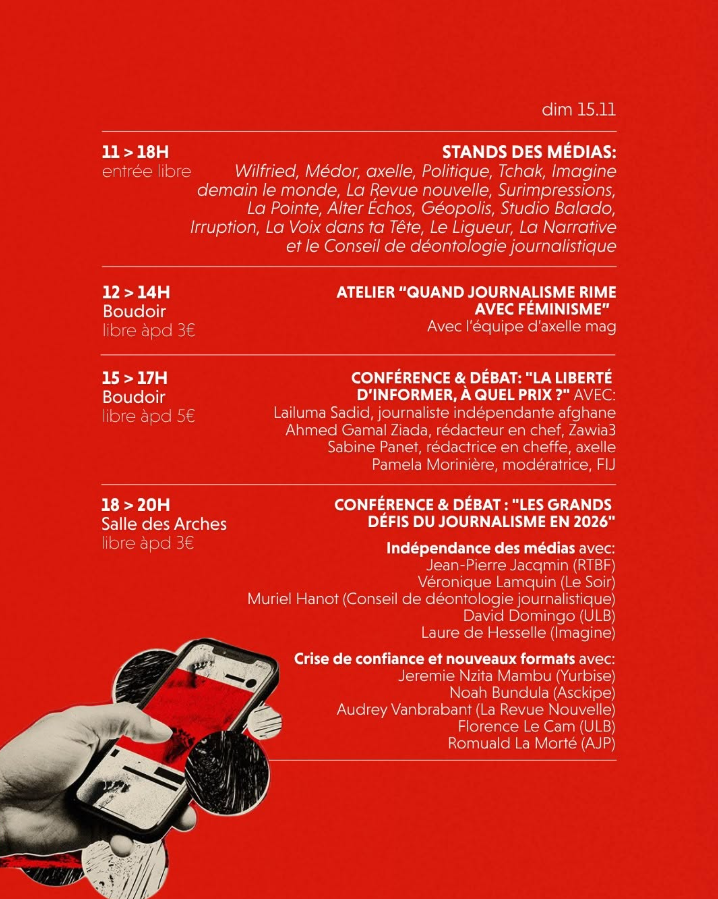
From noon to 2pm, axelle’s team leads Quand journalisme rime avec féminisme — “When journalism meets feminism” — in the Boudoir. The workshop is offered on a pay-what-you-can basis, with booking required, according to the supplied programme.
Its title opens a worthwhile set of questions. Who is treated as an expert? Whose experience becomes a headline? And when does reporting reproduce the assumptions it should be examining?
For KET readers, the connection is immediate. Gender, sexuality, class, disability and migration do not sit neatly in separate sections of someone’s life. Looking critically at how stories are constructed can help reveal what disappears when those experiences are separated or simplified.
The workshop should not be presented as a dedicated LGBTQIA+ session: that is not what the announcement promises. Its relevance lies in the opportunity to examine journalism’s perspective, rather than assume that any perspective is neutral.
Press freedom is not an abstract principle
At 3pm, the programme turns towards the risks involved in getting information into public view.
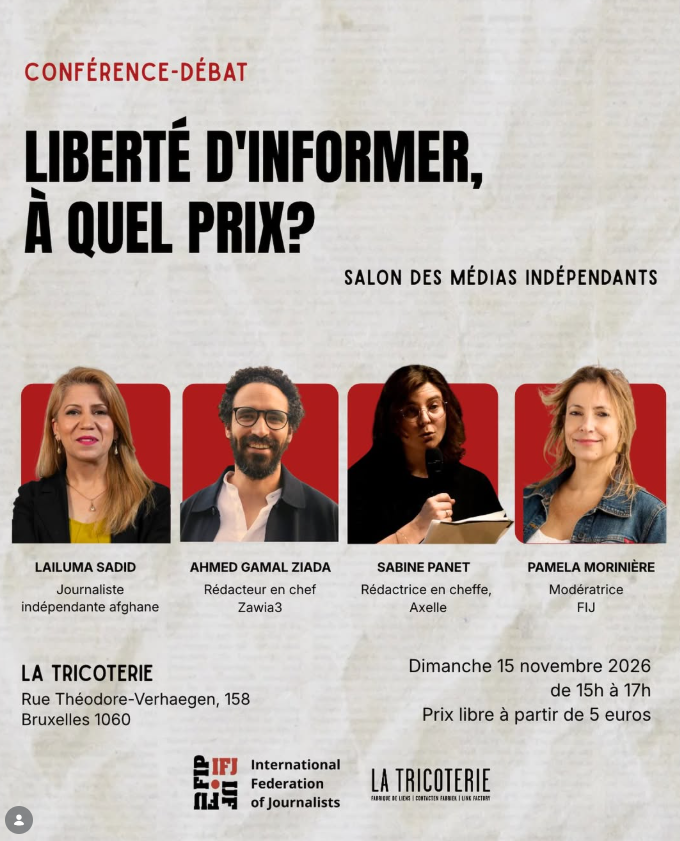
Organised by the International Federation of Journalists, La liberté d’informer, à quel prix ? asks how journalists work under political and economic pressure, intimidation and threats — and what those conditions mean for everybody’s right to information.
The venue’s current listing names Afghan freelance journalist Lailuma Sadid, Palestinian AFP photojournalist Mohammed Abed, and axelle editor-in-chief Sabine Panet, with Pamela Morinière moderating. This differs from the supplied social-media programme, which listed Ahmed Gamal Ziada; check the venue page for the final line-up.
That conversation shifts the focus from whether we like an individual article to the conditions that allow reporting to exist at all. A right to information means little if the people gathering it are pressured into silence.
Independent does not mean beyond scrutiny
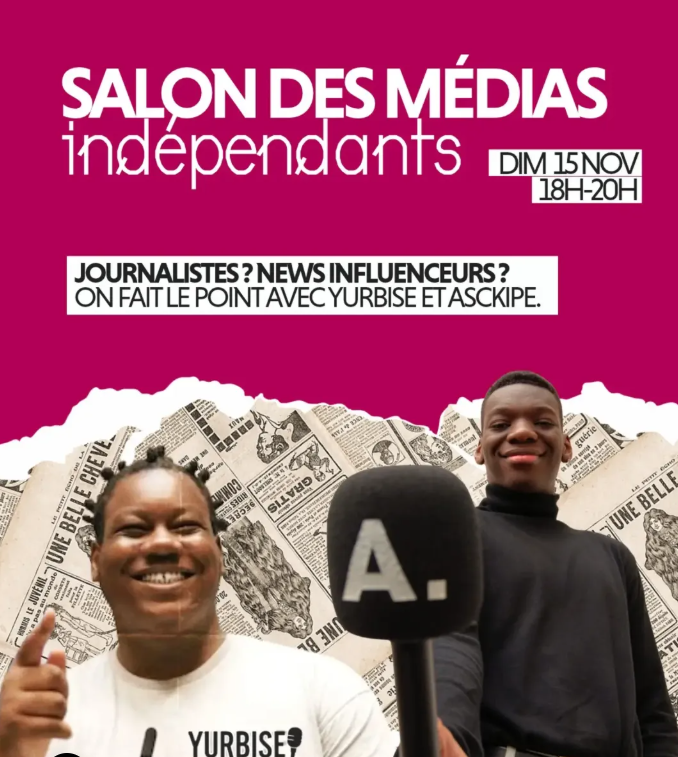
The evening debate, Les grands défis du journalisme en 2026, runs from 6pm to 8pm in the Salle des Arches. It brings public-service journalists, newspaper editors, researchers, content creators and journalism organisations into two connected discussions.
The first looks at independence: how can newsrooms protect their work amid political interference, private ownership and financial pressure? Speakers include Jean-Pierre Jacqmin of RTBF, Véronique Lamquin of Le Soir, Muriel Hanot of the Conseil de déontologie journalistique, Laure de Hesselle of Imagine demain le monde and ULB researcher David Domingo.
The second addresses trust and changing formats, with Yurbise, Audrey Vanbrabant of La Revue Nouvelle, Asckipe, ULB researcher Florence Le Cam and Romuald La Morté of AJP/RTBF.
The useful point is not to divide the room into virtuous independent outlets and untrustworthy institutions. Independence is something to examine through ownership, funding, editorial decisions and accountability — not simply a label that settles the question.
Why this belongs in a queer diary
For LGBTQIA+ people today, journalism matters because it helps shape whether our lives are understood in their complexity or reduced to a controversy.
That makes representation a question of method as much as visibility. Being mentioned is not the same as being listened to. An article can include queer people while still allowing others to define the terms of the discussion.
The salon is not announced as a queer media event. But it creates room for questions queer audiences have every reason to ask: how do you choose sources, handle disagreement, protect people sharing sensitive experiences and correct mistakes?
Meeting journalists does not require agreeing with them. Sometimes the most useful conversation begins with a respectful challenge.
Practical information
- Event: Salon des médias indépendants.
- Date: Sunday 15 November 2026.
- Venue: La Tricoterie, Rue Théodore Verhaegen 158, 1060 Saint-Gilles, Brussels.
- Stands: 11am–6pm in the Salon; free admission, according to the organisers’ announcement.
- Language: The programme is presented in French. English interpretation is not announced.
- Accessibility: The event pages consulted do not detail step-free routes, accessible toilets, hearing support or interpretation. Contact the venue to confirm specific requirements.
- Venue contact: +32 (0)2 537 96 69.
Workshops and debates
| Activity | Time and room | Admission and booking |
|---|---|---|
| Quand journalisme rime avec féminisme — axelle workshop | Noon–2pm, Boudoir | Pay what you can; booking required through the workshop page, as indicated in the supplied programme |
| La liberté d’informer, à quel prix ? | 3pm–5pm, Boudoir | Choose your price from €5; see the venue’s event page for booking and the updated panel. tricoterie |
| Les grands défis du journalisme en 2026 | 6pm–8pm, Salle des Arches | Choose your price from €3; book through the official debate page. tricoterie |
A magazine you have never opened, a question you have been wanting to ask, a conversation that changes how you read: there are worse ways to spend a Sunday.
KET Magazine is a community‑driven, non‑profit magazine run by volunteers and based in Brussels. You can find our other music and nightlife stories on ket.brussels, and you can always write to us to share your projects or pitch a story: info@ket.brussels
You may also like
-
After the party, parenthood: Jordan Firstman’s Club Kid changes the guest list
One minute you are running the night. The next, a ten-year-old is calling you Dad.
-
Who’s shaping you? Sous Influence takes over a Brussels townhouse
Your family, your feed, your beliefs: how much of who you are did you actually
-
Turn up the resistance: a Brussels gathering puts art and freedom of expression centre stage
What if an orchestra belonged as much in a public square as in a concert
-
No name tag needed: 330 Brussels artists take over Vanderborght
From 13 to 15 November 2026, Carte de Visite | ARTopenKUNST brings 330 Brussels artists
-
Cross the border, change the picture: NEXT Festival returns with queer stories and bodies in motion
From 13 November to 4 December 2026, NEXT Festival turns the Franco-Belgian border region into