

Budapest Pride is in danger, and Europe cannot stay silent. Hungarian Prime Minister Viktor Orbán is once again targeting LGBTQIA+ rights, proposing constitutional amendments to restrict gender identities and calling Pride events “LGBTQ+ propaganda.” Now, his government is hinting at banning Pride altogether.
This is why the European LGBTQIA+ Media Association (ELMA) is urging European Commissioner Hadja Lahbib to take immediate action to protect the safety and freedom of Pride events in Budapest and across Europe.

At KET.brussels, we refuse to stand by while another European country erases queer visibility. And we are not alone. LGBTQIA+ media across Europe—from Greece (ANTIVIRUS magazine), Germany (BLU media group), Italy (GAY.IT), Hungary (HUMEN magazine), Czech Republic (LUI magazine), Spain (SHANGAY magazine), France (STROBO magazine), to the Netherlands (WINQ magazine)—are calling on Europe to take a stand.
We’ve seen this before. EuroPride 2022 in Belgrade faced similar threats, but international pressure forced the government to back down. Now, it’s Hungary’s turn. Will the EU let Orbán erase LGBTQIA+ visibility, or will it take action?

Pride is not a privilege—it’s a right. The time to act is now. KET.brussels joins ELMA in demanding that the European Commission steps in. Contact your representatives. Speak up! Show Budapest Pride they are not alone!
You may also like
-

At Liège’s Queer Families Festival, Every Family Has a Story
The third edition of the Queer Families Festival takes place on 11 October at the
-
Türkiye’s LGBTQIA+ Community Faces a New Wave of Pressure
LGBTQIA+ people in Türkiye are living through a sharp escalation in state pressure: Pride events
-

Fiji Declares a National HIV Emergency — and the World Must Pay Attention
Fiji has declared a national HIV emergency after a dramatic rise in diagnoses: 2,016 people
-

“After”: Listening to LGBTQIA+ Survivors Speak About Intimate Partner Violence
On 8 October, Tels Quels invites people to Les Grands Carmes in central Brussels for
-
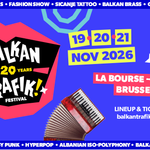
Balkan Trafik! Turns Brussels’ Bourse into a Three-Day Balkan Universe
After a year away, Balkan Trafik! returns to Brussels from 19 to 21 November 2026