

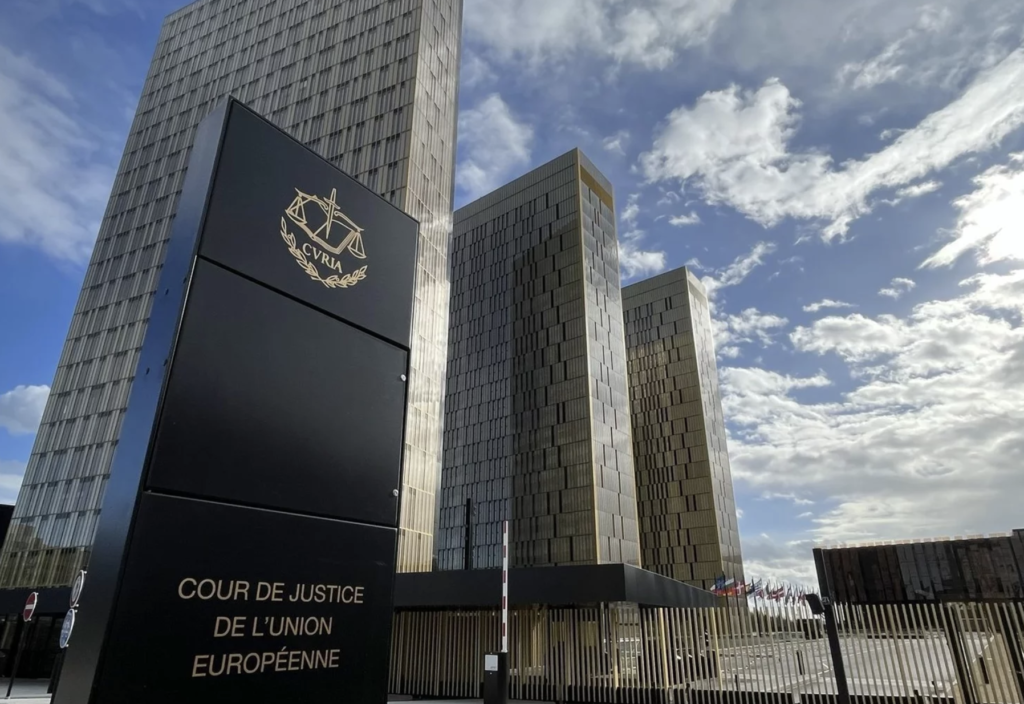
On March 13, the European Court of Justice (ECJ) ruled that Hungarian authorities must correct gender identity data when it is inaccurate. This means that trans people must be allowed to amend their official documents to reflect their lived reality. The ruling comes in response to a case brought forward by a trans man who, after being granted refugee status in Hungary, sought legal gender recognition. However, since 2020, the Hungarian government has outright banned legal gender recognition, effectively erasing trans people from official records.

Despite the clear protections offered by EU regulations—particularly GDPR Article 16, which guarantees the right to rectify personal data—Hungary has continuously blocked trans individuals from exercising this right. The ECJ ruling makes it clear: Hungary’s refusal to allow trans people to update their documents is a direct violation of EU law. Authorities cannot hide behind national legislation to escape their obligations under European regulations.
Crucially, the court also ruled that trans people must not be required to undergo surgery to have their gender legally recognized. This is a significant point, given Hungary’s relentless attacks on trans healthcare and rights.
Instead of complying with the ruling, the Hungarian government has reacted with predictable hostility. Just days before the court’s decision, the ruling Fidesz party introduced a constitutional amendment aimed at reinforcing its anti-trans stance. The amendment explicitly bans any possibility of changing one’s gender in legal records. This move is not just defiance—it is a calculated attack on Hungary’s trans community, sending a clear message that the state refuses to acknowledge their existence and dignity.
This ECJ decision is a victory for trans rights in Hungary and across the EU. It underscores that despite the Orbán regime’s best efforts, European law still stands as a safeguard for fundamental rights. However, the fight is far from over. Hungary’s LGBTQ+ community continues to face systematic discrimination, and the government’s willingness to ignore legal rulings is deeply troubling.
At KET.brussels, we stand in full solidarity with Hungary’s LGBTQ+ community. No government should have the power to erase people’s identities. Today, we celebrate a legal victory against bigotry—but we remain vigilant, knowing that the struggle for true equality is far from won.
You may also like
-

At Liège’s Queer Families Festival, Every Family Has a Story
The third edition of the Queer Families Festival takes place on 11 October at the
-

Türkiye’s LGBTQIA+ Community Faces a New Wave of Pressure
LGBTQIA+ people in Türkiye are living through a sharp escalation in state pressure: Pride events
-

Fiji Declares a National HIV Emergency — and the World Must Pay Attention
Fiji has declared a national HIV emergency after a dramatic rise in diagnoses: 2,016 people
-

“After”: Listening to LGBTQIA+ Survivors Speak About Intimate Partner Violence
On 8 October, Tels Quels invites people to Les Grands Carmes in central Brussels for
-

Balkan Trafik! Turns Brussels’ Bourse into a Three-Day Balkan Universe
After a year away, Balkan Trafik! returns to Brussels from 19 to 21 November 2026