
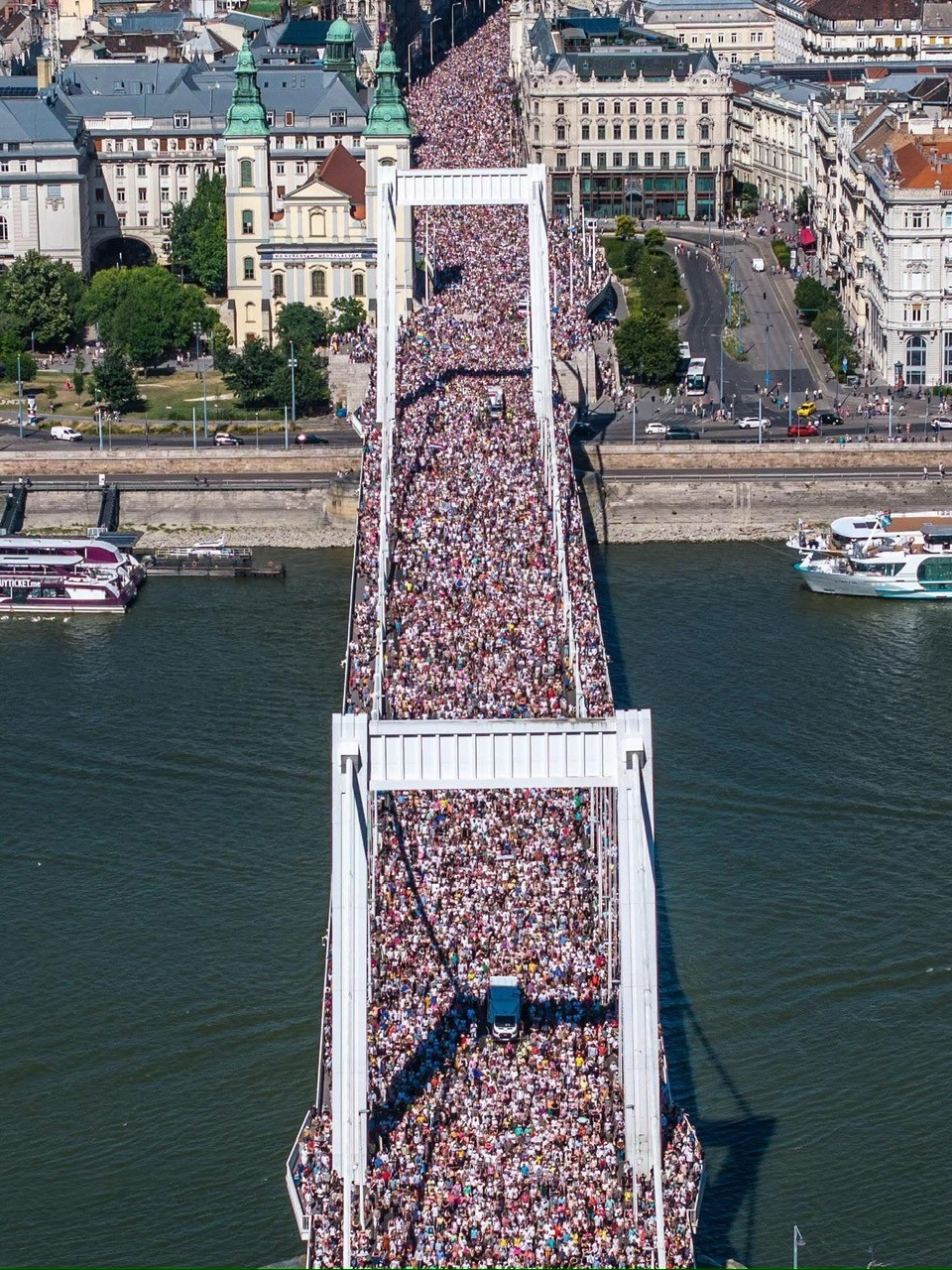
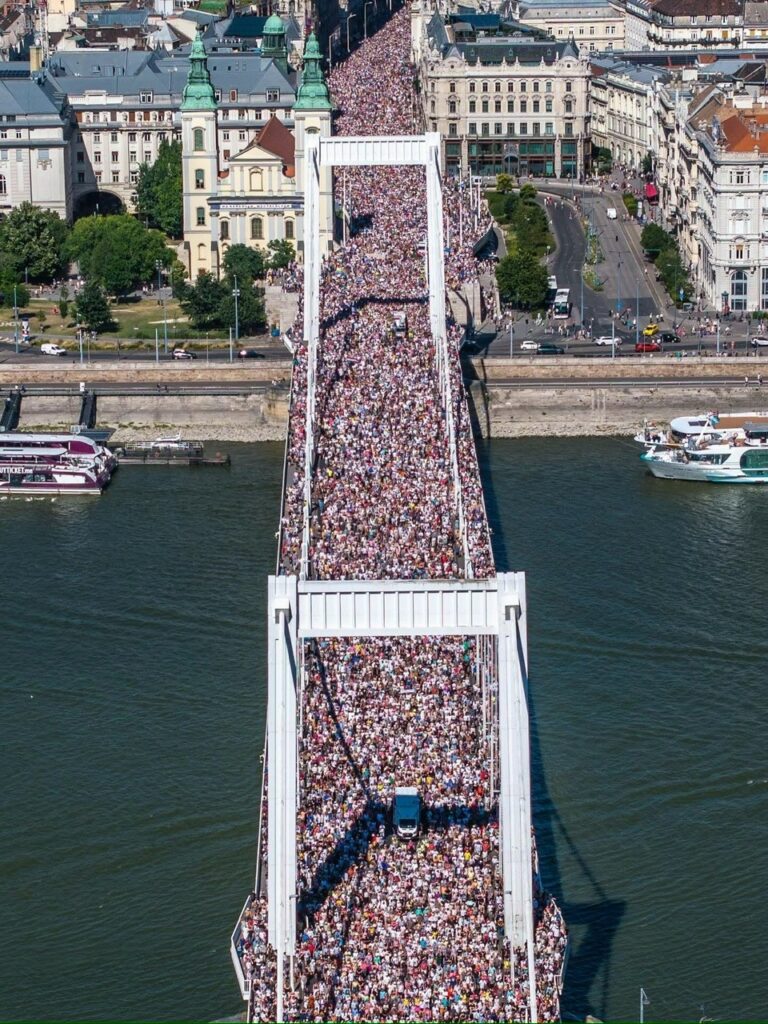
On Saturday, June 28, 2025, the Hungarian capital experienced a historic moment: tens of thousands, with estimates ranging from 100,000 to 200,000 according to organizers, gathered to march in the Budapest Pride parade, defying an official ban imposed by the government of Viktor Orbán. This gathering, marking the 30th anniversary of the march, became a symbol of resistance and solidarity in the face of the rollback of LGBTQ+ rights in the country.
A Tense Context and a Controversial Ban
The nationalist government of Viktor Orbán passed a law last spring aiming to ban the Pride event, justifying the measure as “protecting children” and preventing minors from being exposed to homosexuality or gender identity issues. This ban, accompanied by threats of sanctions (fines up to €500 and a year in prison for organizers), sparked outrage from the international community and European institutions. More than 70 European parliamentarians, commissioners, and mayors from nearly 30 countries traveled to support the march.
Record Crowds and a Festive Atmosphere
Despite the risks, crowds gathered under rainbow flags in an atmosphere that was both festive and determined. Families, young people, seniors, heterosexuals, and members of the LGBTQ+ community marched together, crossing the Elisabeth Bridge and the Danube riverbanks, transforming the city into a colorful mosaic of solidarity. “I’ve never seen so many people,” said Adam Makovecz, a participant for nine years, moved by the massive presence of heterosexual allies.
International Solidarity and Political Tensions
Budapest Pride 2025 took on major political significance. The city’s Green Party mayor, Gergely Karácsony, reaffirmed that the event was organized by the municipality and thus not subject to the new restrictive laws. He also praised international solidarity and called on the police to protect participants from far-right counter-demonstrations, which were permitted by authorities.
The European Commission, through its president Ursula von der Leyen, called on Hungary to guarantee the freedom to demonstrate without fear of reprisals. Viktor Orbán, for his part, accused the European Union of trying to impose its values on Hungary, comparing the situation to Moscow’s attitude toward satellite countries.
A Powerful Message for Freedom and Love
“Freedom and love cannot be banned!”: this message, displayed prominently in Budapest, encapsulates the spirit of the march. Despite police surveillance, facial recognition, and threats of sanctions, Budapest Pride 2025 will be remembered as a moment of resistance, joy, and hope for fundamental rights in Europe.
You may also like
-

US – A blue wave, new faces — and a gay man heading to the Senate
Democrats have won back control of the US House and Senate in the 3 November
-

Brussels Rainbow Village: More Than a Night Out
Just steps from Brussels’ Grand Place, the Saint Jacques neighbourhood is a place to meet,
-

Thirty-seven and still dancing: La Demence opens its birthday weekend at Fuse
La Demence turns 37 with three nights in Brussels, beginning at Fuse on Friday 30
-
Pleasure, care and no lectures: a pocket guide to gay sexual health
Sexual health is about more than a test result. In Le Petit Guide de la
-

Mideterms Elections in US – The Closetocracy: when the closet becomes a question of power
The Closetocracy, now available on YouTube through The Young Turks, puts secrecy, sexuality and political