

On Sunday, Turkish police detained at least 30 people in central Istanbul as they attempted to participate in a Pride march that had been banned by local authorities, according to a statement by an opposition lawmaker. The incident marks another chapter in Turkey’s ongoing crackdown on LGBTQ+ demonstrations and gatherings.
The Istanbul Governor’s Office had issued a warning earlier in the day, making it clear that the Pride event would not be permitted. Authorities blocked access to central areas, shut down public transportation lines, and deployed large numbers of police officers to prevent the march from taking place. Despite these measures, activists and supporters gathered, only to be met with forceful police intervention.
Eyewitnesses reported that police searched the streets for participants and quickly detained those who tried to assemble. The annual Pride march, which is celebrated in cities around the world during June, has faced repeated bans in Istanbul since 2015, when the government cited unspecified “security reasons” for prohibiting the event. President Recep Tayyip Erdogan’s conservative government has frequently targeted the LGBTQ+ community, portraying them as a threat to traditional family values.
Homosexuality is not illegal in Turkey, but the country has seen a rise in anti-LGBTQ+ rhetoric and restrictions on public gatherings. The latest detentions have drawn condemnation from human rights organizations, which argue that the bans and arrests violate constitutional protections and international human rights standards.
Despite the repression, LGBTQ+ activists remain defiant. Some groups managed to reconvene in other parts of the city, vowing to continue their struggle for equality. “We never get tired of deceiving the police and forcing them to deal with us,” read a statement from one group, reflecting the determination of the community to assert their rights.
The ongoing crackdown has raised serious concerns among rights advocates about the shrinking space for peaceful public gatherings and freedom of expression in Turkey. As the country continues to suppress LGBTQ+ activism, solidarity actions and international attention remain crucial in supporting the fight for equal rights.
Ten LGBTI+ activists were detained and subjected to torture. For the first time since 2015, four of the detained activists were referred to court with a demand for arrest. Later, all four of them were released.
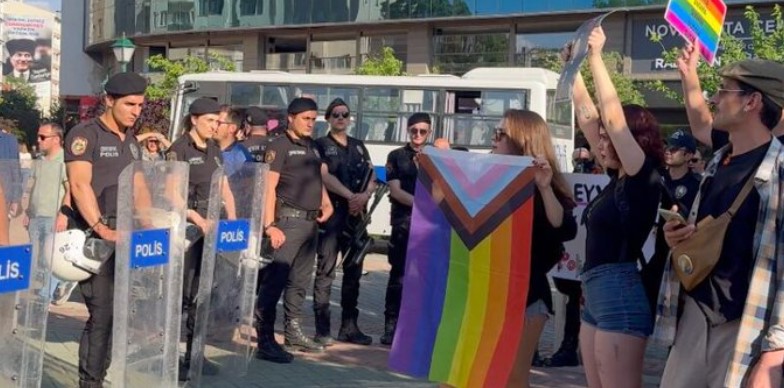
Eskişehir Pride, photo by Nalin Öztekin
You may also like
-

At Liège’s Queer Families Festival, Every Family Has a Story
The third edition of the Queer Families Festival takes place on 11 October at the
-

Türkiye’s LGBTQIA+ Community Faces a New Wave of Pressure
LGBTQIA+ people in Türkiye are living through a sharp escalation in state pressure: Pride events
-

Fiji Declares a National HIV Emergency — and the World Must Pay Attention
Fiji has declared a national HIV emergency after a dramatic rise in diagnoses: 2,016 people
-

“After”: Listening to LGBTQIA+ Survivors Speak About Intimate Partner Violence
On 8 October, Tels Quels invites people to Les Grands Carmes in central Brussels for
-

Balkan Trafik! Turns Brussels’ Bourse into a Three-Day Balkan Universe
After a year away, Balkan Trafik! returns to Brussels from 19 to 21 November 2026