
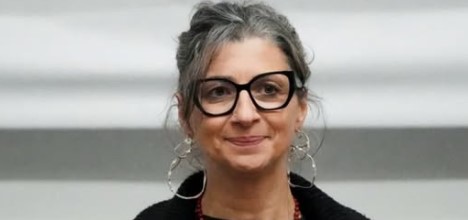
Francesca Albanese, the UN Special Rapporteur on the situation of human rights in the Palestinian territories occupied since 1967, says her life has become a “rollercoaster” since she spoke out on Gaza. In recent interviews, she has described what she calls punishment without due process, after the United States placed her under sanctions that dramatically restrict her financial and professional life.
The move came after Washington added her to its Specially Designated Nationals list, a measure normally used against people accused of terrorism, drug trafficking or other severe offences. According to reporting and legal statements, the sanctions bar U.S. persons from dealing with her property, freeze assets held in U.S. bank accounts, and make travel to the United States impossible.
What the sanctions mean
Albanese says the consequences have been immediate and deeply practical. She describes blocked accounts, loss of access to international financial services, and a dependence on friends and relatives just to manage everyday expenses. She also says her Washington apartment was seized, adding another layer of financial and personal pressure.
That level of restriction is not symbolic. As the Bar Human Rights Committee noted, sanctions of this kind can freeze assets and prevent any U.S. person from engaging with the targeted individual’s property interests, which creates a severe form of isolation in global finance.
Family pressure too
The pressure, Albanese says, extends well beyond her own life. She claims her children have received threats and that her husband, Massimiliano Calì, left his position at the World Bank under pressure. That makes the story less about one official and more about the wider cost of speaking publicly on Israel’s war in Gaza.
This is part of what makes her case so striking: the sanctions are not only punishing a UN expert for her reporting, but also creating a climate of fear around her family and immediate circle. In Albanese’s telling, the goal is not simply legal restraint but deterrence through intimidation.
Why this matters beyond one person
The case has become a flashpoint in the broader conflict over accountability, international law and the role of UN special procedures. Human rights bodies have warned that sanctions against Albanese threaten the independence of the UN system and can chill other mandate holders who investigate abuses.
Reuters has also reported that the sanctions follow Albanese’s criticism of companies she says are complicit in settlement activity and military operations, while the U.S. government argues she engaged in “illegitimate and shameful efforts” to push ICC action against U.S. and Israeli interests.
For Ket readers, the relevance is not only geopolitical. It is also about how institutions try to silence uncomfortable speech, how power responds when confronted, and what happens when someone insists on naming violence even when the cost becomes personal.
“I have no choice but to continue”
Despite everything, Albanese insists she is not backing down. “Ma liberté est plus forte que ma peur,” she says, and adds: “Je n’ai pas d’autre choix que de continuer.” Those lines are the emotional core of this story: a reminder that, for some defenders of human rights, speaking out is no longer an abstract professional duty but a lived act of resistance.
Useful links
For background reading, see the OHCHR statement on the sanctions, the UN Special Procedures condemnation, and Reuters’ coverage of the sanctions here and here.
KET Magazine is a community‑driven, non‑profit magazine run by volunteers based in Brussels. Get in touch to share your thoughts or tell us about your activities. You can also promote your events on our website or support our work with a donation. Contact us at Info@ket.brussels.
You may also like
-
At Liège’s Queer Families Festival, Every Family Has a Story
The third edition of the Queer Families Festival takes place on 11 October at the
-
Türkiye’s LGBTQIA+ Community Faces a New Wave of Pressure
LGBTQIA+ people in Türkiye are living through a sharp escalation in state pressure: Pride events
-
Fiji Declares a National HIV Emergency — and the World Must Pay Attention
Fiji has declared a national HIV emergency after a dramatic rise in diagnoses: 2,016 people
-

“After”: Listening to LGBTQIA+ Survivors Speak About Intimate Partner Violence
On 8 October, Tels Quels invites people to Les Grands Carmes in central Brussels for
-

Balkan Trafik! Turns Brussels’ Bourse into a Three-Day Balkan Universe
After a year away, Balkan Trafik! returns to Brussels from 19 to 21 November 2026