
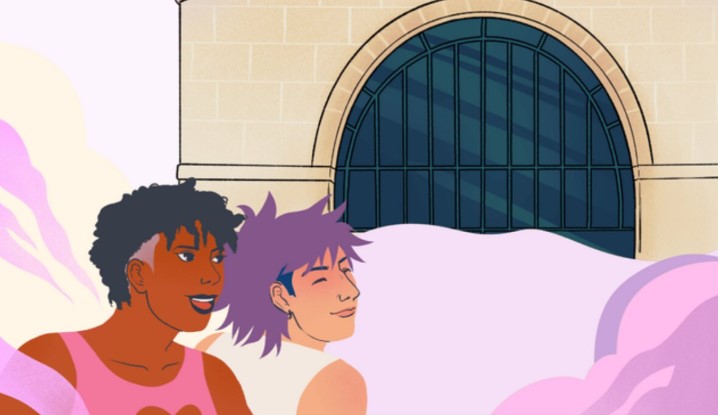
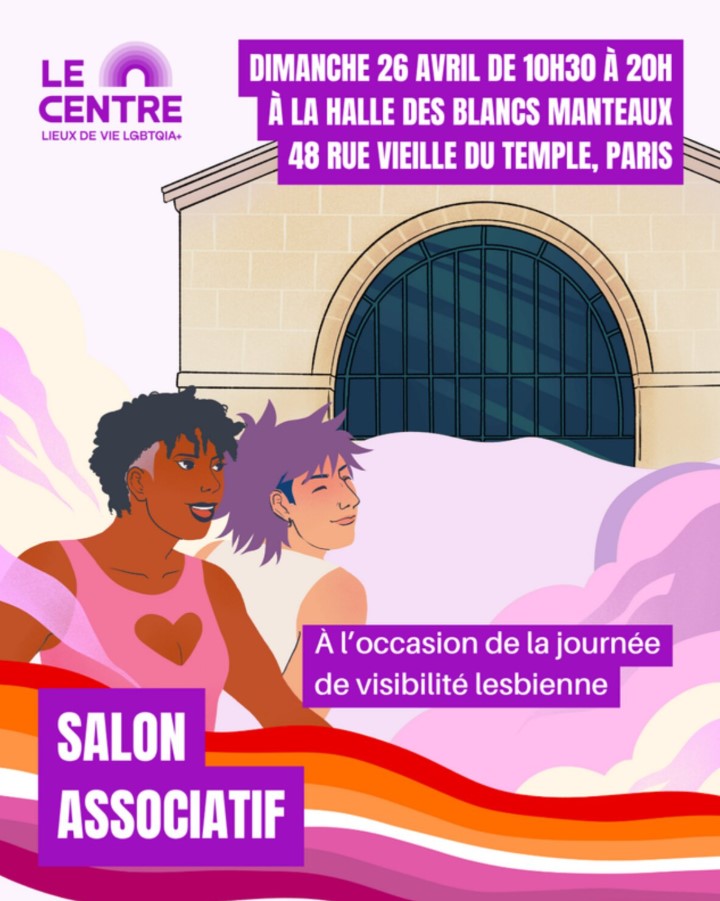
Every April 26, Lesbian Visibility Day reminds us that being seen is not a minor symbolic gesture. It is still a political demand, especially for lesbians who remain underrepresented in media, public life and LGBTQ+ spaces themselves.
The day exists to push back against lesbophobia and against the habit of treating lesbian lives as secondary, invisible or easier to ignore. That invisibility has real consequences: fewer public role models, weaker policy attention and a persistent tendency to flatten lesbian identity into cliché or silence.
Why this date matters
The April 26 date is widely linked to the 1993 U.S. Supreme Court decision in Lambert v. Wicklund, which recognised parental rights for a lesbian mother in a custody context. It later became a fixed date for visibility actions in several countries, while some places continue to use different dates or formats.
That legal reference matters because lesbian visibility has never been only about representation. It is also about family rights, bodily autonomy, parenthood, safety and the right to exist in public without being reduced to a stereotype or a talking point.
Belgium is marking it too
In Belgium, the day is increasingly tied to community programming rather than just a symbolic mention. Tels Quels is among the organisations highlighting the date in Brussels, while Brussels also appears in 2026 Lesbian Visibility Week communications and related community posts.
That matters in a city like Brussels, where queer visibility can be loud at Pride but still uneven the rest of the year. A day like this creates space to centre lesbian voices, stories and needs on their own terms, instead of folding them into a broader LGBTQ+ agenda that can still default to male-centric narratives.
Beyond symbolism
Lesbian visibility is not just about “celebrating identities.” It is about naming the structural issues that still shape lesbian lives: lesbophobia, racism, trans exclusion, economic precarity, health inequalities and the chronic absence of lesbian narratives in culture and politics.
That is why the day remains useful. It forces institutions, media outlets and queer organisations to ask a simple question: who gets to be seen, who gets to speak, and who still gets left out when visibility is supposed to be inclusive?
Useful links
For background reading, see the Ville de Paris page on Lesbian Visibility Day and the Belgian community link from Tels Quels. For a broader rights-based perspective, Amazone’s explainer is also useful: 26 avril : Journée Internationale de la visibilité lesbienne.
KET Magazine is a community‑driven, non‑profit magazine run by volunteers based in Brussels. Get in touch to share your thoughts or tell us about your activities. You can also promote your events on our website or support our work with a donation. Contact us at Info@ket.brussels.
You may also like
-
At Liège’s Queer Families Festival, Every Family Has a Story
The third edition of the Queer Families Festival takes place on 11 October at the
-
Türkiye’s LGBTQIA+ Community Faces a New Wave of Pressure
LGBTQIA+ people in Türkiye are living through a sharp escalation in state pressure: Pride events
-
Fiji Declares a National HIV Emergency — and the World Must Pay Attention
Fiji has declared a national HIV emergency after a dramatic rise in diagnoses: 2,016 people
-

“After”: Listening to LGBTQIA+ Survivors Speak About Intimate Partner Violence
On 8 October, Tels Quels invites people to Les Grands Carmes in central Brussels for
-

Balkan Trafik! Turns Brussels’ Bourse into a Three-Day Balkan Universe
After a year away, Balkan Trafik! returns to Brussels from 19 to 21 November 2026