

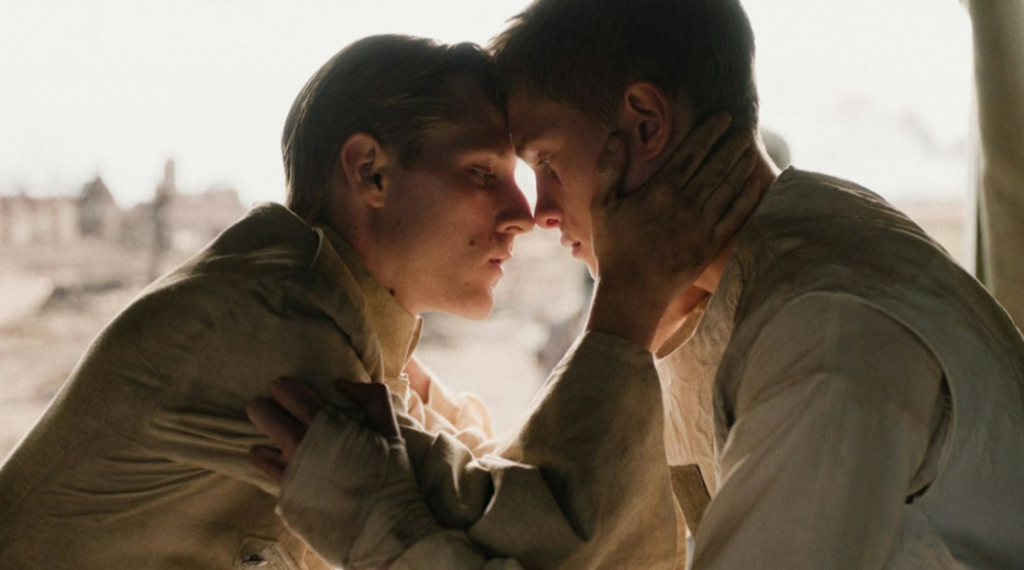
In Coward, a young soldier looking to prove himself finds something he did not expect behind the front: a stage, a performer and the possibility of love. Belgian filmmaker Lukas Dhont’s third feature places a romance between two men amid the violence of the First World War. Now showing at Cineflagey in Brussels until 22 November, it brings queer desire into a setting more often associated with duty, sacrifice and tightly policed ideas of manhood.
A different kind of encounter at the front
Belgium, 1916. Pierre, a shy young man from a farming family, arrives in a world organised around military orders and survival. Behind the lines, a group of performers works to keep soldiers’ spirits up. Among them is Francis, a charismatic tailor who leads the troupe. Their meeting opens a different space within the machinery of war.
Emmanuel Macchia plays Pierre opposite Valentin Campagne as Francis. The contrast between the two characters is central to the premise: one withdrawn, the other exuberant, they find themselves drawn towards each other as the threat of combat hangs over their lives.
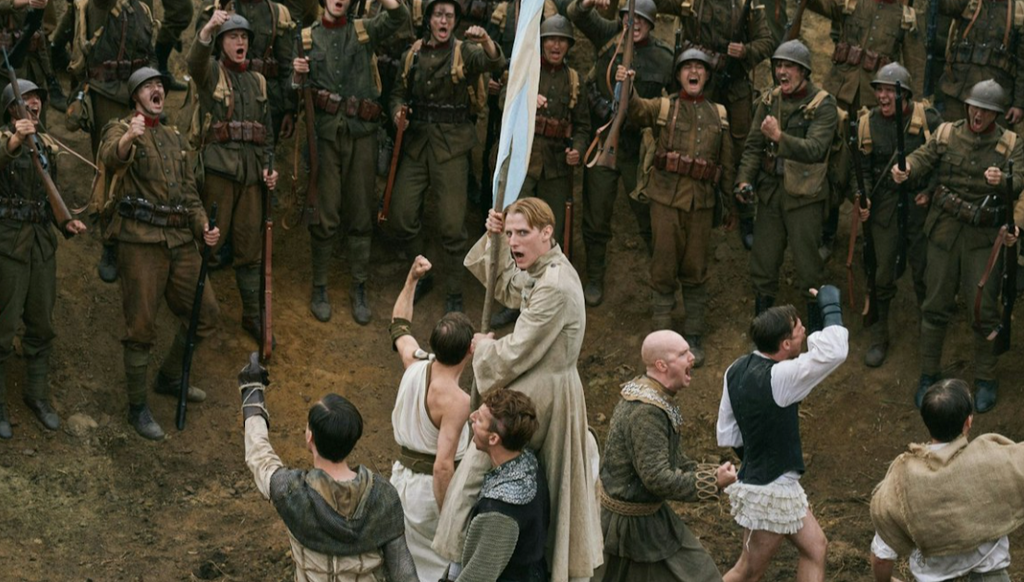
Co-written by Dhont and Angelo Tijssens, Coward follows Girl and Close, taking the director’s interest in intimacy and the pressures placed on young people into a historical setting.
A photograph, a costume and another version of history
The project began with an image: an amateur photograph taken in 1914 showing a man dressing in women’s clothing behind the Belgian front. That photograph helped inspire Dhont’s exploration of performance, desire and the lives unfolding beyond the trenches.
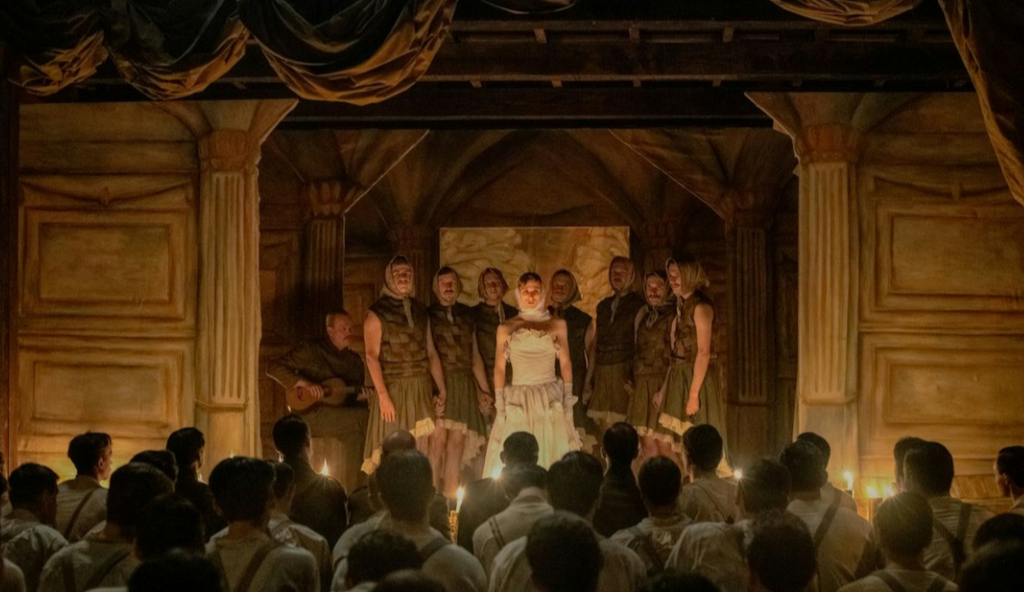
The theatrical revue becomes more than background entertainment. It gives the characters a place to make something together, briefly opening a different world within the one imposed on them by war. Singing, dancing and dressing up sit alongside the uniforms and expectations of military life.
It is a compelling point of departure for a queer historical drama. Rather than treating queer experience as an addition to history, the film begins with a trace already there — and uses fiction to imagine the emotional possibilities around it. The photograph is an inspiration, not documentary proof of the characters’ love story.
Who gets to define courage?
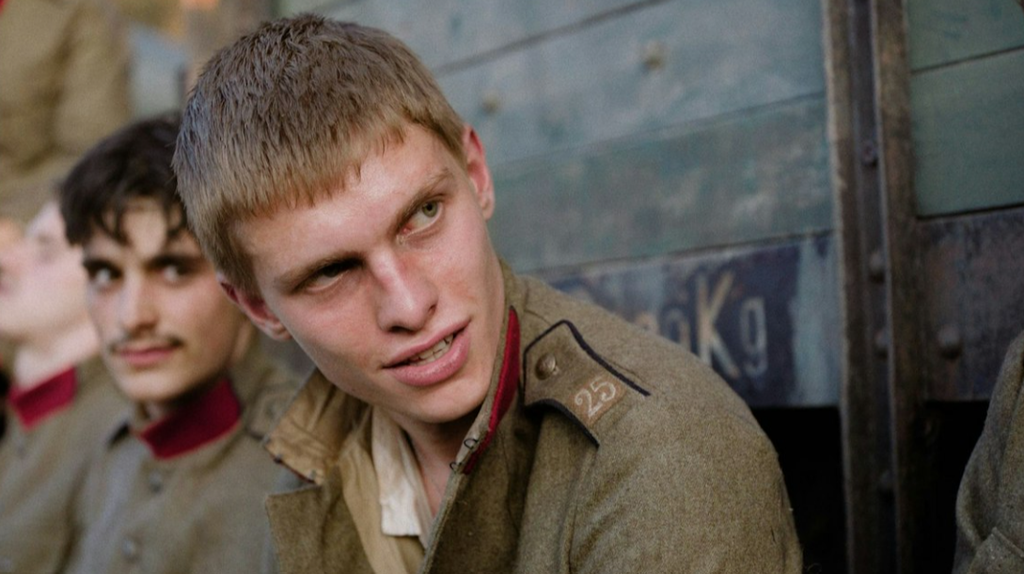
The title makes its challenge clear. What does it mean to be called a coward in a world that demands you risk your life? And what happens when desire draws you away from the role you are expected to perform?
As Cinergie notes, the film questions the apparent opposition between bravery and flight: refusing destruction can also mean choosing survival, love and the possibility of another life.
For LGBTQIA+ audiences, Coward matters today because it places queer love inside a national wartime story while questioning the narrow forms of masculinity through which courage is so often understood.
That is the film’s most interesting promise: tenderness is not simply a pause between acts of violence, but a way of challenging the values around them.
A Belgian film that invites discussion
Coward arrives with considerable festival attention. Macchia and Campagne jointly received the Best Actor award at Cannes, where the film screened in competition. It is also Belgium’s submission for the 2027 Oscars — a submission, rather than a confirmed nomination.
That recognition does not mean the response has been unanimous. VRT praised Dhont’s move into a larger historical canvas, while RTBF critic Hugues Dayez expressed reservations about whether the film recaptures the emotional precision of Girl and Close.
For viewers, that leaves room for a conversation beyond the awards: how does a filmmaker balance a private love story with the scale of war? And can theatre offer genuine resistance, rather than only temporary escape? Those are good questions to take into the screening — and perhaps into a drink afterwards.
Practical information: screenings at Flagey
Cineflagey by Cinematek & Kinograph presents the film in French with Dutch subtitles. No English subtitles are listed, an important detail for Brussels’ international audience. Flagey gives the running time as 120 minutes.
The following screenings remain on the published programme as of 24 October:
| Date | Screening time |
|---|---|
| Friday 30 October 2026 | 18:15 |
| Sunday 1 November 2026 | 18:40 |
| Thursday 5 November 2026 | 18:50 |
| Friday 6 November 2026 | 21:05 |
| Thursday 12 November 2026 | 16:10 |
| Thursday 19 November 2026 | 17:00 |
| Sunday 22 November 2026 | 14:15 |
All dates and times are listed on Flagey’s film page. Check the booking page for availability or programme changes.
- Venue: Flagey, Place Sainte-Croix, 1050 Ixelles, Brussels.
- Tickets: €7–€10.50.
- Cinema card: Flagey also lists a 2026 Cineflagey card offering five films for €38.
- Language: French, with Dutch subtitles.
- Running time: 120 minutes.
- Booking: Choose your screening on the official Flagey page.
- Access requirements: The film page does not detail screening-specific accessibility arrangements. Contact Flagey on +32 (0)2 641 10 20 to confirm what you need before booking.
A war film, a love story and a stage behind the lines: Coward offers several ways into its world — and a reason to look beyond the familiar image of the soldier.
You may also like
-

Endless Summer Camp: Scout Rules Meet Queer Desire at Balsamine
Summer might be over, but Sophie Guisset has other plans. From 19 to 28 November
-

Escher in Brussels: Who Said Reality Had to Behave?
Staircases refuse to play by the rules, birds become fish, and two hands draw each
-

When Nuns Go Pirate: A Queer Sacred Thriller at Varia
What happens when lesbian love, religious memory and horror theatre enter a locked convent—and refuse
-
KET in Paris — Le Hasard Ludique, Where the Tracks Lead to Music
For this stop in our KET in Paris series, we visited Le Hasard Ludique, a
-

At Liège’s Queer Families Festival, Every Family Has a Story
The third edition of the Queer Families Festival takes place on 11 October at the