
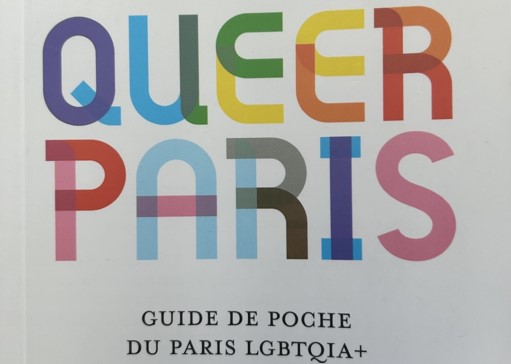
Released on 4 June by First, Queer Paris is a new pocket guide that maps out the French capital through its LGBTQIA+ history, culture and nightlife. Written by Christopher Davin and photographed by Valentin Folliet, the book brings together founding places of queer Paris and the venues, events and businesses still shaping its energy today. For KET readers in Brussels, it reads like both a travel companion and a reminder that queer cities are built as much by memory as by parties.
A guide that mixes history and nightlife
Queer Paris presents itself as more than a list of bars and addresses. Its promise is broader: history, culture and entertainment in one compact object, moving from mythical cabarets and club nights to activist bookshops, drag brunches, artistic hotspots and essential queer businesses.
That mix matters. Too often, queer city guides flatten communities into nightlife only, or turn heritage into something museum-like and disconnected from the present. Here, the stated ambition is to show both the places that founded the identity of the Paris queer scene and those that still give it shape now. In other words, it treats queer Paris as something living, layered and still in motion.
Christopher Davin’s insider eye
The book’s author, Christopher Davin, has spent nearly twenty years moving through the worlds of music and television while also developing projects linked to queer culture and Paris nightlife. His background includes organising LGBTQIA+ festive events and editorial work around queer culture, drag and love stories, including books such as Reines – L’art du drag à la française, Queens – L’art du drag dans le monde, Love Stories – Nos histoires d’amour LGBTQIA+, Eurovision, Paloma au pluriElles and Parents alliés.
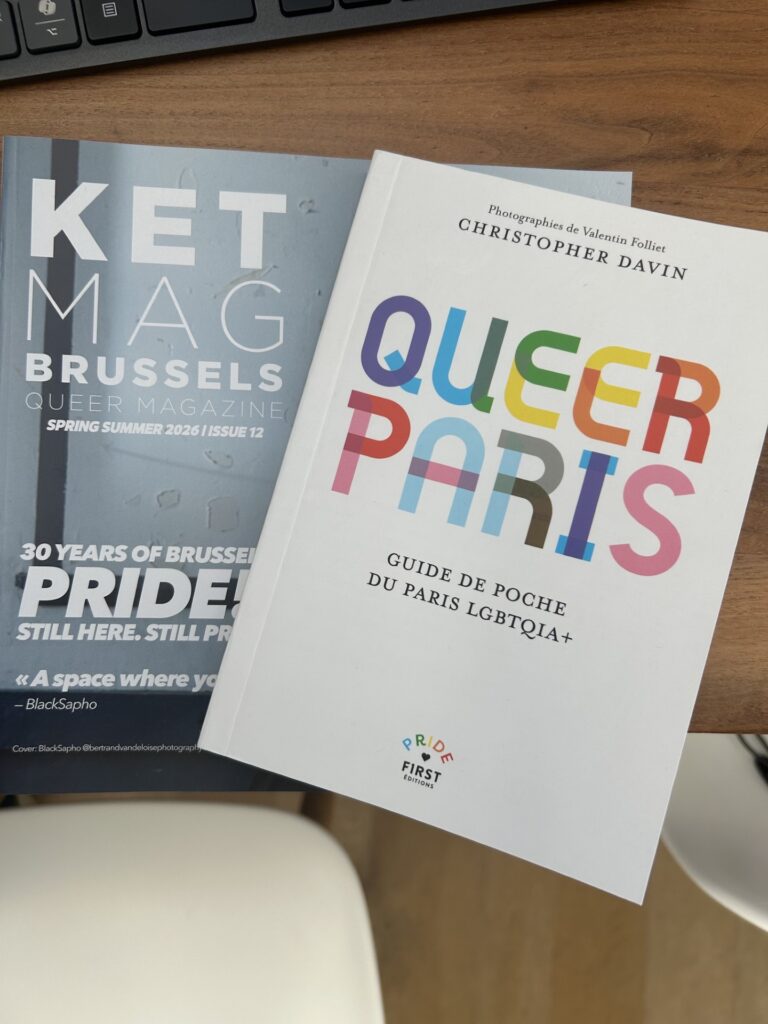
That experience suggests a guide written from inside the scene rather than from a detached travel perspective. The tone promised by the publisher and launch materials is inclusive and lively, with anecdotes and a curated selection of around 60 addresses across queer Paris. That number is small enough to feel intentional, but wide enough to sketch a city of many moods.
Images with fantasy and colour
The visual dimension comes from photographer Valentin Folliet, whose work is described as intimate, dreamlike and saturated with vibrant light and colour. His imagery often flirts with abstraction and symbolism, and his past collaborations include Katy Perry, Offset, Woodkid, Drag Race France Live and Petit Biscuit, with work also published in outlets such as The New York Times, Libération and Rolling Stone.
That matters because queer travel guides do not only tell you where to go; they also shape how a city feels before you even arrive. A photographer with that kind of visual language can turn a guide into something more sensual and emotional, closer to a moodboard of belonging than a simple checklist.
Why it resonates beyond Paris
For Brussels readers, Queer Paris is interesting not only because Paris is a train ride away, but because it speaks to a broader need inside queer communities: documenting our spaces before they disappear, get priced out, or lose their political memory. A guide like this can help first-time visitors find their bearings, but it also quietly archives a city’s queer infrastructure at a specific moment in time.
It also reminds us that one of the strongest things about queer urban life is the tension between the iconic and the hidden. Queer Paris promises both emblematic landmarks and more secret gems, which feels true to how many of us actually navigate cities: through rumours, recommendations, side streets, chosen family tips and places that feel like they were waiting for us.
Practical info
Queer Paris was published by First on 4 June 2026 in paperback format. The listed price is €17.95, and the book is presented as a pocket guide to LGBTQIA+ Paris. A launch event has also been announced at Les Mots à la Bouche, one of Paris’s key queer bookshops.
Useful links: Fnac, launch event at Les Mots à la Bouche, and Christopher Davin’s announcement.
A queer guide is never just a guide. It is also a way of saying: these places matter, these stories matter, and this city is ours too.
KET Magazine is a community‑driven, non‑profit magazine run by volunteers based in Brussels. Get in touch to share your thoughts or tell us about your activities. You can also promote your events on our website or support our work with a donation. Contact us at Info@ket.brussels.
You may also like
-
Bords Perdus: Brussels’ DIY Print Scene Refuses to Disappear
From 25 to 27 September, LaVallée in Molenbeek becomes a three-day home for independent comics,
-

Vigilante: When Justice Turns Into a Trap
What happens when someone loses faith in the institutions meant to protect us — and
-

Can You Prove You’re in Love?
What happens when a queer relationship becomes an administrative test? In Dansen met mijn ex
-
John & Jen: A Small Musical With a Devastating Emotional Punch
At Festival Bruxellons!, John & Jen turns a two-person cast and an intimate barn stage
-
Cósmica Galería: The Madrid Gallery Making Space for Queer Desire and Tenderness Cósmica Galería is