
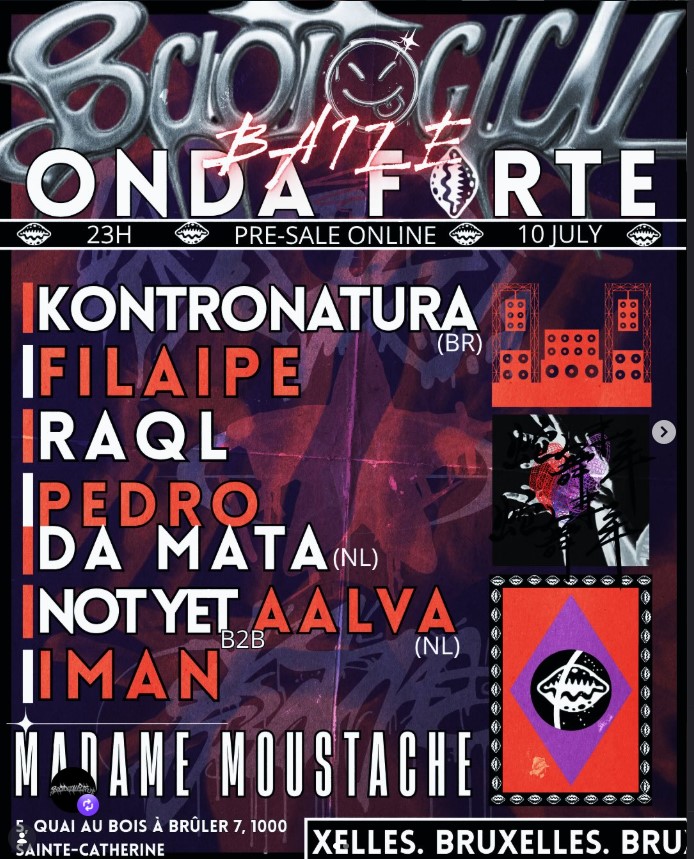
On 10 July, Brussels gets hit with a full wave of baile funk and queer club culture, courtesy of Sociological Rave. For one night, Brazilian DJs, local queer artists and underground collectives remix the city’s soundscape with rhythms from São Paulo, Rio’s outskirts and beyond. At the heart of the line‑up: Kontronatura, transmasculine DJ and producer from the LGBTQ+ collective MAMBA NEGRA, and the Brazilian crew Onda SoundSystem, alongside Brussels‑based talents. For Black, brown and queer communities, this is not just another party – it’s a dancefloor built around resistance, ancestry and the right to take up space.
Kontronatura: Transmasculine Fire from São Paulo
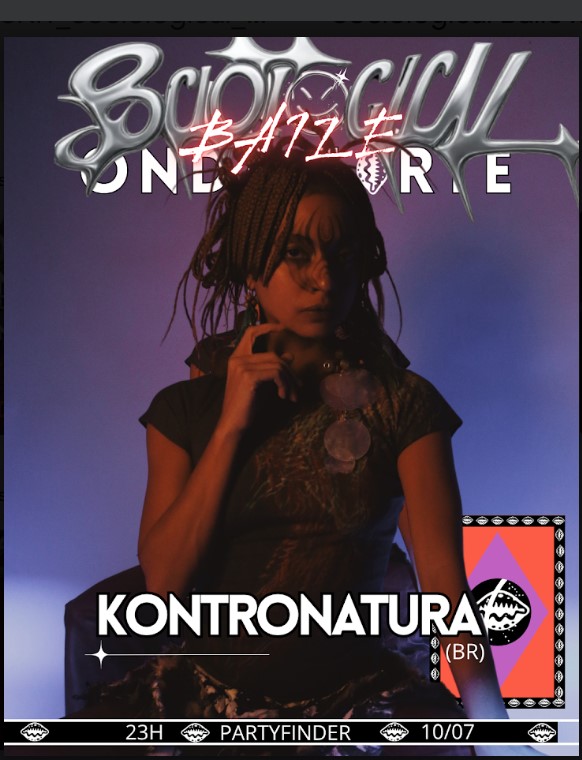
Headlining this edition, Kontronatura (IG @kontronatura) arrives in Brussels straight from São Paulo on a European tour. As a member of the queer Brazilian collective MAMBA NEGRA, he merges afro‑Latin sounds, funk and techno, building sets that feel like both celebration and confrontation.
On the São Paulo underground scene, he is recognised as one of the most important transmasculine figures behind the decks, using basslines and drum patterns to tell stories about survival, desire and everyday life in the periphery. Bringing that energy to Brussels means more than just importing a “trend”: it’s about sharing the reality and aesthetics of a scene that has made baile funk a language for speaking out against violence, racism and class inequalities.
Sociological Rave: Made by and for Black, Brown and Queer People
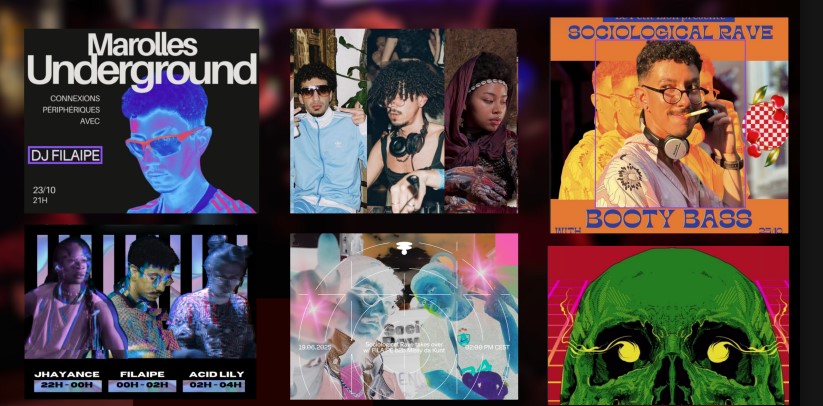
Sociological Rave is not just a catchy name – it’s a concept explicitly created by and for Black, brown and queer communities. The goal: bring electronic music back to its roots in Black and Latin club culture, and celebrate our rhythms and movements in community, rather than polishing them for mainstream consumption.
Over four previous editions in Brussels and Frankfurt, the project has already invited artists like Acid Lily, Alex Perry, FILAIPE, Jhayance, Missy da Kunt and PL Saudade, fusing funk, axé, coupé‑décalé, batida, gqom, bouyon and more in traditional bohemian venues. A bi‑monthly GIMIC Radio residency has extended that work, with b2b sets and MC guests mixing grime, funk and vogue into FILAIPE’s sets.
For queer Brussels, this matters because it opens a space where the references are not euro‑centric: the centre of gravity sits instead in Rio’s outskirts, afro‑diasporic club culture and underrepresented genres like bounce, footwork, rap, rave, ballroom and sound system culture. It’s an invitation to listen and dance from another angle.
Funk as Afro‑Brazilian Resistance
At the core of this night is funk, Afro‑Brazilian music born out of resistance, movement and an urgent need to speak about life in the periphery. It is only recently gaining global visibility in electronic scenes, often stripped of its context. Sociological Rave insists on keeping that context front and centre.
The organisers emphasize that we must remember and respect where funk comes from: favelas, marginalised neighbourhoods, youth who turn dance, rhythm and MCing into tools for survival. They also make a direct link to Brussels, pointing out that the city is full of marginalised, talented young people whose lives could be changed by practices like passinho, footwork, vogue or rhyming as an MC.
In a European climate marked by police violence and aggressive anti‑immigration laws, giving space to these forms – and to the bodies that carry them – is a political act. It says that frontline cultures deserve stages, not just tolerance.
Onda SoundSystem and the Diasporic Bridge
Sociological Rave also invites Brazilian collective Onda SoundSystem (IG @onda.soundsystem), represented by Pedro da Mata, plus Aalva and Not Yet with a b2b tinged with funk and club influences. Their approach, rooted in sound system tradition, extends the night’s dialogue with other underrepresented scenes: grime, footwork, rap, bounce, rave and beyond.
These guests will be joined by Brussels’ own “princess from Brazil”, FILAIPE, and queer local DJs RaQL and IMAN. Together, they anchor the programme in a mix of Brazilian rhythms and their afro‑diasporic and Arab roots – a reflection of the city’s multiple diasporas and a reminder that funk connects to broader histories of Black and migrant music.
The next day, the bridge continues on air: Onda SoundSystem will take over a Kiosk Radio show (11/07), bringing their sound to those who couldn’t be there or who want to stretch the feeling a bit longer.
Why This Night Matters for Brussels Queers
For Brussels’ Brazilian and lusophone community, this night offers rare representation: artists who speak the same languages, carry similar histories and refuse to dilute their culture for European taste. For local Black, Arab, brown and queer youth, it opens a space where their bodies and moves – passinho, footwork, vogue, MCing – are not “side shows” but central.
In the wider queer nightlife landscape, Sociological Rave sits alongside other events Ket loves to follow – from Queer Mess Open Air to experimental theatre like MEXA’s Reality Show – by insisting that nightlife is never just entertainment. It’s also about alliances, safer‑ish spaces, cultural memory and pushing back against repression.
This baile funk edition adds a crucial layer: it reminds Brussels that resistance can be danced, that beats can carry stories across oceans, and that building transnational queer club culture is one way to refuse isolation.
Practical Info
- Event: Sociological Rave – Baile Funk Night
- Date: 10 July
- Concept: Queer baile funk and club night, made by and for Black, brown and queer communities, centring Afro‑Brazilian funk and underrepresented club genres.
- Main guests:
- Kontronatura (São Paulo – MAMBA NEGRA, afro‑Latin funk/techno, transmasculine underground figure) – IG @kontronatura
- Onda SoundSystem – DJs Pedro da Mata, Aalva & Not Yet (funk & club b2b) – IG @onda.soundsystem
- Local & regional artists: FILAIPE, RaQL, IMAN (queer Brussels DJs connecting Brazilian rhythms with afro‑diasporic and Arab roots).
- Extra: Kiosk Radio show on 11 July featuring a set by Onda SoundSystem.
- Audience: Especially welcoming to Black, brown, queer and lusophone communities, as well as anyone ready to honour funk’s roots and dance with respect.
This is the kind of night where you don’t just go out – you plug into a larger story of resistance, rhythm and queer joy that spans from Rio’s outskirts to Brussels’ dancefloors.
KET Magazine is a community‑driven, non‑profit magazine run by volunteers and based in Brussels. You can find our other music and nightlife stories on ket.brussels, and you can always write to us to share your projects or pitch a story: info@ket.brussels
You may also like
-
“Don’t Fear, Make Love”: DARA on Eurovision, Pride, and the Power of Letting Go
A few months after her Eurovision win, DARA is still moving fast. Taking on Pride
-
Dark Synth, Queer Fire: TR/ST and Light Asylum at Botanique
September is getting darker — and more danceable — at Brussels’ Botanique. Canadian synth-pop project
-

John & Jen: A Small Musical With a Devastating Emotional Punch
At Festival Bruxellons!, John & Jen turns a two-person cast and an intimate barn stage
-

Bitch Idol Season 3 Is Ready to Crown Brussels’ Next Drag Superstar
Bitch Idol, Brussels’ homegrown drag competition, returns this summer with twelve performers, five live shows
-
XRDS 2026: Big Sound, Soft Prices and a Wild Urban Escape
For two days, XRDS turned the Parc des Étangs in Anderlecht into one of Brussels’