
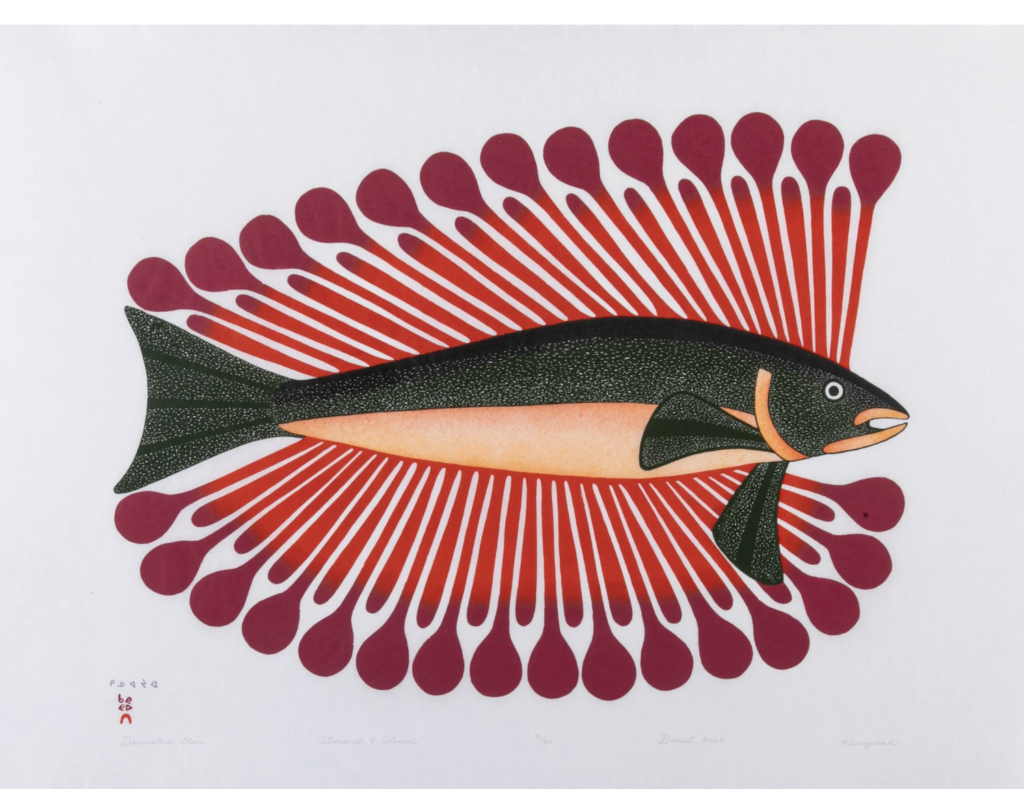
Women artists take a leading role in “Inuit: Impressions of the Canadian Far North” at Brussels’ Musée Art & Histoire. Bringing together nearly 250 works, the exhibition explores an artistic landscape where mythology, gender relations and social change meet.
Who gets to picture a place, and whose perspective shapes the image? At Brussels’ Musée Art & Histoire, “Inuit: Impressions of the Canadian Far North” approaches the Canadian Arctic through the work and words of artists from Nunavut and Nunavik. Women occupy a prominent place in this story, reflecting their leading contribution to Inuit graphic art.
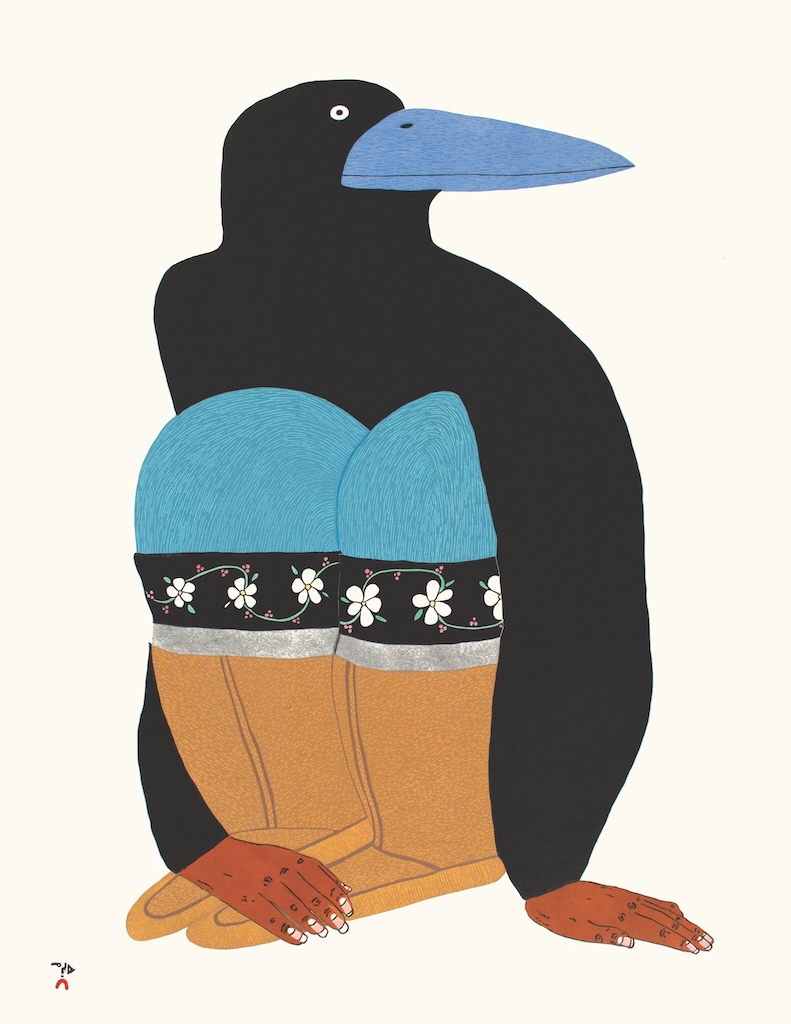
The exhibition brings together nearly 250 prints, drawings and sculptures spanning around 70 years. For visitors more familiar with Inuit sculpture, its emphasis on works on paper offers another starting point. It also gives visibility to a field in which women have played a central creative role across generations, helping to shape both its imagery and its development.
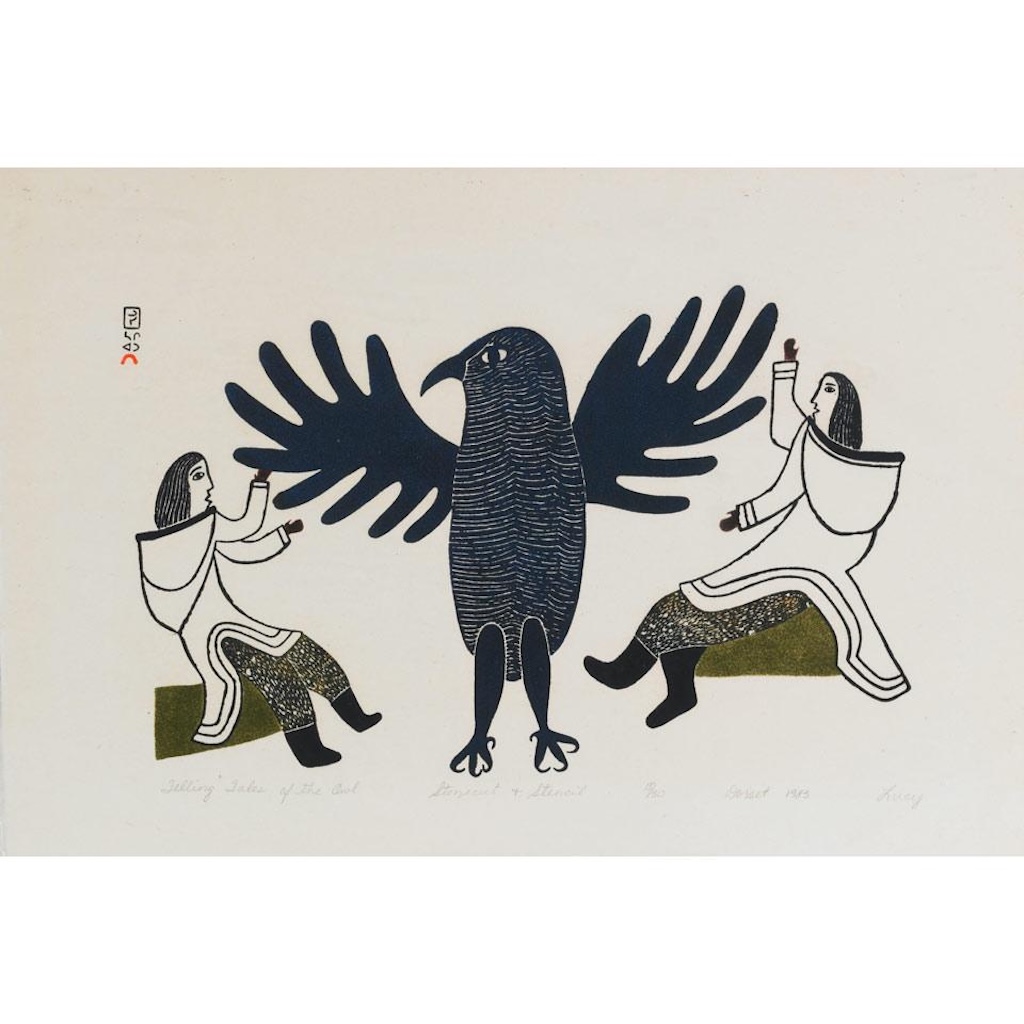
That presence gives the exhibition a particular interest for audiences attentive to gender and representation. Women appear here as image-makers, contributing their own perspectives to an artistic history that remains relatively unfamiliar to European audiences. The selection opens up questions about whose work circulates internationally and how much of an artistic tradition we actually get to see.
Gender relations are among the subjects addressed in the exhibition, alongside the consequences of settlement, social transformation and climate change. These concerns share the galleries with Arctic wildlife, shamanism and mythology. Together, they reveal artists engaging with inherited stories and the circumstances of contemporary life, across a period of substantial change.
The artists’ own comments accompany works throughout the display. Their presence matters in a museum context where Inuit art has often been approached through explanations of culture and tradition. Here, visitors can also encounter what individual makers have said about their work. The emphasis shifts towards artistic choices, personal perspectives and the different concerns that an image can hold.
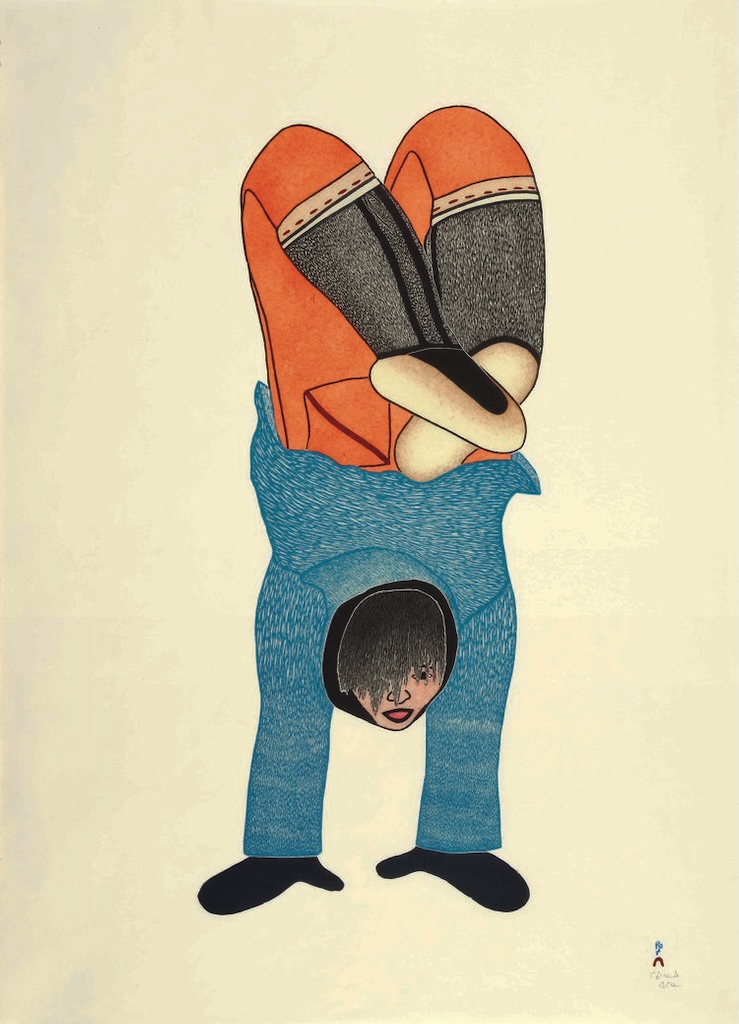
A reconstructed large igloo forms the starting point for a route through thematic sections devoted to animals, birds, the polar night and changing environmental and social conditions. A section on printing techniques adds a practical perspective, drawing attention to how the images are made. The exhibition’s scale allows these different subjects and approaches to sit alongside one another without suggesting a single Inuit experience.
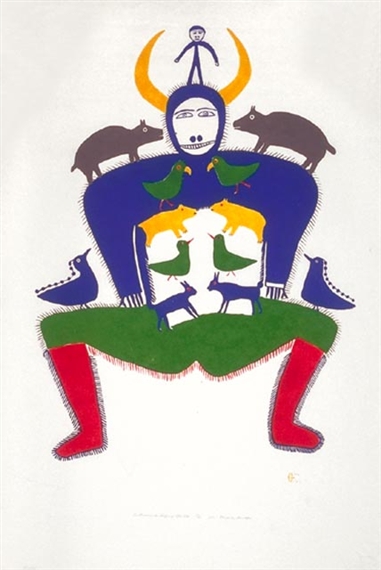
For KET readers, the gender thread offers a way into a wider artistic conversation. The exhibition places women’s creative work within seven decades of Inuit art and includes gender relations among the realities artists explore. Looking closely at who makes these images, and listening to what they say about them, brings a different Arctic into view: one shaped by individual voices and ongoing debate.
Practical information
Exhibition: Inuit: Impressions of the Canadian Far North
Venue: Musée Art & Histoire, Brussels, Belgium
Dates: 16 October 2026 to 18 April 2027
Programme: Workshops, talks, screenings, encounters and cultural events. The exhibition also includes four activity stations for children and visit workshops for people with visual impairments.
You may also like
-
Escher in Brussels: Who Said Reality Had to Behave?
Staircases refuse to play by the rules, birds become fish, and two hands draw each
-
Inuit Art Takes Centre Stage at Brussels’ Art & History Museum
From 16 October 2026 to 18 April 2027, the Art & History Museum in Brussels
-
What Happens When We Move Together? The Mechanics of Crowds Comes to Liège
From 20 November 2026 to 4 April 2027, La Cité Miroir in Liège hosts The
-

Geoffrey Bawa at Vitra Design Museum: Architecture for the Senses
Few architects have understood the relationship between buildings, landscape and human emotion as intuitively as
-
Shape of absence: when Villa Empain makes disappearance visible
From 18 June 2026 to 24 January 2027, the Boghossian Foundation presents Shape of absence at Villa Empain, an exhibition that