

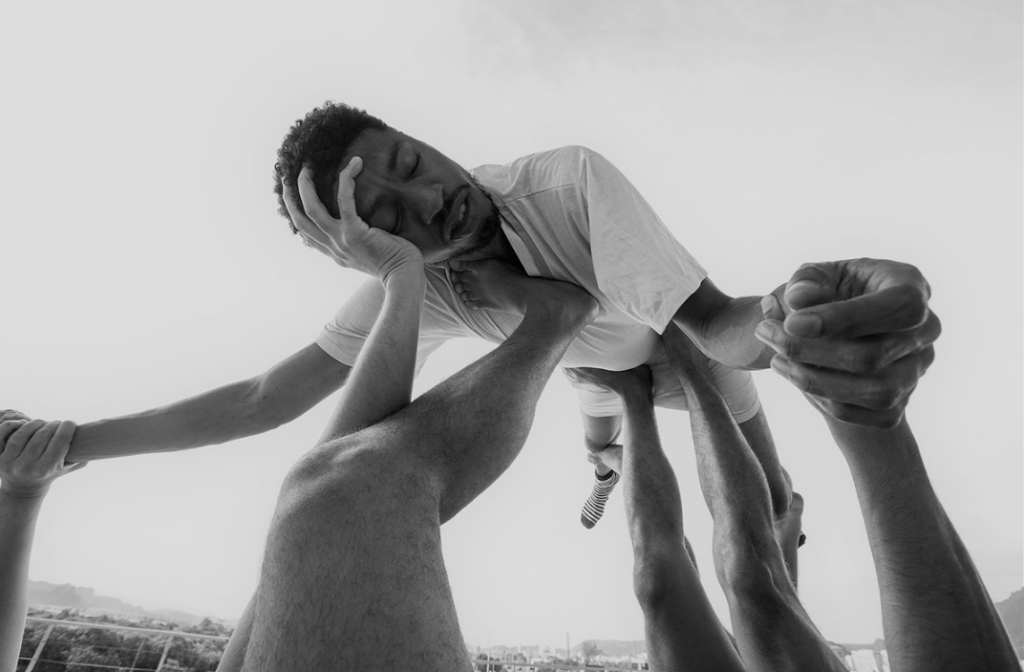
From 13 November to 4 December 2026, NEXT Festival turns the Franco-Belgian border region into a meeting place for theatre, dance and performance. Its 19th edition brings together 29 shows by 33 international artists representing 20 nationalities, across 15 cities. With queer histories, feminism, migration and ecology running through the programme, this is an invitation to look beyond your usual venues — and discover artists asking how we might live differently together.
A festival that refuses to stay in one place
NEXT is not a festival with one central stage and a few satellite events. It is built through cooperation: 25 partner theatres across Belgium and France share a programme that moves through the Lille–Kortrijk–Tournai Eurometropolis, Valenciennes and surrounding cities. In Belgium, the route takes audiences to Kortrijk, Deinze, Menen, Ypres, Tielt and Waregem, among other locations.
That geography is part of its identity. Crossing a border becomes an ordinary part of going to see a performance, rather than a dividing line between cultural scenes.
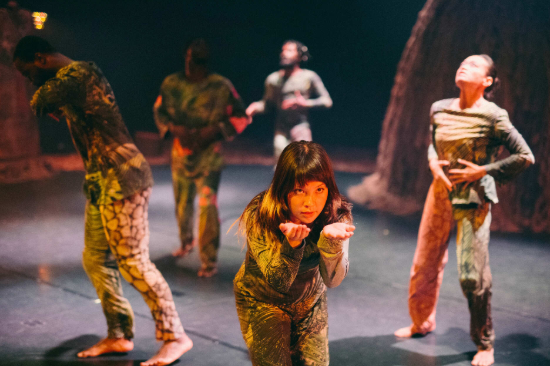
The programme connects that approach to wider questions of exile, justice, feminism, ecology and inclusion. These are not presented through one artistic language: dance, theatre, installations and encounters offer different ways into the conversation.
For LGBTQIA+ audiences, NEXT matters because it gives queer perspectives space within a broader international conversation about power, belonging and the freedom to shape a life.
Queer histories, from Persian pop to the opening night
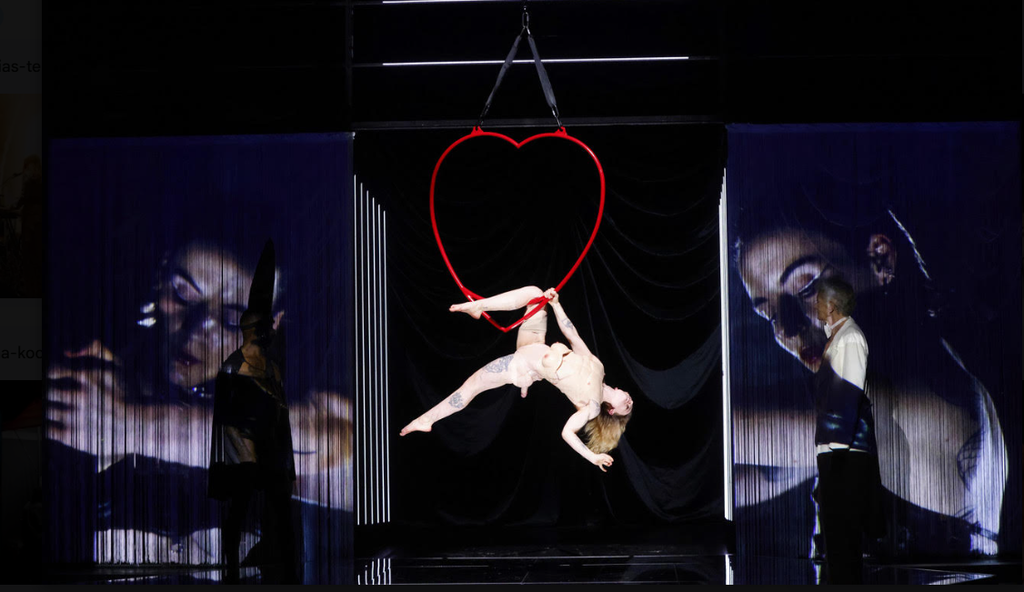
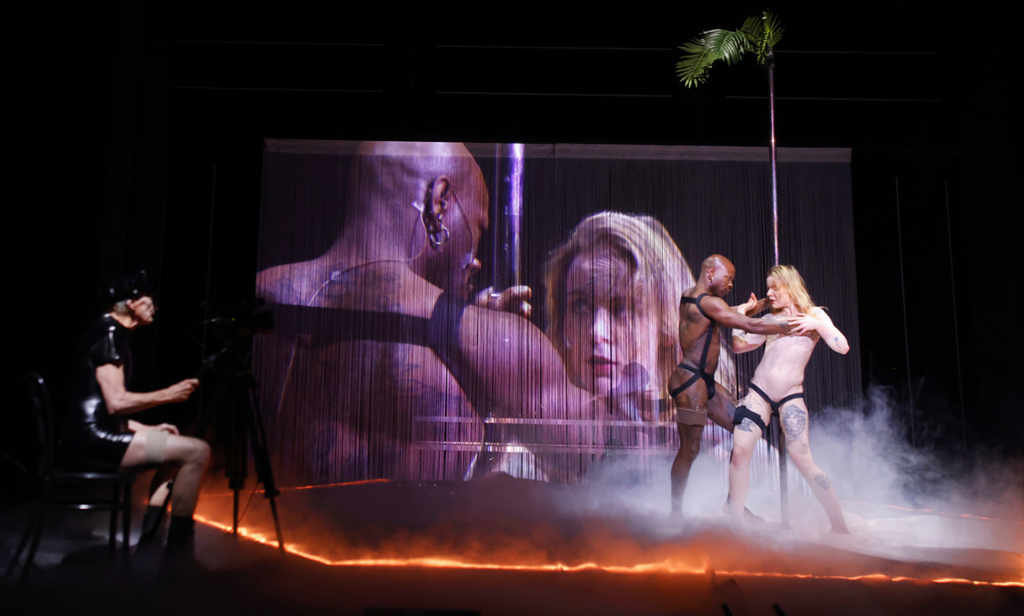
The festival opens on 13 November at the Opéra de Lille with Androgynous. Portrait of a Naked Dancer, a creation by Lola Arias with the Maxim Gorki Theater. Positioned between theatre and dance, it sets the tone for a programme interested in work that moves between forms.
Another strong queer thread comes through Cabaret Téhéran. Gurshad Shaheman revives figures from Persian pop culture through songs, archive images and personal stories, tracing connections between performance and feminist and queer struggles in Iran. Alone on stage, he moves between these personalities, while family memories complicate the relationship between public history and private experience.
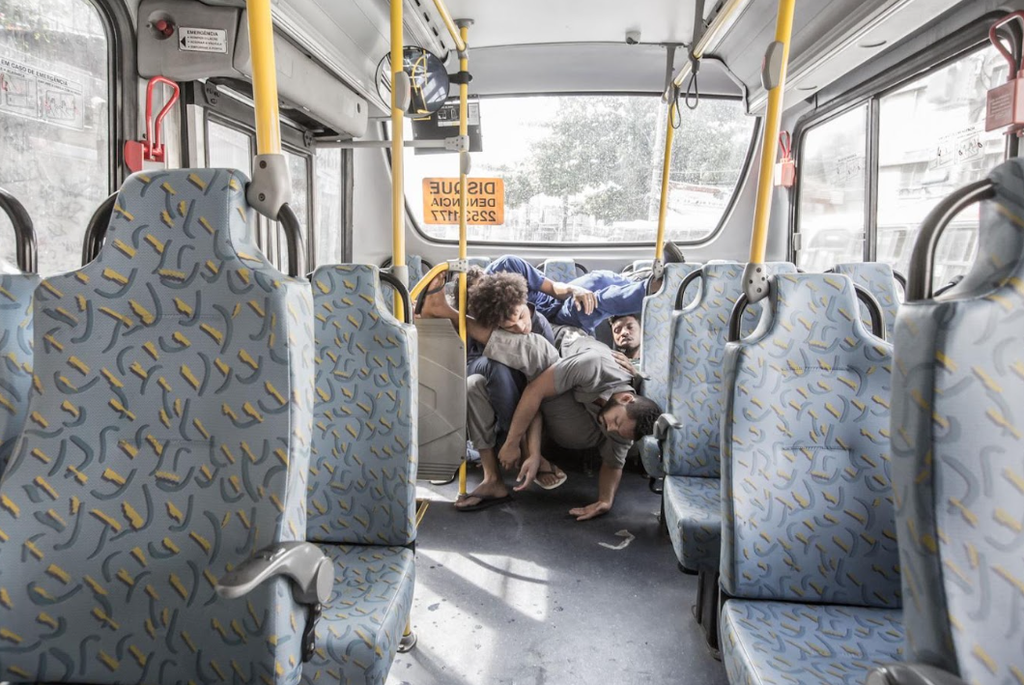
Within NEXT, the show visits Le Bateau Feu in Dunkirk on 17 and 18 November, then Le Phénix in Valenciennes on 24 and 25 November. It is a reason to consider the French side of the programme, rather than treating the Belgian selection as the whole festival.
In Belgium, follow an artist rather than a single show
One of NEXT’s most appealing programming choices is to offer several encounters with the same artist or company. Instead of meeting a practice once and moving on, audiences can spend time with different aspects of it.
Brazilian choreographer Alice Ripoll is one such presence. aCORdo comes to Budatoren in Kortrijk on 14 and 15 November, followed by Adorno at Leietheater in Deinze on 17 November. A workshop with Ripoll and Cie REC at Budascoop on 18 November adds a participatory encounter to the performances.
Bare Feet Dance Theatre also appears across several formats. In Kortrijk, the programme includes a workshop, the exhibition Body in the Field, performances of Tsiah Thoo and a shared lunch. The company then presents Lingering in Waregem on 27 November.
Jo Bannon’s presence unfolds over several days, too: Sleight of Hand, The Dirty Work and Passing sit alongside a dinner with the artist. Together, these strands make room for a slower kind of discovery — returning to an artist’s work rather than collecting unrelated highlights.
The dates and formats above follow the Belgian programme supplied by the festival.
Bodies, senses and other ways of paying attention
The Belgian selection also offers plenty of ways to build your own route through the festival.
Nagham Salah Othman presents Inhabiting My Body at Budascoop on 14 and 15 November. Later in the month, Ypres hosts Bryana Fritz and Thibault Lac’s Lick-Horn, the exhibition SENSES, and HYPERSENSES by Laika and Zefiro Torna.
Other stops include Marta Cuscunà’s Corvidae. Quand les espèces se regardent. in Tielt, Léa Drouet’s Rodéo in Kortrijk, and Jefta van Dinther’s Mercury Rising at Schouwburg Kortrijk.
These works should not all be placed under a single queer label. Their interest lies partly in their differences: the programme allows explicitly queer perspectives to sit alongside other artistic investigations, rather than asking every work to represent the same experience.
The underlying invitation is one of curiosity — towards unfamiliar forms, other bodies and perspectives that may not immediately resemble your own.
Workshops, meals and time between performances
NEXT’s encounters are not limited to the auditorium. The Belgian programme includes workshops with Alice Ripoll and Cie REC, Bare Feet Dance Theatre and Zora Snake, as well as meals with Bare Feet Dance Theatre, Jo Bannon and Zora Snake.
There is also 2 jaar Ge Durft!, a day at Budascoop on 28 November dedicated to young people, art, vulnerability and resilience.
These formats offer a different relationship with the festival. A workshop asks for participation; a meal creates time around the performance. Neither automatically guarantees intimacy or accessibility, but both make space for something other than arriving, watching and leaving.
The final evening, on 4 December, brings Zora Snake’s Combat des lianes to Schouwburg Kortrijk at 8pm, followed by Lander Gyselinck’s Hi-Hats in Trees at 10pm — a closing double bill for those who want to stay a little longer.
Practical information
- Festival: NEXT Festival, 19th edition.
- Dates: 13 November–4 December 2026.
- Region: The Lille–Kortrijk–Tournai Eurometropolis, Valenciennes and surrounding Belgian and French cities.
- Scale: 29 shows, 33 international artists, 20 nationalities and 25 partner theatres across 15 cities, according to the festival’s press information.
- Full programme and booking: Visit NEXT Festival.
- Prices: Not included in the supplied programme. Check the individual event and booking pages for ticket rates, workshop fees and meal reservations.
- Languages and surtitles: Check each production separately; the international programme should not be assumed to be language-free or English-accessible throughout.
- Accessibility: Confirm step-free routes, accessible seating, sensory information and any specific support with the relevant venue. The supplied overview does not establish one access arrangement across all locations.
Selected Belgian dates for your diary
| Event | Date and time | Venue |
|---|
| Event | Date and time | Venue |
|---|---|---|
| aCORdo — Alice Ripoll | 14 November, 3pm and 7pm; 15 November, 2pm and 6pm | Budatoren, Kortrijk |
| Inhabiting My Body — Nagham Salah Othman | 14 November, 8pm; 15 November, 7pm | Budascoop, Kortrijk |
| Adorno — Alice Ripoll | 17 November, 8pm | Leietheater, Deinze |
| Lick-Horn — Bryana Fritz & Thibault Lac | 18 November, 8.45pm | Het Perron, Ypres |
| Tsiah Thoo — Bare Feet Dance Theatre | 22 November, 6.30pm; 23 November, 8pm | Schouwburg, Kortrijk |
| Corvidae. Quand les espèces se regardent. — Marta Cuscunà | 24 November, 8pm | Theater Malpertuis, Tielt |
| Sleight of Hand — Jo Bannon | 25–26 November, 2pm; 27–28 November, 3pm | Schouwburg, Kortrijk |
| Rodéo — Léa Drouet | 28 November, 4pm | Budascoop, Kortrijk |
| HYPERSENSES — Laika & Zefiro Torna | 28 November, 8.15pm; 29 November, 4pm | Het Perron, Ypres |
| Mercury Rising — Jefta van Dinther | 29 November, 6.30pm | Schouwburg, Kortrijk |
| The Dirty Work — Jo Bannon | 1 December, 2pm; 2 December, 7pm | Schouwburg, Kortrijk |
| Passing — Jo Bannon | 2–3 December, 6pm | Budascoop, Kortrijk |
| Flaming Creatures — Latifa Laâbissi & Walid Ben Selim | 3 December, 8pm | Budascoop, Kortrijk |
| Combat des lianes — Zora Snake | 4 December, 8pm | Schouwburg, Kortrijk |
| Hi-Hats in Trees — Lander Gyselinck | 4 December, 10pm | Schouwburg, Kortrijk |
Schedule based on the festival’s supplied Belgian programme; check individual listings before booking.
A single performance can be enough to begin. NEXT’s pleasure is that the next encounter might take you to another town, another language or a way of seeing you had not planned for.
KET Magazine is a community‑driven, non‑profit magazine run by volunteers and based in Brussels. You can find our other music and nightlife stories on ket.brussels, and you can always write to us to share your projects or pitch a story: info@ket.brussels
You may also like
-
Lou Trotignon brings transition, testosterone and a little fish energy to Brussels
What if the person everyone expected you to be simply wasn’t you? In Mérou, comedian
-

Love behind the lines: Lukas Dhont’s Coward comes to Flagey
In Coward, a young soldier looking to prove himself finds something he did not expect
-
Meet Benka: the Brussels pop artist who caught our ear at Tels Quels
KET loved discovering Benka at the Tels Quels Talent Show at Les Grands Carmes on
-
Africa Legacy: a different way to look at art history in Brussels
More than 250 works, 22 countries and a conversation across centuries: Africa Legacy – Berceau
-
Two nights, different gears: Rave Rebels turns up the volume in Brussels
Rave Rebels returns to Brussels’ ING Arena on 6 and 7 November 2026, bringing Faithless,