
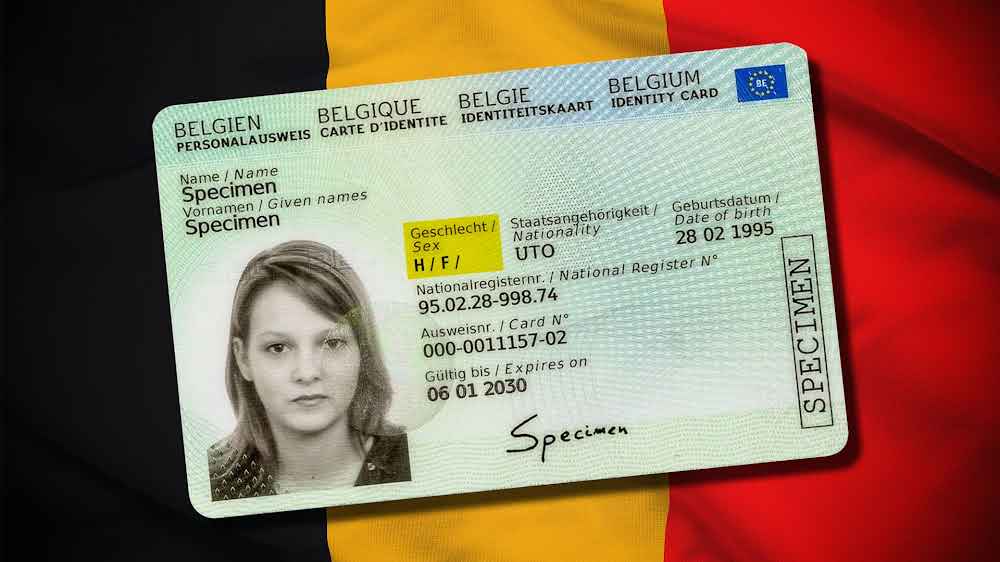
For the first time in Belgium, non-binary individuals will soon be able to request an identity card without any mention of gender. Hailed as a symbolic step forward, the reform is already raising concerns among LGBTQIA+ advocates.
Interior Minister Bernard Quintin (MR) announced the introduction of two types of ID cards. By default, Belgians will receive a card marked “M” or “F”. But upon formal request, it will be possible to obtain a genderless version.
While many see this as a step toward visibility for people outside the binary, LGBTQIA+ organisations remain cautious. “This is not what we asked for,” says Erynn Robert from Prisme, the federation of queer associations in Wallonia. Çavaria, its Flemish counterpart, adds that “nothing changes” for non-binary people, apart from having to “make their gender invisible”.
Critics highlight that the national registry number still reveals the gender assigned at birth, and that the reform could expose non-binary individuals to risks, especially when traveling abroad. Moreover, only offering the neutral card upon request could unintentionally create a new form of outing.
Prisme also regrets the lack of consultation and underlines that this reform falls short of addressing the 2019 Constitutional Court ruling, which challenged the binary-only approach in official documents.
A symbolic breakthrough, yes—but perhaps not yet the structural change many had hoped for.
You may also like
-

At Liège’s Queer Families Festival, Every Family Has a Story
The third edition of the Queer Families Festival takes place on 11 October at the
-

“After”: Listening to LGBTQIA+ Survivors Speak About Intimate Partner Violence
On 8 October, Tels Quels invites people to Les Grands Carmes in central Brussels for
-
Liège’s Maison Arc-en-Ciel Needs Support to Keep Its Doors Open
Maison Arc-en-Ciel de Liège, a vital LGBTQIA+ community hub in Wallonia, is facing growing financial
-
Garden Party de la Maison Arc-en-Ciel de Liège
Liège’s Maison Arc-en-Ciel is bringing back its annual Garden Party on Saturday 5 September 2026.
-
IGLYO Wants to Hear From You: Europe’s Biggest LGBTQI School Survey Is Back
IGLYO, the Brussels-based international LGBTQI youth network, has just launched the second edition of its