
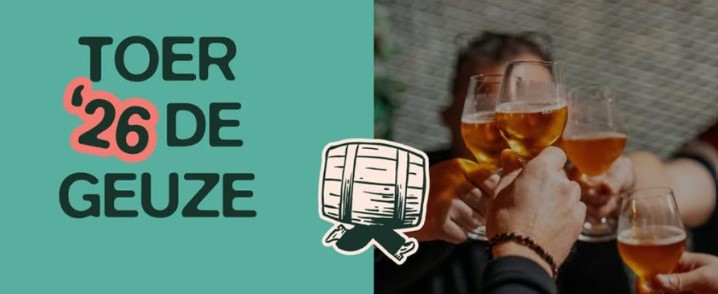
If you want to taste something that feels truly Belgian, Toer de Geuze is hard to beat. On 9 and 10 May, fourteen lambic brewers and blenders open their doors across the Pajottenland and the Zenne Valley, giving the public a rare look at the craft behind gueuze, the country’s most characterful wild-fermentation beer.
This is not just a beer weekend. It is a living map of Belgian brewing heritage, where names like Boon, Lindemans, Timmermans and Mort Subite sit alongside newer players such as Kestemont, Sako and Den Herberg. In other words: old Belgium and new Belgium are pouring from the same barrel.
A beer made by time
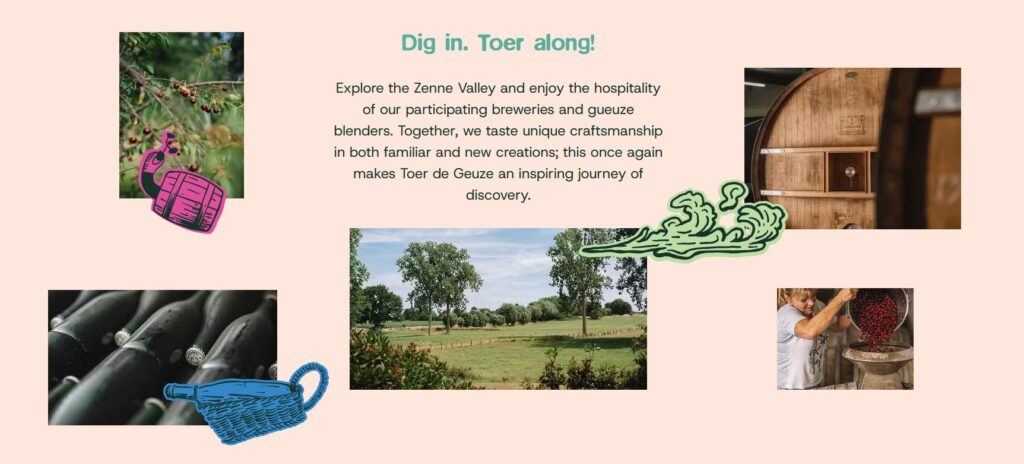
Lambic is the base of gueuze, and what makes it special is the spontaneous fermentation that gives it its unmistakable acidity and funk. It is a beer style that refuses to hurry, which is part of the charm: lambics age, blend and evolve before becoming gueuze.
That slow craft is exactly what Toer de Geuze celebrates. Visitors can move from brewery to brewery, see how lambic is made, and taste beers that are deeply tied to a specific place and climate. It is a very Belgian kind of pleasure: precise, local, patient and quietly obsessive.
Tilquin’s quiet milestone
One of the most interesting stops this year is Gueuzerie Tilquin in Bierghes, in Walloon Brabant. Pierre Tilquin has been making lambic blends for years, but he recently crossed an important line by starting his own small organic lambic wort production in 2022 and, three years later, releasing an old-style gueuze made from 1-, 2- and 3-year-old lambics.
The production is modest — just 80 hectolitres — but it matters because it shows how the lambic tradition keeps moving forward without losing its roots. That balance between heritage and experimentation is one of the reasons the Toer de Geuze remains so compelling.
Megablend, or the collective spirit in a bottle
As in every edition, the participating brewers and blenders have also joined forces to create a Megablend, a special old gueuze made from lambics contributed by all fourteen participants. That kind of collaboration is very much the spirit of the event: not competition, but shared pride in a singular Belgian tradition.
For visitors, that means the weekend is as much about discovery as it is about tasting. You are not just sampling beer; you are sampling a whole region’s identity, with every brewery telling a slightly different version of the same story.
Why it feels so Belgian
What makes Toer de Geuze feel like “the real taste of Belgium” is not simply that it is local. It is that it reflects the country’s talent for craft, patience and understatement. Lambic and gueuze are beers with a strong sense of place, and the Pajottenland has become their most recognisable home.
That is also why the event keeps drawing beer lovers back every two years. It offers a rare combination: open doors, deep tradition, and enough variety to keep even experienced drinkers curious.
Useful links
Visit Vlaams-Brabant: Toer de Geuze
Brouwerij Boon – Toer de Geuze 2026
Lindemans – Toer de Geuze 2026
“Alcohol abuse is harmful to health.”
KET Magazine is a community‑driven, non‑profit magazine run by volunteers based in Brussels. Get in touch to share your thoughts or tell us about your activities. You can also promote your events on our website or support our work with a donation. Contact us at Info@ket.brussels.
You may also like
-
FrancoFaune 2026: Brussels, Turn Up the Volume
From 1 to 11 October, FrancoFaune returns for its 13th edition, spreading French-language music across
-

Pink Screens Turns 25 — and Brussels’ Queer Cinema Is Still Coming Home Late
From 28 October to 7 November 2026, Pink Screens returns to Brussels for its 25th
-

Circle Park Prepares One Last Summer Dancefloor in Brussels
Circle Park is bringing its summer season to a close with a two-day Closing Weekend
-

Balkan Trafik! Turns Brussels’ Bourse into a Three-Day Balkan Universe
After a year away, Balkan Trafik! returns to Brussels from 19 to 21 November 2026
-

Listen Festival Turns Brussels Into a 24-Hour Dancefloor
Listen Festival is back on Saturday 21 November for its 10th anniversary — and this