
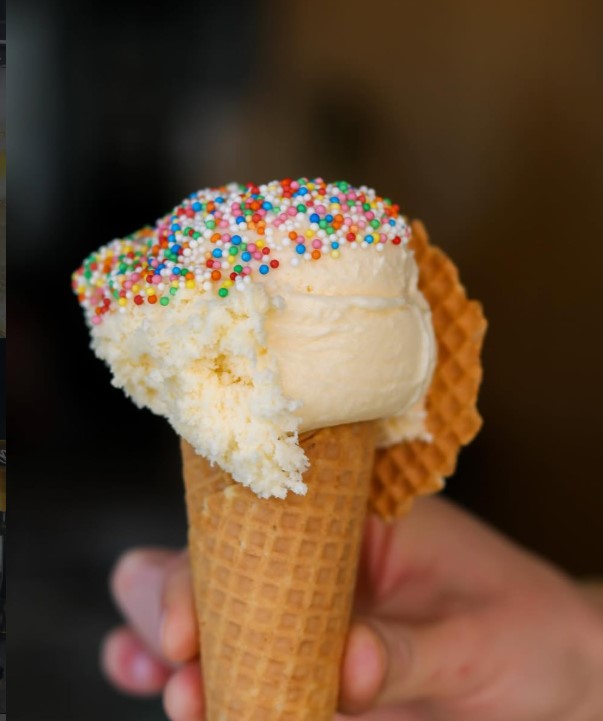
As summer edges closer, Brussels is once again queuing for ice cream, and independent food guide Tartine et Boterham has just shared its favourite artisan gelato and ice cream spots in the capital. Their top six highlights Giotto, Froo, Zizi, Bargello, Pepe’s and Gaston, selected for quality ingredients, craft, creativity and attention to sustainability. For queer people in Brussels, these addresses matter not just as sweet treats, but as small, local places where summer can feel softer, more social and a little more liveable.
A summer map written by artisans
Behind the seasonal rush for ice cream, there is a whole ecosystem of small makers keeping craft alive in Brussels. According to Tartine et Boterham, the city counts around twenty artisan ice cream makers, usually small businesses with one to five full-time equivalent workers, while Belgium overall has close to 200 artisan ice cream makers concentrated in Brussels, major cities and the coast.
The guide says its selection is based on several criteria: quality raw materials, respect for craftsmanship, recipe creativity and a commitment to durability. That matters in a market where “artisan” is often used loosely, and where the difference between industrial branding and actual know-how is not always obvious to the public.
Six places worth the detour
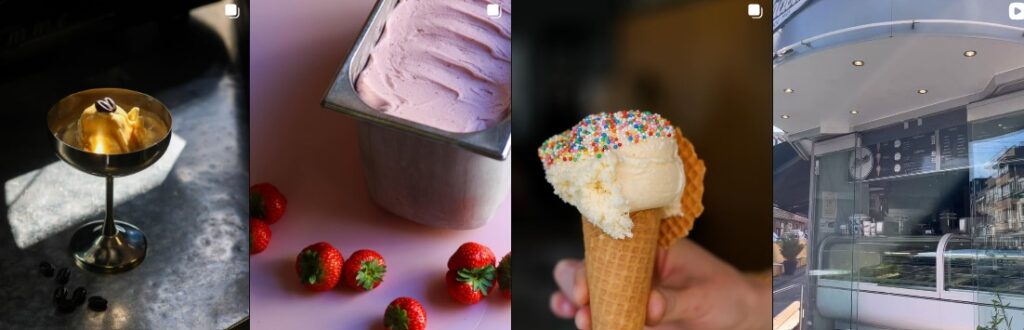
The six Brussels names picked by the guide are Giotto, with shops in Jette and Ixelles, Froo, in Watermael-Boitsfort, Zizi, in Uccle, Bargello, in Brussels city centre, Pepe’s, with several locations including Woluwe-Saint-Lambert, Etterbeek and Ixelles, and Gaston, in Brussels-Ville and Woluwe-Saint-Pierre.
Giotto stands out for its award-winning gelato and now has addresses at Rue Bonaventure 103 in Jette and Rue Washington 152 in Ixelles. Bargello, at Place de la Liberté 5, has built a strong reputation around high-end Italian gelato with an emphasis on terroir and sustainability, while Gaston has become a familiar Brussels name since opening its first shop in Sainte-Catherine in 2016.
Pepe’s now spans several neighbourhoods, including Avenue Georges-Henri 233 in Woluwe-Saint-Lambert, Rue du Bailli 95 in Ixelles and Chaussée de Wavre 758 in Etterbeek, which makes it especially practical for people trying to stay local to their side of town. Zizi, meanwhile, remains a long-standing Uccle favourite at Rue de la Mutualité 57A, and Froo anchors the list in Watermael-Boitsfort at Rue Middelbourg 94.
What makes this relevant for queer Brussels
Not every queer summer story has to begin in a bar, club or explicitly LGBTQIA+ venue. Ice cream shops can also be part of a queer city map: places for low-pressure dates, chosen family catch-ups, post-demo cooldowns or those in-between moments when what you want is company, sugar and a bench in the sun.
That is part of why artisan ice cream matters. These are often neighbourhood-scale businesses with a clear identity, regular customers and a slower rhythm than nightlife spaces. For LGBTQIA+ people, especially those looking for softer daytime options, they can offer a more accessible way to exist in public, take up space and enjoy the city without having to perform or explain too much.
Brussels, sweetness and scale
Belgium is one of the European countries where ice cream consumption is particularly high, with an average of around 14 kilos per person per year according to figures cited by Tartine et Boterham. That statistic is playful on the surface, but it also says something about how deeply ice cream is woven into everyday pleasure here.
In Brussels, where summers can feel both brief and intense, a good ice cream spot becomes more than a shop. It becomes a ritual, a meeting point, a tiny urban refuge. And when those places are rooted in craftsmanship rather than trend-chasing alone, they add something more durable to the city’s food culture.
Practical info
The six addresses highlighted by the guide are: Giotto in Jette and Ixelles, Froo in Watermael-Boitsfort, Zizi in Uccle, Bargello in Brussels city centre, Pepe’s in Woluwe-Saint-Lambert, Etterbeek and Ixelles, and Gaston in Brussels-Ville and Woluwe-Saint-Pierre.
Useful links: Tartine et Boterham, Giotto, Bargello, Gaston, Zizi.
A good scoop will not fix the world, but in a city summer, it can still make room for a gentler kind of joy.
KET Magazine is a community‑driven, non‑profit magazine run by volunteers based in Brussels. Get in touch to share your thoughts or tell us about your activities. You can also promote your events on our website or support our work with a donation. Contact us at Info@ket.brussels.
You may also like
-
Sensuelle: A Softer Space to Explore Desire, Connection and Self-Expression
Sensuelle is creating warm, women-centred spaces where sensuality can be explored without performance pressure, shame
-
Platine Summer Residency: Four Weeks of Food, Sound and Art Under One Molenbeek Roof
This summer, Brussels collective Platine turns LaVallée into a full‑on playground where food, music and
-

Canal, Sun and Queer Chill: Quai d’Été Turns Brussels into a Summer Waterfront
From 2 to 19 July 2026, Quai d’Été / Zomerkaai drops anchor at the Quai
-

The 11 Bar: Brussels’ first pop‑up bar for women’s sports
This summer, Brussels gets a new kind of sports bar – one where women’s sports
-

Love, Law and Queer Futures: Why LGBTQ+ Couples Should Still Visit Their Notary
In Belgium, same-sex marriage has been legal for over 20 years, and yet many LGBTQ+