
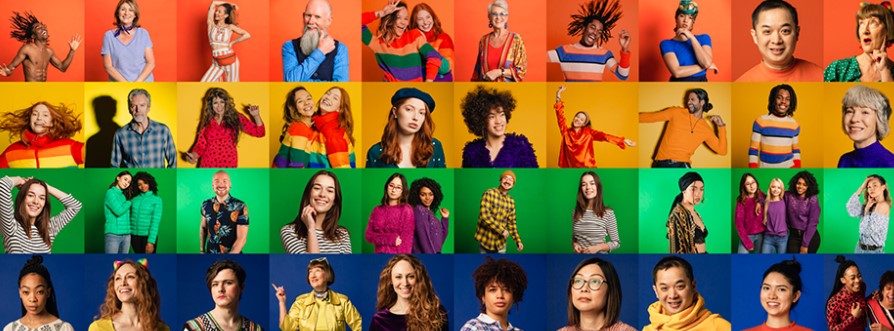
At UCLouvain, inclusion and diversity are no longer side notes – they are becoming core research topics and institutional priorities. Through a dedicated Equity, Diversity and Inclusion (EDI) cell and a new Gender Equity, Diversity and Inclusion Plan (GEDIP), the university is trying to turn values into concrete actions in teaching, research and campus life. For queer, racialised, disabled and otherwise marginalised students and staff, this shift matters: it means that lived experiences of discrimination are not only acknowledged but increasingly studied, documented and used to transform the institution from within.uclouvain+4
When Inclusion Becomes a Research Question
The article “La recherche au service de l’inclusion et de la diversité” highlights how UCLouvain uses research as a tool to tackle inequalities that run through universities, from gender gaps to racism, ableism or class‑based exclusion. Rather than treating EDI as a purely administrative or symbolic agenda, the university encourages projects that analyse how discrimination operates in curricula, hiring, evaluation and everyday interactions.uclouvain+1
This approach is anchored in a broader institutional strategy. UCLouvain has adopted a Gender Equality Plan and now a GEDIP 2024‑2027, which integrates equality, diversity and inclusion into its long‑term vision. The idea is to move beyond ad hoc measures and build a coherent framework where research, teaching and governance all contribute to a more inclusive academic environment.uclouvain+1
An EDI Cell and a Dedicated Prorector
Concrete change often depends on structures, not just good intentions. UCLouvain has created an EDI cell tasked with promoting an inclusive, respectful academic environment and aligning practices with the university’s founding values. This cell develops and supports policies that touch everything from recruitment and promotion to student support and anti‑harassment procedures.uclouvain
The university has also set up a prorectorate dedicated to Equity, Diversity and Inclusion, giving these issues a seat at the management table and resources to act. This prorector and their team work across teaching, research and HR to ensure that EDI is not confined to one project or faculty but becomes a transversal lens on how the institution functions. For many queer and minority members of the community, this signals a willingness to move from statements to accountability.francoisesmets+1
Training Those Who Will Change Organisations
UCLouvain’s commitment to inclusion also extends beyond its own walls. Through inter‑university certificates like “Diversity, Equity, and Inclusion in Organizations: From Barriers to Impact”, the university trains professionals who lead DEI efforts in companies, public institutions and non‑profits. These programmes equip participants with tools to analyse biases, design inclusive policies and navigate resistance to change.uclouvain+1
The detailed curriculum includes sessions on intersectionality, gender and sexual orientation, age, disability, migration, socio‑economic status and more, with a strong focus on legal frameworks and organisational transformation. In other words, UCLouvain uses its research‑based expertise to help reshape workplaces and institutions where many LGBTQIA+ and racialised people continue to face barriers.uclouvain
A Strategic Vision That Names Diversity
All of this fits into the university’s strategic plan “Un cap, du sens” (2024‑2029), which explicitly mentions the goal of acting for a diverse and sustainable society. The plan insists on:uclouvain
- Fostering a thriving university community, with equitable, inclusive working and learning conditions.
- Fighting all forms of harassment and discrimination.
- Creating safe, caring frameworks for study and work.
As a research university, UCLouvain also sees diversity as a strength in scientific creativity: supporting young researchers, valuing interdisciplinary work, and recognising varied profiles and trajectories. For queer and marginalised academics, this kind of wording can open doors to projects that would previously have been sidelined.uclouvain+1
Brussels as a Laboratory of Inclusion
On its Brussels campuses, the university has already experimented with initiatives like the “Bruxelles, Diversité & Inclusion” colloquium and exhibitions such as “Bruxelles, cartes invisibles”, which invited the community to think critically about democracy, dignity and inclusion. Events like these show how research, art and public debate can intersect to make invisible experiences visible.uclouvain+1
In the broader Brussels landscape – where Ket regularly covers queer culture, activism and safer‑space initiatives – UCLouvain’s EDI efforts add another layer: a more institutional but potentially powerful space where data, testimonies and analysis can support demands for change, both within and beyond the university.
Practical Info and Useful Links
- Main article (FR): “La recherche au service de l’inclusion et de la diversité” – via UCLouvain’s news section.
- EDI portal: Enraciner l’Équité, la Diversité et l’Inclusion – uclouvain.be/fr/equite-diversite-inclusion.uclouvain
- Policies and plans:
- Gender Equality Plan – uclouvain.be/en/discover/equality/gender-equality-plan.html.uclouvain
- GEDIP (Gender Equity, Diversity and Inclusion Plan 2024‑2027) – PDF available via UCLouvain’s site.uclouvain+1
- News on EDI:
- “Comment l’UCLouvain agit concrètement pour une université plus inclusive” – uclouvain.be/fr/news/comment-luclouvain-agit-concretement-pour-une-universite-plus-inclusive.uclouvain
- “Nouveau rapport sur l’état de l’égalité du genre et la diversité à l’UCLouvain” – uclouvain.be/fr/equite-diversite-inclusion/news.uclouvain
- Training programmes:
- Certificate “Diversity, Equity, and Inclusion in Organizations: From Barriers to Impact” – uclouvain.be/prog-2025-dive2fc.uclouvain
For those navigating UCLouvain as queer, racialised, disabled, neurodivergent, precarious or any combination of these, the path to a fully inclusive university is still in progress. But seeing research, governance and training pulled together around equity and diversity is a sign that the institution is, at least, taking the work seriously – and that there are growing opportunities to push it further from the inside.
KET Magazine is a community‑driven, non‑profit magazine run by volunteers and based in Brussels. You can find our other music and nightlife stories on ket.brussels, and you can always write to us to share your projects or pitch a story: info@ket.brussels
You may also like
-

At Liège’s Queer Families Festival, Every Family Has a Story
The third edition of the Queer Families Festival takes place on 11 October at the
-

“After”: Listening to LGBTQIA+ Survivors Speak About Intimate Partner Violence
On 8 October, Tels Quels invites people to Les Grands Carmes in central Brussels for
-
Liège’s Maison Arc-en-Ciel Needs Support to Keep Its Doors Open
Maison Arc-en-Ciel de Liège, a vital LGBTQIA+ community hub in Wallonia, is facing growing financial
-
Garden Party de la Maison Arc-en-Ciel de Liège
Liège’s Maison Arc-en-Ciel is bringing back its annual Garden Party on Saturday 5 September 2026.
-

IGLYO Wants to Hear From You: Europe’s Biggest LGBTQI School Survey Is Back
IGLYO, the Brussels-based international LGBTQI youth network, has just launched the second edition of its