

The Closetocracy, now available on YouTube through The Young Turks, puts secrecy, sexuality and political accountability under the spotlight. Promoted as an investigation into a US senator’s alleged use of male escorts, the documentary arrives with explosive claims — and questions about how those claims should be reported. For LGBTQIA+ audiences, the central issue is not who might be gay, but where privacy ends and public accountability begins.
A political documentary with a provocative premise
The Young Turks, the US news and commentary outlet co-founded by Cenk Uygur, announced The Closetocracy with a deliberately provocative question: “Which US Senator did we catch using male escorts?” The announcement promised a YouTube release, positioning the film as an exposé of secrecy at the heart of American political life.
Uygur has argued that the story is not about someone’s sexuality. Instead, he has invoked a national-security concern and alleged that an incident involved illegal conduct captured on a recording. Those are serious claims, but they remain the producers’ allegations rather than independently established findings in the sources available for this article.
That distinction matters. A documentary can make an accusation, present testimony or offer an interpretation. None of those automatically settles what happened.
Sexuality is not the scandal
For a queer publication, the starting point should be straightforward: being gay is not misconduct. Neither is keeping your sexuality private.
The question worth examining is accountability. Does an investigation establish conduct that affects someone’s public responsibilities? Does it document an abuse of power, rather than simply expose an intimate life? And can it explain the public interest without making queerness itself sound incriminating?
TYT’s promotional framing places The Closetocracy on that contested ground. Its stated justification is alleged wrongdoing and a security concern, not sexuality alone. Whether the film substantiates that distinction is the standard by which its reporting should be judged.
For LGBTQIA+ people today, this matters because scrutiny of powerful individuals should not turn into another invitation to treat same-sex desire as shameful.
The shadow of Outrage
There is a clear precedent for this kind of documentary. Kirby Dick’s Outrage, released in 2009, examined politicians who concealed their homosexuality while supporting policies hostile to LGBTQ+ people. It also explored the media’s reluctance to report on that contradiction.
The useful connection is not a guessing game about politicians’ private lives. It is the tension between what people do with public power and what they allow themselves in private.
The Closetocracy enters similar territory, although no production connection between the two films has been established. Its promotional claims also introduce a different emphasis: alleged illegality and national security, which require evidence beyond an argument about political hypocrisy.
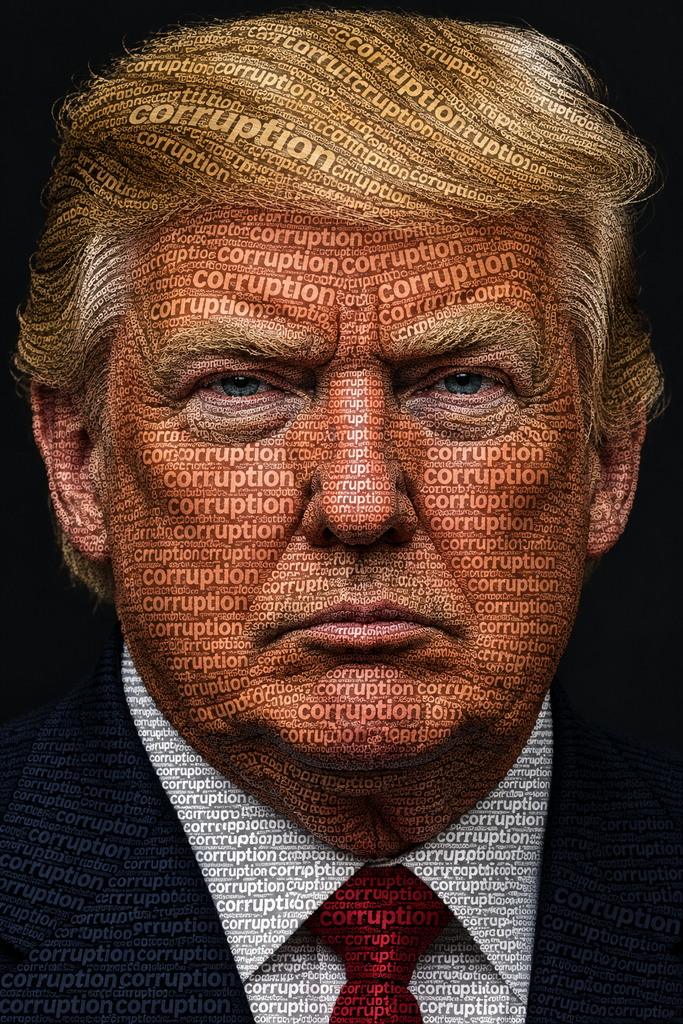
A portrait of Donald J. Trump (with IA)
Watch the evidence, not the guessing game
Before the announced release, social media discussion was already circling around the senator’s possible identity. The coverage consulted described speculation rather than a confirmed identification. Repeating those guesses would add noise, not clarity.
A more useful way into the documentary is to ask what its evidence actually establishes. Are recordings presented with enough context? Are witnesses speaking about events they directly experienced? Is the person accused given a meaningful opportunity to respond? Are allegations clearly separated from verified facts?
The language around sex workers deserves attention, too. People who sell sexual services should not be reduced to a sensational plot device or treated as inherently discrediting. Their dignity, privacy and safety belong in the story alongside any legitimate scrutiny of a public official.
For readers in Brussels and Belgium, that is a more meaningful connection than importing Washington’s rumour mill: how do we demand accountability without reproducing the stigma queer communities have spent decades challenging?
Practical information
- Title: The Closetocracy
- Release: 22 October 2026, following TYT’s announcement the previous day.x
- Where to watch: The Young Turks’ YouTube channel.
- Language and accessibility: Runtime, subtitle options and any geographical restrictions have not been independently verified for this article.
The most interesting question is not who is hiding in the closet. It is whether the film can illuminate what power does behind closed doors — without making queer lives the spectacle.
Editorial note: The draft below uses your update that the documentary is now available on YouTube. I could confirm TYT’s release announcement, but not independently verify the full film’s availability or retrieve its direct viewing link. The allegations are therefore attributed throughout.
KET Magazine is a community‑driven, non‑profit magazine run by volunteers based in Brussels. Get in touch to share your thoughts or tell us about your activities. You can also promote your events on our website or support our work with a donation. Contact us at Info@ket.brussels.
You may also like
-

Beyond the rent rant: Bruscope puts Brussels life under the lens
Why does finding a home in Brussels feel so complicated? Who does the work that
-

At Liège’s Queer Families Festival, Every Family Has a Story
The third edition of the Queer Families Festival takes place on 11 October at the
-

“After”: Listening to LGBTQIA+ Survivors Speak About Intimate Partner Violence
On 8 October, Tels Quels invites people to Les Grands Carmes in central Brussels for
-
Liège’s Maison Arc-en-Ciel Needs Support to Keep Its Doors Open
Maison Arc-en-Ciel de Liège, a vital LGBTQIA+ community hub in Wallonia, is facing growing financial
-

Garden Party de la Maison Arc-en-Ciel de Liège
Liège’s Maison Arc-en-Ciel is bringing back its annual Garden Party on Saturday 5 September 2026.