
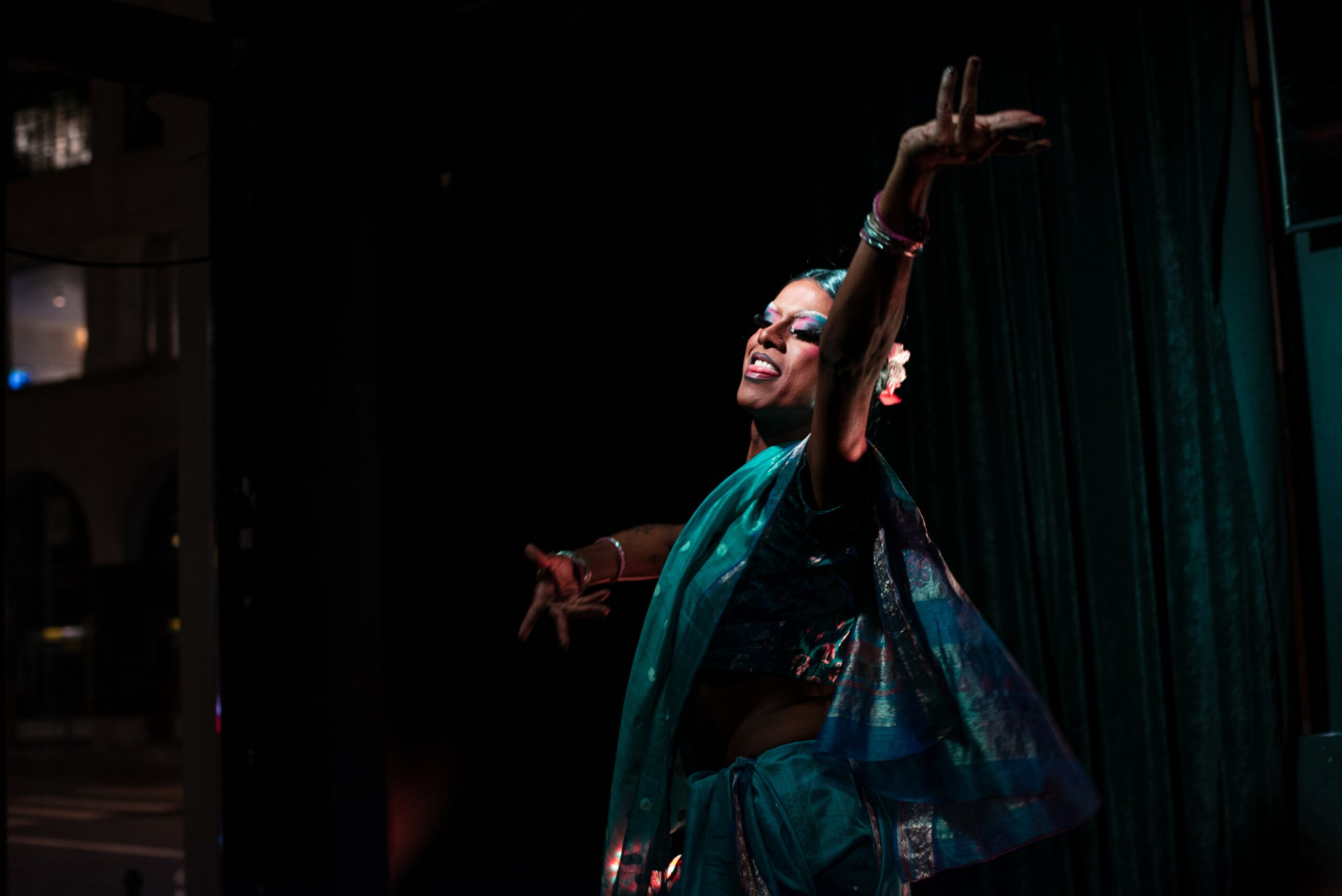
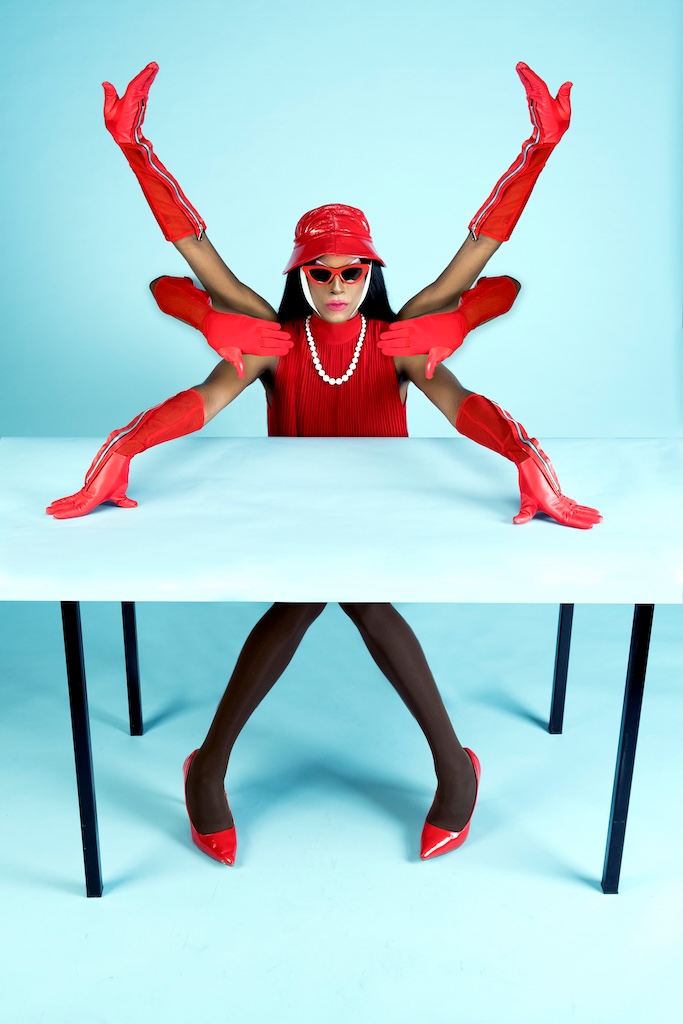
Meet Paula Roïd: a Brussels-based drag queen born in Sri Lanka, raised in the Paris suburbs, and now a driving force in Belgium’s alternative queer scene. Blending humor, heritage, and hard truths, Paula isn’t just here to entertain — she’s here to shake things up.
“I was born in France to Sri Lankan parents who fled the civil war in the 1980s,” explains Lark, the artist behind Paula. “Growing up in the Paris suburbs, I had to constantly navigate between two cultures — which was both a richness and a struggle. My parents made countless sacrifices so we could integrate into a society that didn’t always want us.”
After moving to Brussels with their husband, Lark opened Lundi Di, a campy, offbeat shop in the Marolles district. “We were total outsiders in the local decor scene. But from day one, the queer community welcomed us with open arms. They saw what we were doing and understood that our weirdness was part of the charm.”
It’s within that welcoming atmosphere that Paula Roïd was born — a glamorous, kitsch, and political queen who channels joy and resistance in equal measure. “Watching alternative drag shows in Brussels made me want to be part of it. Paula started as an extension of who I am — bubbly and outgoing — but she’s also become a vessel for healing. She’s helped me reclaim parts of myself I had buried out of shame or anger.”
“As Lark, I struggled to embrace my roots. Through Paula, I reconnected with my Sri Lankan identity and now proudly showcase it to an audience that values and celebrates it.”
Today, Lark’s drag is inseparable from their activism. With five other artists, they co-founded Peaux de Minuit, a collective dedicated to amplifying racialized voices in the arts and challenging institutional norms. “This isn’t just about visibility — it’s about creating real structural change and empowering others to take up space.”
And Paula has fans — plenty of them. “I’ve only been performing for a year and a half, but the response has been incredible. I think I’ve won a few hearts along the way, lol.”
Her inspirations are as eclectic as her drag: “Grace Jones, La Grande Dame, Call Me Brenda, Blanket la Goulue, Mama Tituba, Beyoncé and her husband Tom, who pushes my creativity every single day.”
GoPaula is also deeply committed to supporting local queer initiatives like the Trans Solidarity Fund Belgium, The Playback Show, and Propaganda, a powerful show by Eastern European artists confronting queerphobia through visual storytelling.
“Being part of the Brussels queer community has helped me love myself fully. It’s also shown me that our struggles are collective — and that our presence, our shows, our stories, they matter. We exist. We shine. And if that makes people uncomfortable? Well, tough luck.”
Follow: @paula_roid
You may also like
-
Stanislawa: Building a Queer Future from Belgium’s Clubbing Past
Between Brussels and Amsterdam, DJ and producer Stanislawa turns 1990s trance, sensual techno and progressive-house
-
“After”: Listening to LGBTQIA+ Survivors Speak About Intimate Partner Violence
On 8 October, Tels Quels invites people to Les Grands Carmes in central Brussels for
-
Orlane on Amour Pluriel: The Rise of a Queer Belgian Pop Icon
Orlane has never hidden her queerness. In ROUGE À LÈVRES, desire for a woman slips
-
Liège’s Maison Arc-en-Ciel Needs Support to Keep Its Doors Open
Maison Arc-en-Ciel de Liège, a vital LGBTQIA+ community hub in Wallonia, is facing growing financial
-
FIVE QUESTIONS… AND ONE BONUS – Meet Tristan Jon, painter
Music, movement, Brussels and the poetry of blur: painter Tristan Jon talks about the art