
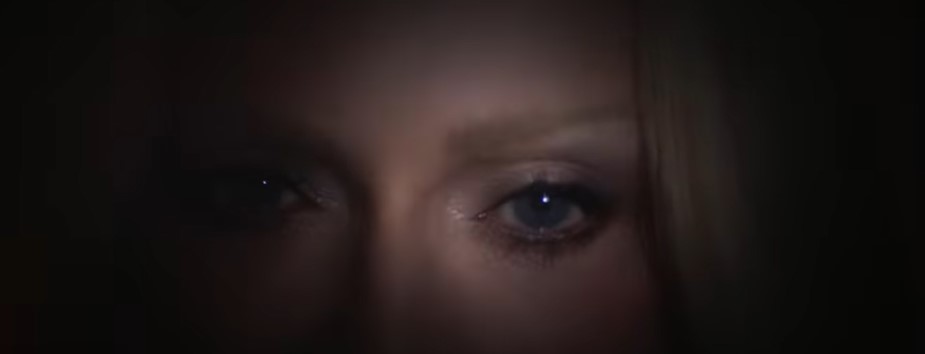
With “Confessions II”, a new electro‑driven album built for dancefloors and stadiums, Madonna is staging yet another resurrection moment in her career. Sixteen tracks later, one thing is clear: the “queen of pop” is not just returning to club sounds, she is very deliberately turning back towards the LGBTQ+ community that first crowned her.
Back to the dancefloor – and to queer memory
“Confessions II” opens with a mantra‑like track (“I feel so free”) and strings together uptempo songs designed for clubs, gyms and Pride stages. Sonically, it reconnects with the universe of “Confessions on a Dance Floor”: pulsing beats, tight transitions, songs that feel like they belong as much in a DJ set as in a pop album.
Behind the production, she brings back Stuart Price, the producer who helped shape the sound of “Confessions on a Dance Floor” in 2005 (“Hung Up”, “Sorry”). The cover art also echoes that era: Madonna perched on a wall of speakers, fishnet stockings, lingerie, veil – a direct wink to the Madonna/Madone play on words, and a signal to those who remember the first “Confessions”: this is for you.
Pride, nostalgia and strategic queer targeting
In 2024–2026, Madonna’s comeback has been framed around highly visible moments aimed squarely at queer audiences:
- a surprise mini‑concert in Times Square to launch Pride Month,
- a set built on the “Vogue” / ballroom / drag imaginary she helped popularise,
- and a carefully curated presence in LGBTQ+‑heavy spaces (festivals, queer clubs, Pride stages).
“Confessions II” extends that strategy in sound: club‑ready tracks, a clear wink to her NYC gay club years (“Danceteria”), lyrics that flirt with themes of freedom, chosen family and late‑night confessions. This is Madonna going back to the dancefloor as queer church, in a moment where many younger pop acts (Dua Lipa, Charli XCX, etc.) are occupying that territory.
For KET readers, it’s hard not to see this as both homage and attempt to recapture a core base: the queer fans who made “Erotica”, “Ray of Light” and “Confessions” cult classics, and who have sometimes drifted away during her more uneven 2010s output.
Collaborations as credibility boosters
The guest list on “Confessions II” reads like a map of the contemporary pop landscape:
- a duet with Sabrina Carpenter, road‑tested at Coachella,
- a collaboration with Stromae, who brings his slam‑spoken melancholy into her universe,
- a track with Martin Garrix, anchoring her in the big‑room EDM world,
- an incursion into reggae with Feid,
- and even a song shared with her daughter Lola Leon, staging the mother‑daughter lineage directly in the tracklist.
All of this serves a double purpose: stay connected to younger audiences, while showing that the “Madonna effect” still works across genres and generations. But it also signals that she knows where her queer audience now lives: in a playlist where she coexists with alt‑pop girls, Latin crossover acts, and global festival names rather than ruling alone at the top of the charts.
Between genuine allyship and calculated comeback
Madonna’s relationship with the LGBTQ+ community is not new. From AIDS activism to the ballroom homage of “Vogue”, she has long used her platform to amplify queer aesthetics and struggles – while also benefitting artistically and commercially from that proximity. In 2026, the stakes feel different: she is no longer an untouchable chart‑dominator, but a legacy act fighting to stay central.
“Confessions II” and its promo cycle (Pride performances, queer‑coded imagery, dancefloor‑oriented singles) can thus be read in two ways:
- as a continuation of a decades‑long bond with queer communities;
- and as a strategic attempt to tap again into a fanbase that remains among the most loyal, vocal and globally organised.
The tension between those two readings – sincere allyship vs. targeted marketing – is not new in Madonna’s career. But in a landscape where many other pop artists court queer audiences, she now has to compete on a field she helped create.
Why this matters now
For queer listeners in Brussels and beyond, “Confessions II” raises questions that go beyond whether the album “slaps”:
- What does it mean when an artist who built her myth with and through LGBTQ+ culture returns to that well to reclaim relevance?
- How do we navigate our own nostalgia – for 80s/90s/00s Madonna, for club nights that shaped us – while remaining lucid about who gets paid and who stays precarious?
- And what place do we still give to icons of her generation in a world where queer and trans artists themselves are finally occupying more space at the centre?
Madonna’s new album doesn’t answer these questions, but it gives us a reason to ask them again – preferably on a dancefloor, surrounded by people who know all the choruses by heart.
KET Magazine is a community‑driven, non‑profit magazine run by volunteers and based in Brussels. You can find our other music and pop‑culture stories on ket.brussels, and you can always write to us to share your projects or pitch a story: info@ket.brussels.
You may also like
-

Tels Quels Talent Show: Brussels’ Queer Voices Take the Mic
On Friday 16 October, the Tels Quels Talent Show brings live queer creativity to Les
-

CLELIA Turns Solitude Into a Shared Pop Therapy
The Brussels-based musician opens up to KET about mental health, queer visibility and her new
-

Eli Is Bringing Her Colourful Pop Universe to Brussels
American singer-songwriter Eli is heading to Brussels this autumn for an intimate show at the
-
FrancoFaune 2026: Brussels, Turn Up the Volume
From 1 to 11 October, FrancoFaune returns for its 13th edition, spreading French-language music across
-
Bears Attack: Brussels’ Bear Folies Hit the Dancefloor
Belgium Bear Pride celebrates its 15th anniversary from 29 September to 4 October 2026, and